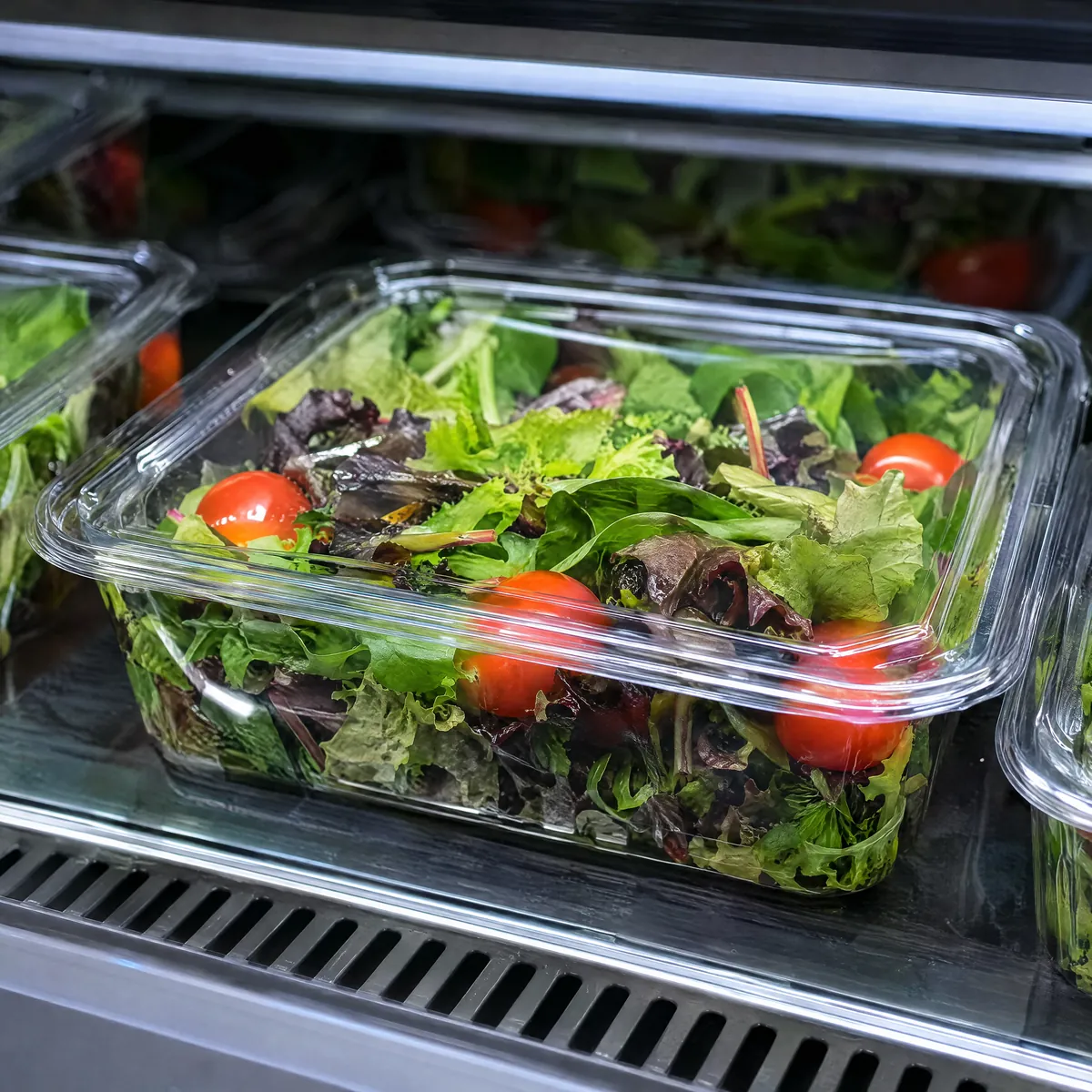
Crystal-Clear View in Food Packaging and Maximum Light Transmission in Greenhouse Films
Colorex Anti-Fog Masterbatch is a surface-active additive concentrate that prevents the water vapor condensing (sweating) in closed food packaging and agricultural greenhouse covers, due to the temperature difference between the inside and outside, from turning into water droplets on the plastic film surface that block the view and the light.
Polyethylene (PE) and polypropylene (PP) films are hydrophobic (water-repellent) by nature and have low surface energy. When moisture inside the package condenses on the film surface, it forms thousands of small hemispherical water droplets; these droplets scatter light and make the film look hazy and fogged. The hydrophilic fatty acid esters in Colorex Anti-Fog Masterbatch migrate to the film surface in a controlled way after production and raise the surface tension. As a result, the contact angle of the water droplets decreases, and instead of beading up, the droplets spread over the film surface as an invisible, continuous and fully transparent thin layer of water.
Key Advantages and Technical Features
Cold and Hot Fog ResistanceProvides instant and long-lasting clarity both for fresh food kept in cold stores/supermarket display cases (+4°C) and for hot-filled packaging.
Food Freshness and Shelf Life ProtectionPrevents water drops collecting on the package lid from dripping onto meat, cheese, vegetables or bakery products and causing mold, bacterial growth and spoilage.
Preventing the Lens Effect and Plant Burns in Greenhouse FilmsPrevents water drops forming on the greenhouse roof from focusing sunlight like a magnifying glass (lens) and burning the plants; increases light transmission inside the greenhouse by up to 15%.
Food Contact Compliance (Food Grade)Its active components consist of plant-based esters; it fully complies with FDA and European Union (EFSA) food contact regulations.
Packaging films for fresh meat, poultry, fish, cheese and delicatessen (tray lidding)
Packaging films for washed fresh salad, vegetables and fruit
Agricultural greenhouse covers, high tunnel and low tunnel films
Packaging films for bakery products and hot food (hot-fog applications)
Transparent food containers and thermoformed lid sheets
Affected Properties / Effects on the Final Product
Surface tension and contact angle: Prevents water droplets from beading on the film surface; spreads the water as an invisible thin layer.
Full optical clarity and transparency: Stops packaging from fogging in refrigerated display cabinets (+4°C), so the product inside is clearly visible in the display.
Food shelf life and freshness: Prevents water drops from dripping onto the food and causing mold, darkening and bacterial growth.
Greenhouse light transmission: By eliminating drops on the greenhouse roof, it increases the sunlight reaching the plants by up to 15% and prevents lens burns caused by drops.
Food safety: With its food grade structure based on plant esters, it does not change the taste or smell of the food.
Effect on the Process and Production Line
Disperses homogeneously on mono-layer and multilayer (co-ex) blown film and cast film lines.
Offers clean processability without smoke or odor at the extruder die exit.
Frequently Asked Questions
The most frequently asked questions about anti-fog masterbatch and their answers. If you cannot find what you are looking for, please contact our team.
Does Anti-Fog Masterbatch dry out the moisture inside the package?
No, the Anti-Fog additive does not absorb or dry out moisture. The moisture balance inside the package must be maintained to keep the food fresh. The Anti-Fog additive changes the surface tension of the condensing water droplets, turning them from beads into a glass-like transparent and invisible thin film of water.
Why is its use so important in food packaging?
There are two main reasons: First, a consumer at the supermarket shelf does not want to buy a fogged package whose contents cannot be seen; Anti-Fog provides crystal-clear visibility. Second, when water drops collecting on top of the package drip onto the food, the food spoils quickly; Anti-Fog stops this dripping and extends shelf life.
What happens if Anti-Fog is not used in greenhouse films?
Water drops forming on the inner surface of greenhouse films without Anti-Fog scatter sunlight, reducing the light entering the greenhouse by 15–20% and lowering crop yield. In addition, cold water dripping onto seedlings leads to plant diseases, and in sunny weather the lens effect of the drops causes leaf burns.
In which layer should it be used in multilayer (co-ex) films?
In multilayer (3- or 5-layer) packaging and greenhouse films, Anti-Fog Masterbatch is mainly applied to the inner layer facing the food/the inside of the greenhouse, and to the middle layer so that it acts as a reservoir.
What is the recommended let-down ratio (dosage)?
Depending on the film thickness, layer structure and application, it is generally used at 1.5–3.0% in food packaging films and at 3.0–5.0% in long-life agricultural greenhouse films.
Which polymer types is it compatible with?
We have product types with special carriers for film and thermoformed sheet production based on LDPE, LLDPE, mLLDPE, EVA, HDPE, PP (cast PP and BOPP) and PS.
Does the Anti-Fog additive affect corona treatment and printing?
Since Anti-Fog agents are additives that work by migrating to the surface, overdosing can affect print adhesion on the surface. In multilayer films, it is recommended not to use it in the outer (print) layer, or to carry out corona treatment in-line immediately after production.
How soon does the effect start and how long does it last?
Our fast-acting types designed for food packaging migrate to the surface within 24–48 hours after film production, reach full performance and remain active throughout the shelf life of the package. Our controlled-release types developed for greenhouse films provide long-lasting performance throughout the season.
Is it suitable for direct food contact?
Yes. The active agents used in the Colorex Anti-Fog Masterbatch series are produced from 100% food-approved (FDA and EU 10/2011 compliant) glycerol and sorbitan esters.
Can it be used together with Slip or Antiblock Masterbatch?
Yes, it can. In fact, since the Anti-Fog additive on its own can change the coefficient of friction of the film, supporting it with a suitable ratio of Antiblock Masterbatch is generally recommended for film openability.