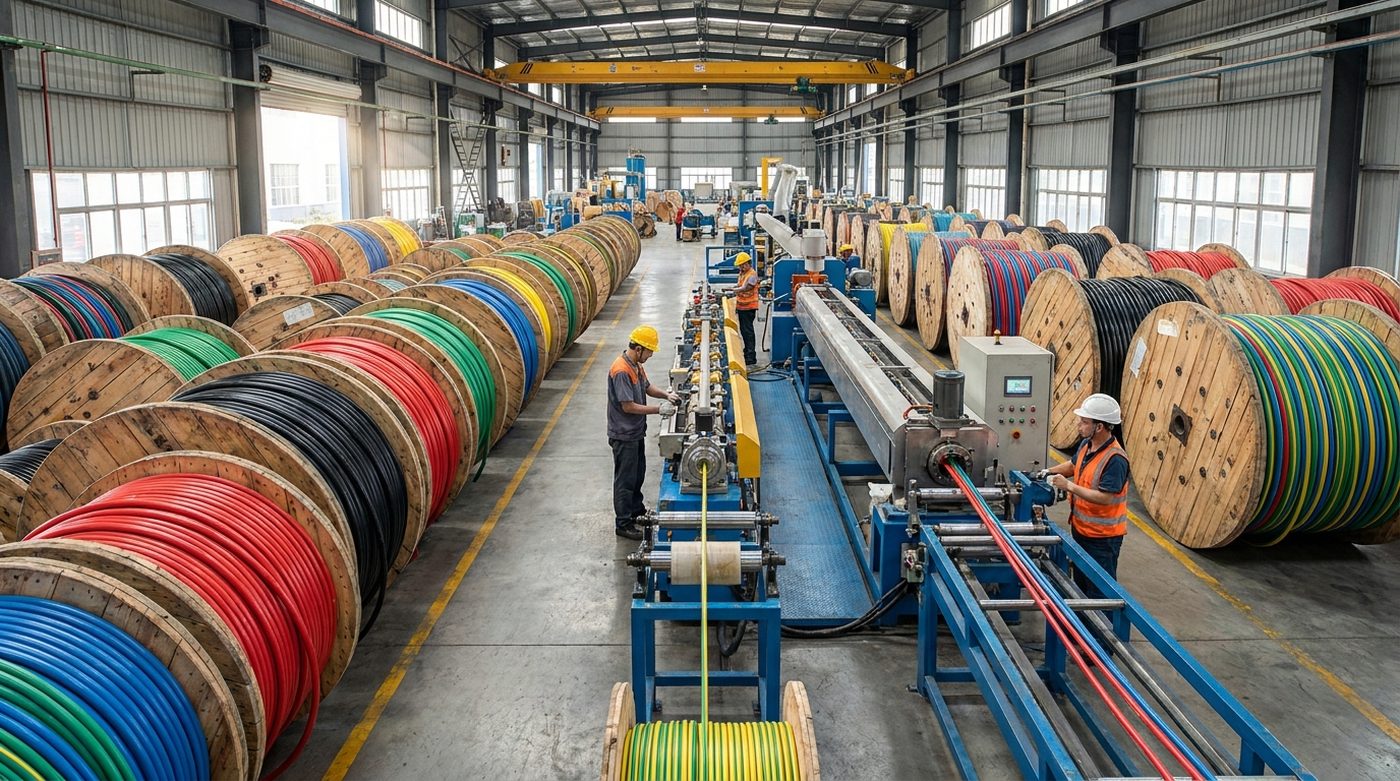
We offer a wide range of masterbatch and additive products that meet high safety and quality standards for the cable industry, one of the most critical parts of the electrical and energy sector. As Colorex, we develop solutions that provide excellent dispersion in cable insulation and sheathing processes and smooth surfaces in high-speed production lines. In addition to our standard black and white masterbatch products, we produce colored masterbatches developed with millimetric precision in line with international color standards and the special demands of our customers.
Furthermore, to increase life and property safety, the top priority of the cable sector, we offer a competitive advantage to manufacturers with special process additives that provide flame retardancy and UV resistance for outdoor cables, are fully compliant with international environmental and health directives, and preserve the insulation resistance of the polymer.
Recommended Dosage
In low voltage and general insulation applications: 1.0% - 2.0%
In color coding and jacketing applications: 1.5% - 3.0%
In cables requiring flame retardancy, UV resistance, and special performance: 2.0% - 4.0%
Potential Problems and Solutions in the Cable Industry
Common Problems and Solutions
A technical guide of 363 questions compiled from the field experience of the Colorex engineering team.
Why does the masterbatch not distribute homogeneously within the polymer?
Melt flow indices are incompatible; the middle zone temperature of the extruder barrel should be increased by 5°C, and Colorex series that are fully compatible with the polymer should be used.
Why does the cable jacket come out rough in high-speed production?
Melt fracture is occurring; head pressure should be reduced to the 150-200 bar range, and polymeric flow regulators should be added to the recipe.
Why do bubbles (pores) form in the jacket during extrusion?
There is moisture in the raw material; the polymer should be dried at 80°C before production, or Colorex desiccant additives should be used.
Why does the polymer burn inside the barrel, creating black specks?
Machine residence time has been exceeded or the temperature has surpassed 200°C; temperatures should be decreased by 15°C and thermal stabilizers should be added.
Why is there constant fluctuation in the cable's outer diameter (wall thickness)?
Motor amperage and feeding are fluctuating; PID temperature controllers should be calibrated and the puller speed must be stabilized. Answer: ATH filler degrades by releasing its water above 170°C; barrel temperatures should be kept within the 145°C - 165°C range.
Why is there so much scrap during color transitions (e.g., black to white) on the production line?
The old pigment has adhered to the barrel steel; the temperature should temporarily be increased by 10°C, and high-viscosity purging compounds must be applied.
Why is the underlying copper conductor visible in light-colored insulations?
Opacity (hiding power) is insufficient; a Colorex white masterbatch containing a high percentage of titanium dioxide should be used.
Why does the cable jacket shrink after coming out of the water trough?
The jacket was cooled abruptly; trough temperatures should be graduated as 60°C, 40°C, and 20°C.
Why does premature curing (scorch) occur inside the extruder for cross-linked (XLPE) cables?
The barrel temperature has exceeded 140°C; the feed zone should be set to 110°C, and the head zone to a maximum of 135°C.
Why is there weak adhesion between the copper wire and PVC insulation?
The cold wire abruptly freezes the PVC melt; the copper wire should be heated to between 90°C - 110°C using a pre-heater.
Why does PVC degrade and release acid gas (HCl) during production?
Screw friction has pushed the temperature above 190°C; the RPM should be lowered, and calcium-zinc based thermal stabilizers must be used.
Why do the jackets of outdoor cables crack in the sun in a short time?
UV rays have broken the polymer chains; high-durability HALS type Colorex UV stabilizers should be added to the formula.
Why do flame-retardant cables drip during the burn test?
The melt viscosity has dropped significantly with heat; PTFE-based anti-dripping agents that activate at 160°C should be used. Answer: The melt temperature is too low (below 190°C); the temperature should be raised to 200°C - 210°C to reset the elastic memory of the polymer.
If the copper coming from wire drawing is hard, how does it disrupt extrusion?
Hard wire cannot remain centered (eccentricity); the wire should be softened by running the annealing unit at 450°C - 500°C.
In multi-core cables, why does the jacket stick to the inner cores? Question 19: Why does the pressure in the extruder's filter zone suddenly spike above 300 bar?
The filter is clogged due to unmelted lumps or impurities; ultra-filtered Colorex masterbatches should be preferred.
Why does the hot cable's insulation get crushed in the spooling unit?
The cooling distance is insufficient; the jacket's surface temperature must strictly be lowered below 40°C before spooling.
Why does the dielectric resistance drop after using colored masterbatch?
Impurities in the pigment have caused conductivity; products with high electrical purity containing no ionic contamination should be used.
In black polyethylene jackets, why does carbon appear lumpy in microscopic tests?
The shear force inside the barrel is weak; temperatures in the 2nd and 3rd zones should be decreased by 5°C to increase viscosity and crush the mixture.
Why do colors in the cable jacket show deviation across consecutive production batches?
Dosing is unstable; gravimetric devices should be used, and Colorex colors approved by millimeter-precision spectrophotometers should be preferred.
In TPU jacketed cables, why does the material melt and stick in the feed throat?
TPU is highly sensitive to moisture and premature heat; the feed throat should be water-cooled at 30°C, and the raw material must be pre-dried. Answer: The material is hygroscopic and has absorbed moisture; it must absolutely be dried in a vacuum oven at 80°C for 4-6 hours before entering production.
In dual-color stripe applications, why does the stripe color fail to fuse with the main jacket?
There is a temperature difference between the two melts; the co-extruder head temperature should be set 5°C - 10°C higher than the main head temperature.
In halogen-free cables, why does the elongation at break value fall below standards?
The high filler ratio has made the polymer rigid; the jacket's flexibility should be restored using elastomeric modifiers.
Why does the Limiting Oxygen Index (LOI) value come out low in HFFR cables?
The ATH has scorched during extrusion or was under-dosed; a 60%-65% filler ratio should be maintained, and barrel temperatures must not exceed 160°C.
Why does the cable jacket burn and the text become illegible during laser barcode printing?
The polymer cannot absorb the laser's wavelength; special bismuth-based Colorex laser marking agents should be added to the formula.
How is surface tracking prevented on the jacket in high-voltage lines?
Contamination creates a conductive path; special anti-tracking additives (silicone/ATH based) resistant up to 200°C should be used.
Why do granules stick to the dosing hopper and fail to flow?
There is static electricity; an ionizer (static eliminator) should be installed on the system, or antistatic-enhanced masterbatches should be used.
What happens if the Draw-Down Ratio (DDR) is too high during jacketing?
The cable over-stretches, thins out, and causes mechanical tearing; the DDR for polyethylene should be stabilized between 1.2 - 2.0.
What is the contamination source that ruins insulation resistance in capacitive submarine cables?
It is calcified water in the cooling trough; deionized (pure) water must be used in the troughs, and temperature should be controlled with heat exchangers.
Why do PVC cables shatter like glass during the -20°C cold bend test?
The monomeric plasticizers in the formula have volatilized; Colorex’s cold-climate flexibility modifiers or polymeric plasticizers should be used.
What should the ambient parameters be in a silane curing sauna?
For effective cross-linking, the temperature should be 80°C - 90°C, relative humidity at 95%, and the cable should be kept there for at least 12 hours.
Why does the "Sharkskin" defect occur during extrusion? Question 37: Why do fine fiber wires break on the line during fiber optic jacketing?
The pulling tension is too high; head pressure should be fixed between 200°C - 240°C, and the tension must be reduced to the 0.5 N - 1.5 N level.
How is Environmental Stress Cracking (ESCR) prevented in PP insulation?
Sudden entry into 15°C water disrupts the amorphous structure; the first stage of the trough should be kept at 70°C - 80°C to ensure controlled crystallization.
How is trapped flammable gas (methane) removed after curing in XLPE cables?
Cables should be aerated in degassing rooms at a temperature of 60°C - 70°C for 3 to 7 days.
Which electrical test is disrupted by diameter fluctuations in coaxial cables?
Return Loss and impedance are corrupted; line speed must be synchronized in real-time using a laser micrometer.
Why is a "Reverse Temperature Profile" applied in MDPE jacketing? Question 42: Why do robotic PUR cables feel sticky after coming out of the trough?
Limescale and minerals in the water cling to the jacket; reverse osmosis purified water should be used, and it must be dried with strong air knives.
Why do white cables turn pink while waiting in the warehouse (Gas Fading)?
Nitrogen oxide gases in the air react with phenolic antioxidants; phenol-free packages and Colorex white formulas must be selected.
What problem arises in insulation if the oxide on the copper wire is not cleaned?
Dielectric voids form at the boundary surface, triggering "Corona" discharge; the wire should be coated without oxidizing, and metal deactivators should be used.
Why do air voids form in the insulation during fiber jacketing at a speed of 1000 m/min? Question 46: Why does recycled XLPE scrap not melt inside the barrel?
The cross-linked polymer has become a thermoset; it does not melt, it can only be micronized and added to new mixtures as a filler at a 5% ratio.
What should be checked on the machine if the Machine Capability Index (Cmk) drops below 1.33?
Wall thickness tolerances are drifting; extruder screw wear must be checked, and heat PID parameters should be calibrated.
Why is the semi-conductive layer difficult to strip from the insulating layer during installation?
The two layers are chemically fused together; easy-strippable semi-conductive compounds must be used in the formulation.
Why do pole cables snap quickly in cold, windy climates?
The polymer's glass transition temperature (Tg) is too high; the jacket should be made flexible with low-Tg POE-based Colorex elastomer modifiers.
Why does water entering from a tiny jacket crack ruin the entire line in underground cables?
Water advances through capillary voids; water-swellable powders or barrier yarns that swell instantly upon contact with water must be used.
Why do the jacket and insulation elongate independently and bag in hot environments?
Their thermal expansion coefficients are different; the expansion curves of the two polymers must be brought closer using suitable mineral fillers.
How does corrosion starting on the armor of steel-armored cables melt the jacket?
Liberated metal ions attack the polymer chains; Colorex corrosion inhibitors and ion-trapping agents must be formulated into the mix.
Why do facility cables crush easily and short-circuit when tools drop on them?
The jacket's impact absorption capacity is inadequate; elastomeric impact modifiers that absorb sudden shocks should be added in high ratios.
Why does viscosity drop when edge trim (scrap) polymers are fed back into the line?
The machine's shear forces have broken the polymer's molecular chains; molecule-repairing chain extenders must be used.
Why does the inner copper turn black or green over time in decorative cables with transparent jackets?
Copper oxidizes due to ambient heat; highly active copper passivation agents that do not affect transparency must be added to the insulation formula.
How is the dense smoke from cables during tunnel fires prevented?
Molybdenum-complexed Colorex smoke suppressants that trap smoke particles and provide transparent combustion should be used.
Why do cables shipped to desert climates melt and stick together inside truck trailers?
The polymer's heat deflection temperature (HDT) is low; heat resistance must be increased by using polymer blends with higher melting points.
How is a dull and matte surface prevented when using recycled plastics?
Impurities refract light; process brightening stabilizers that cover the surface like a microscopic glossy film should be included in the recipe.
Why is the tensile strength of biodegradable (green) cables lower than conventional cables?
The structural flexibility of bio-polymers is weak; Colorex’s green-technology-compatible special strength-enhancing copolymers should be used.
Why do industrial sensor cables swell when they come into contact with machine oils?
Standard polyethylene and PVC absorb oil and dissolve; fully oil-resistant fluoropolymer or highly cross-linked TPU jackets should be selected.
Why does "space charge" accumulate inside the polymer in high-voltage (DC) cables?
Direct current traps electrons in the insulator; nano-sized inorganic Colorex insulation additives should be used to discharge this load.
Why does the halogen-free jacket weaken and turn white at the bending point (stress whitening)?
The ATH filler detaches from the polymer under tension; the filler must be chemically locked to the polymer using maleic anhydride-grafted agents.
Why do marine engine cables break due to resonance fatigue from constant vibration?
The polymer's vibration damping ability is low; special acrylic-based copolymers that absorb vibration energy must be used.
What does the acid secreted by fungi growing on the outer jacket do to the cable?
The acid digests the plastic and rots the insulation; Colorex fungicidal (anti-microbial) agents with silver ion technology must be dosed.
What is it a sign of when the polymer output (flow rate) fluctuates within seconds during extrusion?
The polymer is experiencing slippage in the feed zone of the barrel; a grooved feed should be used, and the throat temperature should be lowered by 10°C.
Why does the color burn during the production of color masterbatches in compounding (twin-screw) machines?
Excessive mechanical friction in the kneading blocks has spiked the heat; the screw RPM value must be reduced by 15%.
Why do fiber optic PBT tubes break down molecularly (hydrolysis) upon contact with water?
PBT chemically reacts with water vapor; carbodiimide-based anti-hydrolysis additives that block the process must be added to the formula.
Why does the peel resistance of the hot-melt adhesive used in armored cables come out weak?
The head temperature remained below the adhesive's activation value; the head temperature should be raised to 150°C for full chemical bonding.
Why does the XLPE cable break and fail during the Hot Set test?
Cross-linking (curing) was insufficient; the silane or peroxide concentration should be increased without causing premature scorching.
Why do silicone-insulated fire cables tear easily during post-production installation?
Silicone's structural tear strength is inherently very low; it should be reinforced with fumed silica, which builds a mechanical network in the formula.
Why do telecom cables experience constant electrical breakdowns during the Spark test?
Moisture or unmelted lumps have created voids inside the insulation; fine-mesh filters and desiccant additives must be used.
How is the lack of gloss on the jacket surface explained by "Draw Resonance"? Question 74: Why does the jacket continue to smolder internally even if the flame extinguishes during the vertical burn test?
The carbon crust on the burning surface is weak and leaks oxygen; the ash barrier must be ceramified by adding zinc borate synergists.
Why do EVA-based HFFR cables stick together while waiting in the warehouse during summer?
EVA's glass transition temperature is very close to summer temperatures; erucamide-based Colorex agents that migrate to the surface to provide slip must be used.
Why do paint pigments ruin the "Dissipation Factor" (dielectric loss) of the cable?
Metal salts and free ions in standard pigments conduct current; electrical insulation pigments with impurities at the parts-per-billion (ppb) level should be chosen.
How does "Water Treeing," which ruins the lifespan of insulation in underground XLPE lines, occur?
Water seeping into micro-pores combines with the electrical field to puncture the insulator like tree branches; tree-retardant (TR-XLPE) resins must be used.
What is the reason for the polymer spurting (surging) from the head zone?
The polymer has melted by forming a bridge (bridging) in the feed throat; the temperature of the water-cooling jacket in the throat zone must be brought below 50°C.
Why does recycled PVC darken inside the barrel and release toxic gas (HCl)?
Its thermal stabilizers were depleted during initial production; a fresh calcium-zinc stabilizer reinforcement must be made before reprocessing.
During laser marking, why do PE/PP cables swell and darken instead of absorbing the text?
The thermal energy of the laser causes outgassing in the plastic; antimony trioxide-based additives that convert energy solely into color change should be added.
How does highly irregular cell sizing in physical foaming affect impedance?
Electrical signal transmission is distorted; Colorex nano-silica nucleating agents should be added at a 0.5% ratio to keep cells homogeneous and micro-sized.
How does head pressure react if the screen pack order is assembled incorrectly in the extruder?
If the fine wire cannot withstand the coarse wire, it bursts, and pressure drops to zero; the arrangement toward the extruder must be coarse (20 mesh), medium (60), fine (120).
Why does the Tear Strength in halogen-free cables fall below the 5 N/mm level?
The polymer structure has weakened due to inorganic fillers; the LLDPE ratio in the formula should be increased to 15% to strengthen the polymer matrix.
In steel-armored cables, why does the outer jacket fail to fully adhere to the armor, leaving gaps?
Fluidity is insufficient; "Pressure Tooling" technique must be used, and the head temperature should be increased by 10°C to allow the jacket to seep between the armor gaps.
Why does an oily layer (Blooming) form on the surface months after the cable is produced?
Low molecular weight additives or poor quality lubricants have migrated out; Colorex additives that have molecular compatibility with the matrix should be used instead.
Why do core insulations melt due to friction in wire twisting machines?
The surface friction coefficient of the insulating material is high; siloxane-based masterbatches that provide permanent lubricity should be added to the recipe.
How does copper contact degrade insulation over time in Polypropylene (PP) cables?
Copper ions catalyze oxidation, breaking PP chains; metal deactivator (MD) additives that chemically bind the copper must be added.
How do acidic sulfate soils corrode underground PE jackets?
Sulfate ions seep into the amorphous regions of the polymer and cause swelling; high crystallinity HDPE and special masterbatches with epoxy barriers must be used.
What is the production-related reason for the jacket color continuously deviating from the target shade in device tests?
The dosing screw is losing millisecond synchronization with the line speed; strict weight-controlled (gravimetric) dosing units are required, not volumetric ones.
Why can't fans cool the internal heat generated by friction in the extruder barrel?
The heat originates from the plastic's own internal friction (viscous dissipation); screw RPM should be reduced, or screws with deeper channels should be preferred.
In cross-linked cables, why does the injected liquid silane evaporate and escape inside the barrel?
Pressure sealing at the injection point is weak; long barrels with a 30:1 L/D ratio should be used, and injection should be relocated after the melting zone.
Why do standard antistatic agents in the jacket stop working in dry weather?
Traditional agents work by attracting moisture from the air to build a conductive water film; if moisture is zero, they fail; Permanent Antistatic polymers that do not need moisture should be used.
How does the formation of a hard crust on HFFR cables during a fire slow down the blaze?
The swelling carbon crust (char) cuts off oxygen to the underlying polymer; the crust should be thickened using phosphorus/nitrogen-based intumescent flame barrier additives.
Why does the jacket material lose mass after a hot water immersion test?
Organic fillers or weak additives have dissolved in the water; non-water-absorbing (hydrophobic) surface-treated inorganic Colorex additives should be selected.
What is the optical result if the "Air Gap" (distance between the melt cone and water) is too short in extrusion?
Since the polymer enters the water before smoothing out, the surface comes out matte like an orange peel; the distance must be adjusted to between 10-20 cm depending on the polymer structure.
Why do Thermoplastic Elastomer (TPE) insulations stick together on the storage roll and fail to unroll?
TPE has high surface tackiness; stickiness must be eliminated by using anti-blocking agents that impart a matte finish to the jacket surface.
How can the outer armor wires pulled over the cable jacket be prevented from cutting into the polymer?
The jacket's "Cut-Through" resistance is low; Colorex compounds containing high-strength fillers should be used in the bedding layer beneath the armor.
What chemical reason causes jackets containing flame retardants (MDH) to shatter in cold climate tests?
Magnesium hydroxide crystals nullify the polymer's low-temperature flexibility; the proportion of EVA-based flexibility copolymers in the formula should be increased up to 20%.
Why does the laser micrometer used on the cable extrusion line constantly misread the diameter?
Splashing water droplets or steam from the water trough deceive the laser; the cable must be completely dried by running a pressurized "Air Wipe" right before the measurement point.
What causes the micro-pimpling (ambering) that forms on the surface of peroxide-cross-linked cables?
Peroxide particles that prematurely scorch in local dead spots inside the barrel exude onto the jacket; machine design must be streamlined to ensure zero residence time.
What defect is observed on the jacket if the degassing zone in the extruder barrel gets blocked?
Moisture and volatile gases inside the polymer cannot be expelled, causing micro-bubbles to burst on the surface; vacuum channels must be cleaned and a continuous vacuum below 200 mbar maintained.
Why must the barrel be purged during machine shut-downs for PVC cables?
PVC waiting inside the barrel rapidly degrades, cross-links, and produces acid; before shutdown, temperatures should be dropped to 120°C and the system purged with a low flow index purging material.
How is color migration stopped in TPU-insulated industrial cables?
Dyes incompatible with the molecular weight of the TPU bleed to the surface; Colorex TPU-based masterbatches that ensure 100% chemical locking with the polymer matrix must be used.
How is the diameter affected if the water level fluctuates in the calibration trough (vacuum tank)?
Because the vacuum pressure breaks, the jacket diameter narrows and expands within milliseconds; the trough water level must be precisely stabilized using float-operated PLC valves.
If the extruder melt pressure suddenly drops by 50 bar, where is the problem?
Material flow is interrupted in the feed zone (bridging), or the hopper is clogged; the cooling water flow rate at the hopper throat should be increased to clear the blockage.
Why does stranding break occur in twin-screw compounding lines?
The melt strength is low; the entry angle into the water trough should be narrowed, and the head temperature should be lowered by 5°C relative to the polymer's yield point.
Why does the thermal aging test (120°C / 20,000 hours) fail in solar panel cables?
Primary antioxidants have depleted over time; high molecular weight Colorex thermal stabilizer complexes must be included in the formula at a minimum ratio of 1.5%.
How is Mud Resistance achieved in marine and submarine cables?
Hydrocarbon drilling muds on the seabed melt the jacket; special cross-linked EVA/EPR copolymer jackets fully resistant to oil and mud must be extruded.
Why do deep-sea cables lose insulation resistance under hydrostatic pressure?
Pressurized water seeps into the amorphous regions of the insulation; increased density (HDPE) and hydrophobic silane additives providing a water barrier must be added to the recipe.
Why is the sintering oven heat so high for fluoropolymer (PTFE) aerospace cables?
PTFE does not melt through conventional means; it is pressed as a powder and baked. The sintering oven must be set between 380°C - 400°C to ensure particle fusion.
Why does the shrinkage test in XLPE cables exceed 4% in a 130°C oven?
The tension between the capstan and the take-up on the extrusion line is too high; line tension must be reduced to decrease the residual stress in the jacket.
What happens in coaxial cables if the void fraction of foamed PE exceeds 60%?
Electrical capacitance improves, but the jacket kinks under the slightest bend; the void fraction should be kept around 50%, and Colorex cell regulating additives should be used.
Why does the actual heat not match the set "Melt Temperature" in the extruder?
High shear forces in the screw profile create extra internal heat via mechanical energy; the RPM should be lowered via the controller based on the screw's friction factor.
What danger arises if the flame retardancy of the bedding polymer under the armor is weak?
The bedding under the armor burns like a wick during a fire, carrying the flame; high-filled and cost-effective Colorex HFFR bedding compounds must be used.
Why do Polypropylene (PP) filler yarns snap while bending the cable?
The fibrillation (linear tearing) resistance of the yarns is weak; the oven temperature in the stretching unit must be locked at 160°C to strengthen the molecular orientation of the yarns.
How is the signal affected if the lay length of the pairs loosens in data cables (Cat 6/7)?
Cross-talk (NEXT) values rise and data packets collide; back-twist settings on the twisting machine must be locked with millimeter precision.
Why does light transmittance remain below 60% in the smoke density test (3m cube) for flame retardant jackets?
Carbonization is incomplete and particles remain suspended in the air; boron/zinc-based synergistic smoke suppressants that trap the smoke in the ash layer must be added.
What should be done to prevent the polymer in the head from drooling onto the floor when the machine stops? Question 119: Why do cable outer diameter tolerances (Ovality) exceed 5%?
The jacket touched the rollers before fully solidifying at the cooling trough entrance; the first guide roller at the trough entrance must be moved back by at least 2 meters.
How does the emulsion (oil/water) used in copper wire drawing ruin insulation?
Oil residues left on the wire prevent the polymer from adhering and cause voids; the wire must be thoroughly dried with air wipes before entering the extruder.
Why is TPE/TPU used instead of standard PE in high-current charging (EV) cables?
PE cannot withstand continuous bending and temperatures above 90°C; flexible thermoplastic elastomers that endure millions of bends and fast-charging heat must be selected.
How is Elongation at Break increased above 150% in halogen-free jackets?
Elasticity must be improved by adding linear low-density polyethylene (LLDPE) or ethylene vinyl acetate (EVA) based Colorex impact modifiers to the formulation.
What is the cause of mechanical "clicking" sounds heard in the extruder barrel during production?
Unmelted hard granules or worn screw flights are rubbing against the barrel wall; the temperature in the 1st zone (feed zone) of the barrel should be raised by 10°C to soften the granules.
How is the gradual clouding of the polymer prevented in clear audio (speaker) cables?
Sunlight or oxygen dulls the polymer; UV absorbers and optical brighteners that do not disrupt transparency should be included in the recipe.
Why is the black color always more durable than other colors in outdoor cables?
Carbon Black particles fully absorb UV rays, converting them into harmless heat; for optimal UV protection, high-dispersion Colorex black must be used at a ratio of 2.0% to 2.5%.
What is the risk if peroxide (DCP) is pre-mixed into the formula (dry blend) during XLPE production?
Peroxide accumulates as a liquid on the surface of the polymer and creates a hazardous pool at the bottom of the hopper; it must be fed directly into the barrel (liquid injection) with controlled liquid feed pumps.
How does the melt behave if the torpedo angle in jacket extrusion is calculated incorrectly? Question 128: What does a sudden drop of the needle indicate in a "Megger" test measuring cable insulation resistance?
There is a microscopic pinhole or metal particle at that point in the insulation; a 15 kV High Frequency Spark Tester must be integrated onto the line.
What is the purpose of the extrusion vacuum in fire-resistant cables wrapped with mica tape?
The vacuum ensures the jacket adheres tightly without leaving gaps, yet without damaging the mica tape; controlled negative pressure between 100-200 mbar must be applied in the head zone.
What does it mean if the "Gel Content" test falls below 80% for cross-linked cables?
The curing reaction is incomplete, and the polymer will continue to melt under heat; the dose of the silane/peroxide active agent or the curing time/temperature must be increased.
What happens to the jacket if the micron size of the calcium carbonate (CaCO3) in the masterbatch is too coarse?
Coarse particles make the surface rough like sandpaper and break physical resistance; Colorex products containing coated, ultra-fine calcite of 1-2 microns must be used.
How does constant dancing of the inner conductor wire during jacketing ruin the cable?
As the wire vibrates, the jacket's wall thickness comes out thick on one side and thin on the other (eccentric); the tension and brake pads on the pay-off unit must be stabilized.
Why do low smoke zero halogen (LSZH) cables fail the acid gas test (pH measurement)?
Poor quality flame retardants implicitly containing chlorine or bromine were used; to ensure the test water pH does not drop below 4.3, 100% halogen-free pure materials are required.
How do microbes and bacteria rot the jacket in industrial PUR cables by eating it?
The ester or ether bonds in polyurethane act as a food source for bacteria; silver-based anti-bacterial Colorex masterbatches that permanently bind to the polymer chain must be used.
How is erroneous measuring by the laser micrometer prevented when the jacket is transparent?
Transparent jackets refract the laser beam, tricking the sensor; for transparent and translucent materials, dual-axis (cross-angle) laser or optical camera measurement modes should be adopted.
How does a lack of surface slipperiness complicate the installation of NYM cables pulled through conduits?
The cable snags on bends inside the conduit due to friction and refuses to advance; amide or silicone-based slip agents that reduce the friction coefficient down to 0.10 must be added to the jacket formula.
What melt problem occurs if the L/D (Length/Diameter) ratio of the extruder screw is too short, like 20:1?
The polymer's residence and mixing time in the barrel is shortened; unmelted particles (unmelts) bleed onto the jacket. For difficult materials like HFFR and XLPE, screws with an L/D ratio of 24:1 or 30:1 are mandatory.
How do you prevent static electricity from spiking to 10,000 Volt levels on the line while pulling the jacket?
Rapid friction of the dry polymer against the rollers accumulates a massive capacitive load; passive carbon brushes (static eliminators) must be installed on the line, and internal antistatic Colorex formulas should be used.
How can rodents be prevented from biting and severing jackets buried underground for highway lighting cables?
Mice and moles mistake the smell of plastic for food; environmentally safe anti-rodent agents containing extracts (like chili pepper extract) that strictly burn the rodent's taste buds must be added.
How does using "Anatase" instead of "Rutile" type titanium dioxide (TiO2) in the masterbatch formula destroy UV resistance?
Anatase TiO2 creates a photocatalytic effect under the sun, burning its own polymer; for outdoor durability of white cables, only Rutile type Colorex TiO2, which reflects UV rays, must be used.
How is the self-weight elongation and sagging (creep) of overhead lines (ACSR) in very hot regions reduced polymerically?
The jacket undergoes plastic deformation under thermal load; to increase the material's thermal creep resistance, high molecular weight HDPE with a low melt flow index (MFI < 1.0) must be selected.
What happens if the dielectric constant (Permittivity) of the insulation exceeds 2.0 in high-speed data cables?
The Velocity of Propagation of the signal within the cable drops; physical nitrogen foaming technology must be applied to bring the dielectric constant down to 1.5 levels.
What is the reason severe melt tearing following "Sharkskin" in extrusion is called "Spurt Fracture"?
The polymer sticks and slips periodically inside the head, causing explosive bursts; the process heat must be increased according to the polymer's melt viscosity, and polymeric flow regulators (PPA) should be increased.
How do you stop the cable flame spread from exceeding 2 meters in the CPR (Construction Products Regulation) test?
ATH filler alone is insufficient; intumescent flame retardants that swell to form a heat shield and maximize carbon barrier thickness during a fire must be used.
How does internal tension built up inside the roll crack the jacket after the cable is wound onto the spool?
The speed synchronization between the capstan and the take-up is flawed, resulting in the cable being wound under tension; the dancer tension valves in the winding unit must be calibrated to zero tension.
Why can't hard materials like Polystyrene (PS) be used as a carrier in the masterbatch for PE cable jackets?
PS and PE are chemically incompatible; they do not mix, and the PS shatters like glass inside the jacket, piercing the insulation. The carrier resin must always be LLDPE or EVA based.
Where is the fault if the head pressure (melt pressure) slowly climbs and hits 400 bar during HFFR jacketing?
The ATH/MDH filler has started accumulating and burning on the screen pack due to heat; the machine must be stopped immediately, the filter changed, and the head temperature profile dropped by 10°C.
How does the PID screen mislead the operator if the thermocouple (heat sensor) does not fully contact the inside of the barrel?
The screen might show 160°C while the inside of the barrel actually reaches 190°C, causing the polymer to burn internally; it must be ensured that the sensors press tightly against the barrel surface using spring-loaded systems.
What is added to the formula to ensure railway signal cables retain their form in oil and diesel immersion tests?
Standard polymers swell in hydrocarbon liquids; oil-resistant masterbatches containing NBR (Nitrile Rubber) or highly cross-linked fluorocarbon elastomer additives must be used.
Why does the "Elongation" value of the cable vary with every batch when using recycled raw materials?
The polymer chain lengths within the scrap are mixed, making the Molecular Weight Distribution (MWD) variable; Colorex compatibilizer coupling agents must be dosed to stabilize the structure.
How is the "Migration" test for color dyes added to cables performed on a white plate in an 80°C oven?
The colored cable is clamped between a white PVC or PE plate and baked; if the color transfers to the white, the carrier chemistry is incompatible. Non-migrating Colorex pigments must be selected.
How is the insulator affected if the Volume Resistivity of the semi-conductive (Semi-con) layer exceeds 100 Ohm.cm?
The semi-conductive layer cannot distribute voltage stress homogeneously, initiating breakdown in the insulator; high-shear mixed compounds where superconductive carbon black is flawlessly distributed must be used.
Why must you wait a long time before restarting the screw if barrel heating is suddenly cut off for Polyamide (Nylon) jackets?
Nylon freezes like concrete inside the barrel; if the screw is turned before heat fully penetrates to the core, the machine's gearbox will shatter. After turning on the heat, a "soak time" of at least 2 hours must be observed.
How is the growth of tree-like structures inside the insulator during water tree tests for XLPE cables related to ions?
Salt and ions in the water that permeate pores break down the plastic under the attractive force of alternating current (AC); super-clean XLPE resins with ionic impurities reduced to ppb levels must be used.
What does it do to the cable if the pneumatic pressure of the "Dancer" unit used in cable pulling is too high?
Because the dancer applies constant tension, the polymer chains in the jacket are forced to stretch (stress-induced crystallization) and flexibility is lost; pneumatic pressure must be kept to a minimum based on the cable weight.
Why do transparent lumps called "Fish Eyes" occur, visible from the outside, on transparent-jacketed cables?
There is a slight melt point mismatch between the base polymer and the masterbatch; the masterbatch formula must be designed with Colorex resins having a melting point 5°C lower than the base polymer.
What is done to prevent deep cracks from forming on the jacket during sea water and ozone gas resistance tests for cables?
Ozone gas attacks and breaks the double bonds of the polymer; EPDM-based rubber copolymer blends that create a permeability barrier against ozone and salt water must be used.
Why is "Skin-Foam-Skin" (3-layer) technology required for the inner insulation of coaxial cables?
The foam layer reduces capacitance, but the thin solid "skin" layers on the inside and outside prevent the foam from crushing and guarantee adhesion to the copper; triple-head co-extrusion must be used.
How is the degradation caused by flame retardants (ATH) clumping (agglomeration) during winter storage in halogen-free cables prevented?
ATH is a hydrophilic powder that absorbs moisture from the air; high-quality fillers whose surfaces are coated with silane or stearic acid, which repel moisture and integrate smoothly into the polymer, must be chosen.
Why does the central insulation crush and thin out while cores rotate in high-speed wire stranding machines?
The back-tension of the cores and the lay angle exert excessive radial pressure on the center; machine brake pads must be electronically controlled, and crush-resistant insulations should be chosen.
Why does the melt pressure zigzag when a "Surge" occurs in the extruder barrel during production?
The fill rate of granules into the screw flights is inconsistent (poor feeding); the cooling water for the grooved barrel must be checked, or the feed depth on the screw should be increased.
How does continuous splashing ruin the surface at the point where the polymer hits the trough water as the jacket is pulled?
Water droplets hit the molten polymer, creating craters (pockmarks) on the surface; the polymer must pass over a smooth guide wheel or through a water cascade before entering the water.
How does the electrical discharge known as "Corona Discharge" in high-voltage lines melt the polymeric insulator?
Ionization in the air produces ozone and high heat, chemically burning the polymer; nanocomposite Colorex additives that have high corona resistance and contain electron traps must be formulated into the mix.
How is the greying of white or yellow cables after a "UV Weathering" test (Xenon lamp aging) related to pigments?
The organic pigments used could not withstand UV energy and underwent photochemical degradation; inorganic pigments with high light fastness (Light Fastness > 7) should be preferred.
Why are Swellable or powdered separator tapes wrapped between the armor and the inner jacket in cables?
Upon water entry, the tape swells instantly to block water from advancing longitudinally; SAP (Super Absorbent Polymer) based tapes that prevent the polymer from absorbing water are mandatory.
What does it signal if the polymer output rate in extrusion continuously drops relative to the screw rotation speed (RPM)?
The clearance between the screw and the barrel has worn out due to friction, causing the polymer to escape backward (backflow); the barrel must be overhauled or screws with wider flights should be manufactured.
Why does the jacket of halogen-free cables suddenly crack under flame, carrying the fire to the inner cores?
The melt fluidity of the polymer under temperature is very low and it tears under thermal shock; boron-based binders possessing a special thermoplastic rheology that melts instantly during flame to plug small pores must be added.
How does the diameter (nm) of carbon black particles in the masterbatch affect UV resistance?
As particle diameter increases (e.g., above 50 nm), UV absorption power weakens; for outdoor durability, Colorex P-type carbon blacks with a particle size below 20 nm (high-color) must be used.
When is the distinction made between using "Tube Tooling" and "Pressure Tooling" in jacket extrusion?
If the inner core is thin, delicate, or has voids, Tube tooling is selected to pass the jacket over it like a tunnel; if the inner core is hard, armored, and void-free, high-pressure Pressure tooling is selected.
Why is "Platinum Curing" preferred over "Peroxide Curing" for cross-linking in silicone-insulated cables?
Platinum curing leaves no by-products (toxic gas), produces no odor, and offers higher physical properties; platinum-catalyzed systems are particularly used in medical and high-quality fire cables.
How does the thermal expansion and flexing (Die Leakage) of the extruder head bolts during production ruin the jacket? Question 173: In overmolding for plugs and sockets, why doesn't the PVC jacket fuse with the injected PVC plug (Cold Weld)?
The temperature of the injected PVC is not high enough to melt the jacket; the injection (barrel temp) should be pushed to the limit, and the mold temp should be held around 50°C-60°C to ensure thermal fusion.
What is the physical disadvantage of adding recycled XLPE material as a filler into thermoplastic jackets?
Unmeltable XLPE powder particles act as microscopic stress concentrators within the polymer; if it must be added, micronization must be reduced below 100 microns and the ratio should not exceed 5%.
What polymeric chain is added to the matrix to ensure HFFR jackets withstand cold climate bending (-40°C)?
Standard EVA polymers transition to a glassy state below -25°C; Colorex resins with POE (Polyolefin Elastomer) or special EPR (Ethylene Propylene Rubber) phases, maintaining flexibility down to -50°C, must be blended.
How does the polymer reach the head zone if the "Compression Zone" length of the extruder screw is too short?
The granules do not have time to expel air and melt homogeneously, arriving as an unmelted paste mixed with air; the compression zone must be designed to cover at least 30% of the screw (based on L/D ratio).
What is the reason for the inkjet-printed brand and length info (Printing) on the jacket smudging and becoming illegible?
Slip agents or waxes in the jacket formula migrate to the surface, preventing the ink from adhering; a gas flame (flame treatment) that cleans the surface should be applied right before the printing zone.
How does lowering the "Heat Release Rate" (HRR) stop the flame during cable fires?
The feeding and growth of a fire depend entirely on heat emission; the HRR value must be suppressed with magnesium hydroxide (MDH) based special Colorex formulas that make the reaction endotermic (heat-absorbing).
What problem is experienced during assembly if the "Elongation" value of the copper wire falls below 25% during wire drawing and extrusion?
The copper wire has become excessively hard; it will snap at the slightest flex during installation, piercing the insulation. Annealing current and voltage values must be raised to soften the wire.
What happens if the "Thermal Stability" limit of the pigments in the masterbatch formula is 200°C and the extruder operates at 220°C?
The pigment breaks down molecularly, and the color darkens or turns burnt grey; high-performance pigments with a Heat Resistance between 250°C and 300°C, suitable for process temperatures, must be selected.
How is "Melt Fracture" prevented during the extrusion of electronic cables with a very thin (0.10 mm) wall thickness? Question 182: Why shouldn't the Adhesion force between the dielectric layer and the copper wire be zero in coaxial or low-current cables?
If there is no adhesion, the wire slips inside the jacket when the cable bends, and air voids disrupt the impedance; a very thin layer of weak acid copolymers (EAA) should be extruded on the inner layer to boost adhesion.
Why are water troughs commonly used instead of Air Cooling in extrusion?
The heat transfer coefficient (thermal conductivity) of water is roughly 24 times greater than air; on high-speed production lines, water is essential to calibrate the polymer and lock its shape in milliseconds.
What is the danger if the "Char" barrier of a halogen-free jacket fails to swell (Intumescent) and remains flat during vertical burn tests?
A thin ash barrier cannot insulate against the flame's heat, causing the underlying polymer to melt and continue burning; the barrier must be thickened with expanding (swelling) phosphorus/carbon donating synergistic Colorex masterbatches.
Why is it mandatory to use brass and aluminum tools for cleaning the Die in jacket extrusion? Question 186: Why are circulation motors run in "Moisture Curing" troughs during the curing period of cross-linked XLPE cables?
In stagnant water, temperature doesn't distribute homogeneously, leaving the top of the cable raw while the bottom cures; circulation pumps must drive the 90°C water to penetrate every point of the cable with equal thermal and hydraulic pressure.
How is color dosing affected if there is a 30% size variation among the masterbatch granules supplied by manufacturers?
Helical dosing screws work volumetrically; small granules fill the voids and are over-dosed, while large ones are under-dosed. For production quality, micro-pellets or equally sized (strand-cut) granules should be preferred.
How does adding epoxy resin into the HDPE jacket in sulfate-rich underground environments block chemical attacks?
Epoxy resins form a tightly cross-linked network within the matrix (steric hindrance), acting as a 3D shield to stop sulfate ions from seeping into the weak (amorphous) regions of the polymer.
How does a "Protrusion" found on the outer semi-conductive (semi-con) layer of high-voltage power cables puncture the electrical field?
Every bump acts like a sharp needle point, pooling voltage there and increasing local Electrical Stress, initiating breakdown; for flawless surface smoothness, ultra-clean compounds and 100% filtered extrusion are mandatory.
How does experiencing an "Overshoot" in the PID control of the machine's barrel heaters burn the plastic?
If the target temp is 160°C, the heaters might run at full power, allowing the temp to spike to 180°C; the "Derivative" and "Integral" parameters must be optimized to apply brakes so the temp smoothly settles exactly at 160°C.
What does it mean when the elongation at break suddenly drops by 50% after a UV aging test (1000 hours) for outdoor lighting pole cables?
Chain scission has already begun, and the polymer has oxidized and become brittle; outdoor conditions were underestimated. You must immediately switch to Colorex packages containing a high ratio of Carbon Black and HALS stabilizers.
Why is it critically important for the Capacitance Monitor to be placed inside the water cooling trough on the telecom cable (Cat6) extrusion line?
The insulation wall thickness and foam ratio take shape in the exact seconds the hot polymer hits the water; to allow the extruder speed to be revised in milliseconds when an incorrect diameter/foam ratio is detected, the sensor must be submerged.
How does an "Acicular" (needle-like) microscopic crystal structure of ATH and MDH flame retardants, as opposed to a "Spherical" one, strengthen the jacket?
Needle-like crystals create fault lines when the polymer tears, facilitating breakage, whereas spherical structures distribute stress equally in all directions; for a more flexible jacket, special milled spherical flame retardant powders should be chosen.
Why is an "IR Curing Oven" (Infrared Shock) more effective than hot air forced ovens in silicone cable production?
In air ovens, only the surface of the silicone forms a crust, whereas infrared (IR) energy penetrates the molecular core of the material, cross-linking the polymer evenly from the inside out, thereby boosting mechanical toughness.
What is the chemical advantage of using silane gas (Monosil Process) over the standard dry blend (Sioplas Process) in XLPE pipe or cable jackets?
In the Monosil process, liquid silane gas, base polymer, peroxide, and antioxidant react in a single step inside the barrel, which eliminates shelf-life issues and ensures a much tighter and more homogeneous cross-link matrix in the final product.
While cost-reducing fillers like calcite (CaCO3) in the masterbatch formulas lower the cost of color, how do they destroy the cable?
Calcite is not a colorant (pigment), it is merely a filler; heavy calcite used to cheapen the product acts like sandpaper on the surface, kills elasticity, and makes the insulator porous like a sponge to water. Colorex series containing pure pigment are a must.
What is the role of the polymer's crystal structure (Crystallinity) in the "Flex Fatigue" cables face from external forces?
Exceptionally high crystalline polymers (e.g., pure HDPE) are rigid and fracture with microscopic cracks under continuous bending; for dynamic cables requiring a long flex life (millions of cycles), highly amorphous thermoplastic elastomers (TPE/TPU) must be used.
Why does the corrosion that starts on the armor after a "Salt Spray Test" in marine cables rapidly puncture the polymeric jacket?
The iron ions (Fe+2, Fe+3) released during rusting act as a very strong catalyst that accelerates the oxidative degradation of the polymer thousands of times; ion-trapping (metal deactivator) additives must be incorporated into the formula.
Which optical property on the jacket surface is destroyed if the pH of the cooling water used in extrusion fluctuates into acidic or basic ranges?
When the pH stability of the water breaks, stabilizers and slip agents on the surface of the polymeric jacket react with the water and dissolve; the gloss level of the surface suddenly takes on a matte and hazy appearance.
How does raising the "Cpk" (Process Capability Index) measured by QC units from 1.33 to 1.66 and above save costs in cable production?
When Cpk climbs above 1.66, the machine is so stable and the tolerance variance so tiny that factory management can safely lower the extra polymer wall thickness (over-thickness) printed as a "safety margin," converting massive polymer tonnage into savings.
How is the polymeric insulator damaged if the degassing chamber temperature exceeds 70°C in XLPE cables?
High heat breaks down the polymer's crystal structure, initiating thermal oxidation; to vent methane gas, the chamber temperature should be kept within a strict 60°C - 70°C band, and ventilation flow must be increased.
What kind of defect occurs in the cable diameter if the pneumatic pressure of the Caterpillar pulling unit remains weak?
The cable slips between the puller belts (slippage), the line speed momentarily drops, and because the extruder pumps polymer at the same rate, periodic bulges (bamboo effect) form on the cable.
How is the outward bleeding (migration) of liquid plasticizers over time stopped in flexible PVC cables?
Monomeric and low molecular weight plasticizers (e.g., DOP) volatilize with heat; instead, polymeric plasticizers or Colorex elastomeric modifiers that bond more strongly to the matrix should be formulated.
Why is the processing window for TPE (Thermoplastic Elastomer) jackets so narrow?
TPEs rapidly degrade just 10°C above their melting point; the barrel temperature profile must be tightly locked between 170°C and 180°C, avoiding high-shear screws.
How does the cell structure react if the gas injection pressure suddenly drops in physically foamed (Foamed PE) data cables?
The solubility of nitrogen (N2) gas in the polymer drops, micro-cells merge to create massive voids (cavitation); the pressure at the gas dosing unit (gas panel) must be fully regulated at 200 bar.
How is the high-temperature oxidation of the copper wire prevented in FEP (Fluorinated Ethylene Propylene) insulated cables?
FEP extrusion occurs at extreme temperatures like 380°C, where bare copper instantly turns black; the wire must be chosen as silver-plated or nickel-plated copper.
In cross-linked cables, even if the "Gel Content" test scores 80%, what does it indicate if the elongation in the "Hot Set" test exceeds 175%?
The cross-links in the matrix haven't formed a sufficiently dense network; the peroxide or silane active agent must be increased, or reaction-accelerating (co-agent) catalysts should be added to the formula.
Why is the Moisture Absorption rate of Polyamide 12 (Nylon 12) jackets lower than other nylon types?
The methylene groups (CH2) in Nylon 12's molecular chain are longer, making the amide groups (polar bonds) where water molecules can attach sparser; hence it is ideal for termite and chemical resistance.
What should be the ideal mesh size for the extruder's "Screen Pack" unit when using recycled PE?
Fine filters like 100 or 120 mesh are necessary to sift out dirt; however, to balance high pressure and prevent wire blowouts, multi-layer cassette filters with 20 / 60 / 120 / 40 backing must be used.
What is the connection between polymer "Surging" in the extruder barrel and mechanical screw wear?
When the clearance between the screw flights and the barrel wall exceeds 0.5 mm, the melt polymer escapes backward under pressure (backflow), causing a pulsating extrusion flow rate.
Why should narrow-angle kneading blocks be chosen in twin-screw mixers producing HFFR compounds?
Wide-angle blocks crush the ATH filler excessively and spike the temp above 170°C via high mechanical friction, burning the filler; Colorex-compatible low-shear profile designs providing gentle transport and mixing are required.
What parameter is based on when setting the Spark Test voltage for ultra-thin-walled (0.2 mm) automotive cables?
High frequency, not high voltage, is needed to avoid puncturing the insulation; voltage should be held in the 3-5 kV range while test frequency is boosted to 3000 Hz (High Frequency Spark Tester) to catch micro-holes.
What happens to the jacket if the radiation dose exceeds the 200 kGy level during E-Beam (Electron Beam) cross-linking?
Polymer chains pushed beyond the cross-linking limit begin to degrade, and the jacket becomes brittle as glass; dosage must be optimized in the 100-150 kGy range depending on material thickness and chemistry.
What is the reason the UV resistance of colored jackets is naturally weaker than black jackets?
Carbon black absorbs all UV and IR radiation in the light spectrum, turning it into harmless heat; for full protection in colored cables, high-performance Colorex additives combining HALS and UV Absorbers must be used.
Why must antistatic agents be "Permanent" (IDP) in Clean-Room and medical tech cables?
Traditional migrating agents surface and shed micro-particles, ruining the clean room's particulate standards (ISO Class); ionic IDP polymers that penetrate the polymer matrix but don't migrate to the surface must be formulated.
What does it prove if water conductivity exceeds 10 µS/mm during the "Acid Gas Test" (EN 60754-2) for halogen-free jackets?
Gases released when the cable burned dissolved in the water, forming ionic acid (pH dropped below 4.3); it must be ensured that flame retardants and color pigments in the formula are 100% halogen-free pure materials.
Why is Die Swell low in the extrusion of polymers with a High Melt Flow Index (MFI > 5.0)? Question 219: How is dispersion failure of color pigments overcome in older extruders with short L/D ratios (20:1)?
The polymer does not get enough mixing time in a short screw; Colorex super-dispersion series, prepared with carriers that have high wetting capacity and melt instantly even at very low RPMs, should be favored.
How does the "Tree Retardant" mechanism that stops water tree growth in TR-XLPE cables work?
Special copolymers and polar agents added into the insulation chemically wrap around seeping water droplets, dropping surface tension and preventing the water from growing in sharp, microscopic branch shapes (electrical channels).
How does increasing the braid Coverage above 90% in armored or shielded cables affect flexibility?
A tight weave completely blocks external electromagnetic interference (EMI) but severely hardens the cable's bending resistance; where flexibility is desired, the braid angle and wire diameter should be modified to target an optimal 85% coverage.
What is the biggest physical factor limiting machine speed in high-speed production lines (e.g., 1500 m/min)?
"Cooling Capacity" limits it, rather than the extruder's output; if the polymer doesn't drop below 40°C before hitting the take-up spool, the insulation deforms, making trough length and water flow the true speed limiters.
Why does Curing Inhibition happen in Platinum-cured Silicone Rubber (SIR) cables?
Sulfur, amine, phosphorus, or tin-based chemicals present in the air or environment poison the platinum catalyst, instantly halting the reaction; the production area must be completely isolated from rubber lines using sulfur vulcanization.
Why does a cable drop from B2ca class to Cca class in CPR (Construction Products Regulation) classification?
The threshold limits in the "Heat Release" and smoke density tests (additional classes like s1a, d1) have been breached; performance must be boosted using high-purity MDH fillers that clarify smoke and instantly smother the flame.
How is the hazard to human health zeroed out for synthetic active ingredients used in Anti-Rodent cables?
Instead of toxic metals or lethal biocides, Colorex green defense additives should be used; these contain encapsulated bitter extracts that are non-volatile to humans but burn the scent/taste cells of rodents only when bitten.
What causes the tube to shrink back months later in Fiber Optic Loose Tube production?
Pull tension on the extrusion line was too high, building "residual stress" inside the polymeric tube (PBT); pull tensions must be reduced, and stress relieved via "annealing" between the hot-water / cold-water zones.
What does the "Thermal Expansion Mismatch" between the conductive copper and the polymeric insulation do during Thermal Cycling?
Copper expands slightly under heat while the polymer expands significantly; over time, the friction causes the insulation to tear internally (micro-cracking). The polymer's Coefficient of Thermal Expansion (CTE) must be brought closer to copper using mineral filler reinforcements.
If the extruder's main motor Load continuously operates above 90%, what is the polymeric reason?
The barrel temp is too low, or the melt viscosity of the polymer used (e.g., low-MFI PE) is massive; to protect the machine, temps should be raised by 10°C, or internal slip additives should be added to ease melt flow.
Why can't single-screw machines be used for compounding HFFR polymers?
The homogenization power of single-screw machines is inadequate to flawlessly blend 60% powder filler (ATH) into the polymer matrix; Co-rotating Twin-Screw mixers with high kneading capability must be used.
How do you solve the poor contrast (faint text) when Laser Marking white or light-grey jackets?
A white background reflects laser energy, leaving carbonization weak; special Colorex laser additives that are sensitive only to UV or Nd:YAG energy and provide localized blackening (contrast) within microseconds must be used.
Why do standard PVC (70°C) jackets fail the -40°C Cold Bend or Cold Impact tests?
Standard PVC's glass transition temperature (Tg) is very high, and the liquid softeners inside freeze at sub-zero temps, turning the polymer to glass; formulas with NBR modification or special polymeric plasticizers boasting low-temp flexibility must be applied.
What is the meaning behind the 175% maximum elongation limit in the standard "Hot Set" (200°C) test for XLPE insulations?
Under a 20 N/cm² weight hung on the polymer, the fact that the material elongates only 175% is definitive proof that the molecular network (cross-linking) resists melting and will maintain its form at short-circuit heat (250°C).
In Pressure Extrusion, how is the outer jacket prevented from sticking excessively to the inner armor or insulation (Stripping difficulty)?
Stearate-based release agents that ease peeling should be added to the jacket formula, or a very thin talcum powder or paper separator layer should be wrapped between the jacket and the inner bedding.
Why are Zinc Borate and ATH (Aluminum Trihydrate) used "Synergistically" together in flame retardant formulas?
ATH alone only cools by releasing water; zinc borate, however, melts during a fire to form a hard glass layer (vitreous char), armoring the carbon barrier created by the ATH to maximize oxygen impermeability.
How does Screw Cooling with water inside the extruder screw lower the head temperature?
When the screw tip is cooled, friction between the polymer and the screw increases, but the "viscous dissipation" (self-heating) energy inside the melt is re-absorbed by the screw body, stabilizing the polymer temp at the head exit.
What happens if the decomposition temperature of the "Blowing Agent" compounds used in chemical foaming (CBA) is higher than the process temperature?
The agent does not release gas (does not activate) inside the polymer, the cable jacket does not foam, and the wall thickness collapses; the blowing agent's activation temp (e.g., 160°C) must equal the barrel temp in the extruder's middle zone.
During Polyethylene (PE) insulation coating, what is the electrical purpose of pre-heating the copper wire to the 100°C - 110°C range with a Pre-heater?
If the wire is hot, the molten PE does not freeze instantly around it (shrinkage stress is zeroed out), and the microscopic dielectric voids (corona discharge focal points) between wire and polymer completely seal, boosting insulation resistance.
What happens if the resin used as a carrier in the masterbatch melts 20°C higher than the base polymer's melting point?
The base polymer melts but the masterbatch granules do not; solid color lumps or tears (unmelts) appear on the cable jacket. Colorex formulas that melt at the same or a lower temp than the base polymer must always be used.
How do you ensure the weight increase does not exceed 1% in the "Gravimetric Water Absorption Test" for submarine pump cables?
All fillers in the insulating material must be surface-treated to be hydrophobic (silane coating), and water-absorbing inorganic minerals like calcium carbonate must not be used in the formula.
How is the "Torsional Stress" caused by continuous bending in robotic cables resolved via Pitch Length?
When the lay length (pitch) at which cores are wrapped around each other is kept short, the inner cores act like mechanical springs that flex as the cable twists on its axis, absorbing stress and preventing insulation breakage.
Why must the Purging Compound used when switching from black to white during extrusion have a very high viscosity?
Black carbon pigment sticks to the barrel steel; low-viscosity (fluid) material cannot strip off the carbon, it merely glides over it. Very hard and sticky (high viscosity) scrubbing agents must be used for mechanical sweeping.
What happens if the overlap ratio of Mica Tape wrapped over the conductor drops below 50% in fire-resistant cables?
During bending, the mica tape opens up, and the flame directly reaches the copper wire, spreading heat to the entire system (short circuit); the taping machine angle must always be locked to ensure a 50% or greater double overlap.
What is the polymeric error behind the ink printed on the outer jacket easily peeling off during the Ink Adhesion Test (tape test)?
Amide or Wax-based slip agents added to the formula for easy jacket pulling were overdosed; the agents migrate to the surface, blocking the reactive sites where the ink would chemically bond to the plastic.
How do you prevent carbon black from clumping (Agglomeration) in the cable insulator, which creates sharp tips (Electrical Stress Points) in the electric field?
Poorly dispersed carbon clumps pool voltage into a single point, initiating treeing; special Colorex semi-conductive masterbatches whose particle size has been crushed to the nanometer level and homogenized in high-density mixers must be used.
What is the secret that allows the "Draw-Down Ratio" (DDR) to hit extreme levels like 100:1 in Fluoropolymer (PTFE) jacket extrusion? Question 248: What does the "Derivative" parameter do to prevent "Overshoot" (exceeding the target temp) in the PID settings of the barrel heating zones?
The Derivative parameter calculates the rate of temperature rise and prematurely brakes heater power as it approaches the target (e.g., 160°C); thus, instead of spiking past the target, the temperature settles exactly on target with a smooth, stable curve.
How does the curing time in a water bath mathematically increase according to cable wall thickness for silane-cross-linked cables?
The curing reaction depends on the speed at which water penetrates (diffuses) to the polymer core; the time increases proportionally to the square of the wall thickness (e.g., doubling the thickness quadruples the time), which is why thick power cables require much longer in 90°C saunas.
How is the extra polymer wall thickness (Over-thickness) given as a safety margin in factories turned into profit by improving the Cpk index?
When the Process Capability Index (Cpk)—which measures machine tolerance variance—is raised to 1.66 and beyond (zero diameter fluctuation), the risk of dropping below the minimum limit (e.g., 1.0 mm) vanishes; production is pulled to the nominal value, turning kilograms of polymer (and masterbatch) per kilometer into pure savings. Answer: Melt strength is inadequate, and the polymer vibrates unable to resist the drawing speed; the drawing distance (air gap) should be shortened, and the extruder head temperature should be lowered by 5°C - 10°C to increase the melt's break strength.
How does experiencing weight gain during the EN 60811 "Water Absorption" test for HFFR jackets ruin electrical insulation?
Water molecules penetrate the insulator, creating leakage current paths; hydrophobic surface-treated Colorex inorganic modifiers should be used to block the hydrophilic (water-attracting) nature of the filler material (ATH).
Why must the by-product "Acetophenone" that emerges during the peroxide curing (vulcanization) of XLPE cables be rapidly removed?
Acetophenone creates liquid microscopic chambers within the insulator, drastically reducing Dielectric Strength; this chemical must be thermally sweated out in 70°C degassing rooms post-production.
What does a sudden drop in head pressure at the "Breaker Plate" zone of the extruder and polymer leaking from the edges indicate? Question 255: In thin-walled "Skin Coat" co-extrusion applications, how is the colored outer layer prevented from easily scraping off the inner insulator? Question 256: How is the thixotropic gel filling inside the fiber optic "Loose Tube" (PBT Tube) prevented from softening the PBT and degrading its strength over time?
Synthetic oils in the gel attack the amorphous regions of the PBT polymer, causing swelling; hydrolytically stabilized PBT masterbatches with proven chemical resistance and gel compatibility must be used.
During the jacket Tensile Test, what does it mean if the polymer suddenly exhibits "Necking" instead of elongating homogeneously?
Polymer chains suddenly release stress and begin to yield; polymers with a narrower Molecular Weight Distribution (MWD) should be selected to strengthen the material's yield point and increase elastic recovery.
What is the thermal reason for PUR (Polyurethane) spiral cables losing their Memory/Coil Recovery property and staying flat after being stretched?
Baking (annealing) time and temperature after spiral coiling were insufficient, so molecules couldn't fixate into their new shape; depending on form, PUR cables must be kept in 90°C - 110°C ovens for at least 45 minutes to lock in thermal memory.
How does the "Crystallinity Degree" of the Carrier resin in Colorex color masterbatch formulas affect color homogeneity?
Highly crystalline carriers (like HDPE) are hard to melt and disperse late, creating a matte and wavy surface; for perfect pigment distribution, carriers with low crystallinity (LDPE or LLDPE) and low melting points are always used. Answer: Polymer trapped in dead spots thermomechanically shreds itself due to constant exposure to high shear forces, spewing out as burnt black specks on the jacket; aerodynamic, heart-shaped flow distributors should be used.
How does the blackening of the tinned copper wire used in Photovoltaic (Solar) cables due to extrusion heat affect insulation?
Blackening (oxidation) disrupts electrical contact and increases resistance during connector assembly; head temperature must not exceed 170°C, and the HFFR insulation compound must consist of sulfur-free formulas that do not react with tin.
During the extrusion of the inner Filler material in multi-core installation cables (NYM), how does a rough outer surface ruin the outer jacket?
Bumps and air pockets on the inner filler reflect like a mirror onto the outer jacket pulled under vacuum (telegraphing effect); the filler material (usually recycled PVC with calcite or rubber) must be smoothed out with high-MFI fluidizers.
What mechanical property does adding "Silicone Oil" modifiers to the matrix of TPE or TPU jackets impart to the industrial cable?
It permanently lowers the jacket's friction coefficient, preventing the cable from chafing against itself and the channel inside drag chains, extending its mechanical life to millions of cycles.
If "Solid Bed" breakup occurs too early in the extruder, how does the melt reaching the head zone behave?
Granules mix into the melt pool too early inside the screw and are pushed forward, losing frictional force before fully melting; the polymer exits the head like an inhomogeneous paste with high melt temp fluctuation.
Which Colorex additive works to keep light transmittance above 60% by stopping smoke particles in the "Smoke Density" test for flame retardant (FR) cables?
Standard fillers release smoke into the air; however, molybdenum, zinc stannate, or borax-based special Colorex synergists bind smoke particles together during a fire, causing them to collapse to the floor as heavy ash rather than rising into the air.
What is it a sign of if the "Anti-Oxidant" (AO) packages used in cable insulations fail to reach 30 minutes at 200°C in the "OIT" (Oxidation Induction Time) test?
The balance of primary (Phenolic) and secondary (Phosphite) antioxidants in the formula is skewed or underdosed; the cable's thermal working life (e.g., 20 years) cannot be guaranteed, and the AO package must immediately be raised to the 1.0% level.
When the total wall thickness of the "Foam/Skin" insulation over pairs in data cables is 0.25 mm, how is capacitance kept constant?
Gas injection and puller speed must be autonomously controlled by the extruder RPM through a closed-loop system tied to a laser micrometer and an underwater capacitance monitor on millisecond cycles.
How does the "Exothermic" (heat-releasing) nature of the peroxide reaction during the production of XLPE-insulated medium voltage (MV) cables threaten the barrel?
When the curing reaction starts, it self-generates heat; if the barrel is not cooled, heat surpasses 140°C, turning into premature curing (scorch). The barrel's water cooling channels must remain constantly active to absorb this exothermic heat.
Which polymeric Compatibilizers are necessary to recover "Bending Flexibility" in black underground pipe/cable jackets made from recycled PE material?
Foreign plastics (PP, PET) inside the scrap weaken the matrix with micro-cracks; SEBS or EPDM-based binders grafted with maleic anhydride (MAH) must be added to chemically stitch different plastic molecules together.
Why must the internal surface roughness value (Ra) of the Die used in jacket extrusion be mirror-polished to the 0.1 micron level? Question 271: Why is it a critical standard that the "Light Fastness" scale for Colorex color masterbatches produced for the cable industry be 7 or 8 out of 8?
Values of 7 and 8 guarantee the pigment will resist fading for years under UV radiation from sunlight; low-fastness (e.g., 4 or 5) pigments turn grey outdoors within months, invalidating color coding (phase, neutral, earth).
Which high-performance resin is blended into the TPE formula to prevent automotive cables (FLRY) from melting near the 150°C engine block?
Standard TPE or PVC melts at these temperatures; to push the material's thermal ceiling (HDT) above 150°C, polyester-based elastomers (TPE-E) or cross-linked fluorocarbon structures must be integrated into the formulation.
How does ambient humidity above 60% during the Bunching of fine copper wires affect the extrusion insulation?
Moist air trapped between wires instantly turns to steam upon encountering the 180°C melt in the extruder head, blowing out the insulator from the inside (micro-voids); bunching halls must be air-conditioned, or the wire must be dried with hot air before entering the head.
If the pH value of the cooling water trough drops below 6.0 (acidic), what chemical reaction starts on the surface of the PVC jacketed cable?
Acidic water reacts with and dissolves the calcium carbonate (calcite) filler and surface stabilizers in the PVC formula; the jacket surface instantly becomes matte, rough, and mechanical strength weakens starting from the surface.
Why does increasing the flame retardant filler ratio from 65% to 70% in HFFR cables geometrically collapse mechanical properties (Tensile/Elongation)?
65% is the critical "Percolation Threshold"; beyond this point, polymer matrix chains completely detach from one another, leaving only powder in between, and the polymer starts acting like brittle chalk rather than plastic.
How does the fluidity behavior known as "Shear Thinning" of polymers in extrusion make machine speeds advantageous?
Polymer is a non-Newtonian fluid; as screw RPM (friction) increases, polymer molecules align in the flow direction and viscosity (thickness) suddenly drops, becoming slippery. This allows production at high speeds without head pressure spiraling out of control.
Why does mechanical snapping accelerate when Polyamide 6 (Nylon 6) jackets are in constant contact with high-temperature water (Thermo-hydrolytic aging)?
Amide bonds in the nylon molecule undergo hydrolysis from the combination of high heat and water, cutting the chain right down the middle; to increase thermo-hydrolytic resistance, sterically hindered stabilizers (hydrolysis stabilizers) must be added to the formula.
Why must jacket internal stress be close to zero during the jacketing of telecom or data cables to minimize "Cross-talk" errors?
Stress in the outer jacket exerts centripetal pressure on the cable, disrupting the symmetry of the inner twisted pairs; the jacket should be drawn loosely (tube tooling), and cooling rates balanced to prevent the jacket from applying pressure to the inner structure.
How does adding Colorex process aids (PPA) directly from the mixer into the polymer, rather than via masterbatch, impact efficiency? Question 280: If the dosing pump for the cross-linking agent "Silane" liquid fails in XLPE cables, is the kilometers-long cable produced just garbage?
The lack of silane makes curing (vulcanization) impossible; because the cable will melt at 90°C, it can never meet high voltage standards, and since recycling it is risky, it unfortunately must be sidelined as scrap/waste for lower quality applications.
How does increasing the Stearic Acid or Wax amount in the jacket formula above 0.5% paralyze the melting rheology in the extruder?
Wax overly lubricates the polymer's outer surface, exceeding the "External Lubrication" limit; polymer granules slide along the screw flights, generating no friction energy, and progress to the head in a solid state (unmelted), bringing production to a halt.
To reduce the cable's flame carrying speed in flame propagation tests (EN 60332-1), what kind of compatibility must exist between the inner insulator and outer jacket material?
Having only a non-flammable outer jacket is not enough; to prevent the insulator (e.g., PE) from melting under high heat, catching fire, and blowing out the jacket from the inside, the insulator must also be cross-linked (XLPE) or filled with flame retardants (HFFR).
If the Aramid Yarn (Kevlar) wrapped over the jacket in fiber optic cables is coated using extrusion head pressure (Pressure Tooling), why do the fiber wires break? Question 284: If Colored Masterbatch (Red/Blue) is going to be used instead of Carbon Black for "UV Resistance" in solar panel cables, what must change in the formula?
Because the shielding effect of carbon black is gone, high-dosed Colorex photostabilizer packages combining HALS and UV Absorbers must be used so the polymer absorbs UV rays and captures free radicals.
To keep the Expansion Degree (foam ratio) constant along the line in high-speed data cables, what must the viscosity be at the nitrogen gas injection point?
Polymer viscosity must be at the melting limit (neither too fluid nor too solid); if it's too fluid, gas escapes and cells burst; if too solid, gas cannot dissolve. The barrel gas injection zone temp must be fine-tuned precisely above the polymer's crystal melting point (e.g., 165°C).
What does a sudden drop in pressure in the steam tube (CV Tube) after the extrusion of rubber (EPR/EPDM) cables create in the insulator?
Gases produced during the curing reaction exist as micro-bubbles inside the polymer matrix; when pressure drops, these gases suddenly expand, turning the insulator into a spongy, electrically weak structure (porosity).
What causes TPE formulas with low temperature flexibility to leak oil (Bleeding) onto machine parts exposed to high temperatures?
The molecular weight of the Extender Oils in TPE is low, and as they approach evaporation limits with heat, they break away from the polymer network; higher molecular weight, naphthenic character, medical-grade processing oils must be used.
Why does suddenly dunking halogen-free jackets into 15°C water in the cooling trough weaken the jacket's Tensile Strength?
Chemical bonds between the mineral fillers (ATH/MDH) and the plastic within the polymeric matrix suffer micro-fractures at boundary surfaces (interfacial stress) due to thermal shock; cooling must absolutely be staggered, starting from 60°C.
Why must the date and batch printed on the jacket's outer surface be dried with an air curtain after passing the Inkjet unit?
If the ink touches rollers or the trough before fully latching onto the polymer's surface energy, it smudges; fast-drying (MEK based) inks followed immediately by hot air blowers (air knife) must be used to lock in adhesion.
While making the cable flexible during extrusion, why does keeping the "Lay Length" of stranded copper conductors short increase electrical resistance (Ohm/km)?
As the twist shortens, the total length of copper wire going into the same length of cable increases (due to spiraling); this extra wire distance raises electrical resistance, so flexibility and resistance standards must intersect at an optimum pitch.
When recycled plastic is used, what is added to stabilize the extruder's Motor Load Fluctuations?
Because scraps have varying viscosities, the screw experiences momentary strain; polymeric "Rheology Modifiers" and ester-based Colorex internal lubricants that molecularly grease the matrix and equalize melt consistency must be used.
In underground XLPE power cables, how does a rough "Inner Semi-con" layer drawn between the conductor and insulator initiate electrical breakdown?
Every sharp peak on the rough surface breaks the "Faraday Cage" effect under high voltage, creating local voltage stress; this stress lays the groundwork for electron jumping (Water/Electrical Treeing) inside the insulator, puncturing the cable.
If the extruder's head pressure is continuously rising but the Screen Pack is clean, where is the problem? Question 294: Why is the white smoke generated when laser marking the jacket on LSZH (Low Smoke Zero Halogen) cables so dangerous?
As the laser energy burns the polymer, it locally emits irritating carbon monoxide and decomposition gases; exhaust vacuum systems must be run at full capacity directly above the laser unit to pull gases away from breathing areas.
Why is it inadequate to use only Phenolic Antioxidants (AO) to stop the "Thermal Oxidation" process in polyethylene-insulated cables?
Phenolic AOs only catch free radicals in the initial stage (Primary), but cannot stop the peroxides formed during degradation; they must absolutely be combined in a synergistic mix with Phosphite or Thioester-based Secondary AOs that break down peroxides.
If the vacuum pressure used in the Cross-head is extremely low (e.g., -5 mbar), what kind of defect does the outer jacket exhibit?
The jacket cannot grip the inner cores and excessive air is trapped, causing the jacket to appear like a wrinkled or loose tube; the vacuum value must be increased to adhere tightly to the inner structure (generally between -50 and -150 mbar).
Why is it impossible to re-extrude the polymer during the recycling process of Fluoropolymer (PTFE/FEP) cables?
Fluoropolymers do not melt into a homogeneous liquid (melt flow) under heat, they display a gel-like high viscosity; when their chains are severed via shearing, they completely lose their original thermal and electrical properties, hence cannot be directly recycled.
If the dosage ratio of Colorex process additives exceeds 2%, what problem occurs on the outer jacket surface? Question 299: If the "Thermal Conductivity" of the insulating material is increased in power cables, how does the cable's Ampacity change?
The heat generated by electric current in the conductor (Joule heating) is dissipated out much faster through the insulator (cooling is achieved); thereby dropping the cable's operating temperature, allowing safely higher currents (Amps) to be carried on the exact same cross-section of copper wire.
How does Machine Learning applied via PLC on extrusion lines maximize the "Cpk" (Process Capability) value in production?
Artificial Intelligence analyzes line speed, laser diameter measurement, head pressure, and PID temp fluctuations within microseconds, linking them to respond autonomously; thus, wall thickness is stabilized to a hundredth of a millimeter and tolerance variance is zeroed out without needing human intervention.
How does unbalanced polymer flow vectors in the Cross-head ruin jacket wall thickness?
Polymer advancing faster from one side of the flow channels (distributor) creates a pressure imbalance, shifting the cable off-center; perfectly balanced "Heart-Curve" flow distributors designed with Computational Fluid Dynamics (CFD) must be used.
How is "Torsional Fatigue" delayed in robotic industrial cables after 5 million cycles?
In cables continuously rotating on their own axis, polymer chains snap from shearing stress; high molecular weight TPU blends and Colorex siloxane-based modifiers that permanently lower internal friction must be used.
In high-voltage (HV) cables, how does poor distribution of color pigments trigger "Partial Discharge" failures?
Undispersed pigment clumps create micro-voids and density gaps within the dielectric matrix, forming electrical stress points; nano-dispersed Colorex high-voltage color series with ultra-high ionic purity must be used.
Why is cable wall thickness a technical limiting factor in the silane cross-linking (Moisture Curing) method?
Silane curing requires water to penetrate (diffuse) to the polymer core; when wall thickness exceeds 5 mm, water cannot reach the center and inner parts remain raw, which is why the peroxide (CV tube) method should be preferred for thick cables.
How does coating the surface of flame retardant ATH (Aluminum Trihydrate) fillers with "Aminosilane" increase jacket strength?
Untreated ATH powders cannot grip the polymer matrix and kill elasticity; aminosilane coating builds a chemical bridge between the inorganic powder and organic polymer, improving elongation at break values by 30%.
In submarine data cables, what does an increasing "Dielectric Loss Angle" (Tan Delta) value in the insulator indicate over time?
It shows that seawater has seeped into the insulator at a micro level, or that the material has undergone thermal oxidation; resins that stop water tree growth (TR-XLPE) and super-clean antioxidant packages must be used.
How is the "Shrinkback" allowance optimized in the "Loose Tube" (PBT Tube) structure of fiber optic cables?
Cooling shock during production leaves residual stress in the PBT, and months later the tube shortens, compressing the fiber; cooling trough temperatures must be lowered very gradually, and line tension must be kept to a minimum.
How does excessive turbulence in water circulation within the Water Trough affect the jacket surface?
Water slamming violently against the molten polymer causes microscopic waves and cooling scars (water marks) on the surface; water entry into the trough must occur via diffusers that provide laminar (smooth) flow.
How does cooling the inside of the extruder screw with water (Screw Cooling) control the "Shear Heating" the polymer is exposed to?
Cold water running through the screw core reabsorbs the extreme friction energy the screw creates while dragging the polymer, preventing melt heat from spiraling out of control at the head exit.
On the production line, why is the Purging step so difficult when transitioning from dark colored HFFR material to clear PE insulation?
Fillers and dark pigments in HFFR plaster themselves to the barrel walls; to clean it, an abrasive, high-viscosity purge must be pushed through first, followed by Colorex liquefying cleaning agents matched to the flow index of the clear polymer.
How does using a "Melt Pump" in thin-walled cable extrusion stabilize wall thickness?
Polymer pressure coming from the extruder fluctuates with screw rotation; a melt pump placed in between pumps polymer to the head at a constant volume with millisecond precision regardless of RPM, dropping diameter fluctuation to zero.
How does the shape of masterbatch granules—cylindrical (strand-cut) vs. spherical (underwater-cut)—affect dosing?
Spherical granules flow much better in the hopper and settle homogeneously between screw flights; cylindrical granules may harbor cutting dust and are prone to static. For flawless dosing, spherical-cut Colorex series are recommended.
In very thick insulated (e.g., 154 kV) XLPE cables, how is the "Thermal Expansion Mismatch" between the copper wire and polymer managed?
Under heat, XLPE expands far more than copper and upon cooling, can tear the insulator from the inside out (voids); to maintain thermal balance, the cooling process must be performed slowly under pressurized nitrogen (N2) gas via precise millimeter calculations.
How do synergistic agents that trigger Charring in halogen-free flame retardants (HFFR) stop the fire?
Instead of melting and dripping when burned, these agents cause the polymer to instantly swell (intumescent) and form a hard ceramic/carbon crust, definitively cutting off the underlying polymer's oxygen supply.
How is the leaching of Anti-Termite/Rodent additives into soil legally prevented over time?
Older toxic pesticides seep into soil, pollute groundwater, and violate REACH laws; encapsulated Colorex natural repellent additives that do not leach from the polymer matrix and cause pain only when bitten must be used.
How does the laser Micrometer mismeasuring a cable that hasn't been completely dried by the Air Wipe deceive the process?
Water droplets on the jacket refract the laser beam like a lens, making the cable appear thicker than it is; the PLC system reacts to this false data by slowing the extruder, leading to mistakenly thin cables. Air drying must be flawless.
Why is a homogeneous Cell Size Distribution mandatory when foaming data cables (Cat7) with nitrogen gas?
A mix of large and small cells leads to signal loss (Attenuation) and impedance imbalance; Colorex nano-crystal nucleating agents that equalize cell sizes at the micro level must be used.
After the extrusion of Silicone Rubber (SIR) cables, why is "Post-Curing" performed in ovens?
Initial curing on the line only ensures the material holds its shape; to vent volatile by-products inside the structure and reach ultimate tear resistance, cables must be baked in 200°C ovens for 4-6 hours.
How do you prevent plasticizers in the PVC cable jacket from cracking the Polycarbonate (PC) connectors they attach to over time?
Monomeric softeners inside the PVC seep into the polycarbonate's molecular structure, creating Environmental Stress Cracking; non-migrating polymeric plasticizers or cross-linked PVC formulas must be used.
What is added to the matrix to suppress the "Peak Heat Release Rate" (pkHRR) value of a cable under CPR directives (B2ca class)?
To freeze the combustion reaction endotermically (heat-absorbing), heavy doses of Colorex flame shield compounds consisting of MDH (Magnesium Hydroxide) that activates at very high temperatures and boron-zinc synergists must be added.
Why does placing a "Ripcord" in the inner layer for easy jacket stripping distort the jacket wall thickness during extrusion? Question 322: How does wear over time in the Grooved Feed section of the extruder's feed zone drop polymer output?
Grooves provide high friction to grip granules and push them forward; when they wear down, granules spin idly in the barrel (slippage), and output abruptly falls by 20%. Grooved barrels must be periodically renewed with hardened steel.
How do you prevent TPU (Polyurethane) jackets from breaking down (Hydrolysis) within months in highly humid tropical environments?
Standard Polyester-based TPUs react with water vapor, snapping their chains; for humid environments, Polyether-based TPU resins with vastly higher hydrolysis resistance must be formulated.
How does the Molecular Weight Distribution (MWD) of the masterbatch carrier affect surface gloss in high-speed cable jacketing?
Carriers with a broad MWD (varying chain lengths) create micro-roughness on the melt surface; Colorex series prepared with polymers having a narrow MWD guarantee a smooth and glass-like (high-gloss) surface.
What is the connection between the accelerator voltage (keV) in E-Beam curing and the depth to which rays penetrate the polymer?
The higher the voltage, the deeper electrons travel into the polymer; in thin-walled cables, high voltage heats the inner copper and burns the jacket. Penetration depth (kV setting) must be optimized millimeter-by-millimeter according to wall thickness.
How is the jacket becoming brittle in cold bend tests (-40°C) related to the thermodynamic "Glass Transition Temperature" (Tg)?
When the ambient temperature falls below the Tg value, polymer chains freeze, losing mobility, and the plastic turns to glass; POE-based rubbery modifiers that remain amorphous down to -50°C must be added to the formula.
How does keeping the jacket Friction Coefficient (COF) low for fiber optic cables pulled into underground conduit pipes increase pull distance?
As the jacket rubs against the pipe wall, pulling tension increases exponentially and the cable snaps; ultra-high molecular weight silicone masterbatches added to the formula drop the COF value to 0.10, tripling the distance.
How does maintaining high wire Tension in the conductor Annealing unit distort the insulation diameter?
Hot, softened copper wire stretches and thins out under high pull tension; thinned wire goes off-center in the extruder head (eccentricity), shifting insulation to one side. Tension valves must be set to zero weight.
How does the carbon black inside black color masterbatches having a "High Structure" alter UV resistance and fluidity?
High-structure carbon blacks build branched networks inside the polymer, boosting UV absorption but severely spiking melt viscosity (thickness), making flow difficult; for cable jackets, medium-to-low structure but highly dispersed (P-type) Colorex blacks are ideal.
While the jacket remains intact, how does water creeping between strands via Capillary Action rot stranded conductors?
Water entering through splices or micro-cracks gets sucked miles inward through the gaps between fine wires; to block this seepage, water-swellable yarns that expand up to 100 times their volume when touched by water must be placed centrally and between the wires during stranding.
What error in recycled polymer causes the extruder's Screen Pack to constantly clog and raise pressure?
The washing process for the scrap was inadequate, and paper, sand, or unmeltable cross-linked particles have filled the filter's pores; raw materials must be run through laser or optical sorters prior to feeding.
What is the reason the line speed for Polyamide 12 (PA12) anti-termite jacket extrusion is kept at half the speed of standard PE?
PA12 has very low melt strength and takes shape very slowly (slow solidification) before entering the water cooling trough; if pulled at high speeds, the jacket deforms or accumulates in drops on the wire.
How is the "Metamerism" problem—where cable jacket color looks entirely different under different light sources—solved?
Metamerism stems from matching colors in the lab only to daylight, without testing under fluorescent or LED light; using Colorex spectrophotometers, color formulation must be balanced to yield zero variance (Delta E < 1) under all three light sources (D65, TL84, A).
Why do HFFR (Halogen-Free) compounds harden in factory warehouses over months and refuse to melt in the machine?
Inorganic fillers in HFFR formulas soak up atmospheric moisture like a sponge, creating premature hydrogen bonds (false cross-linking) between polymer chains; products must be stored in dry environments within vacuum-sealed aluminum foil packaging.
How do periodic, multi-second spikes and drops in the Motor Amps of the extruder's main drive motor threaten the barrel?
Polymer is jamming in the feed zone, and the motor struggles to turn the screw, pushing the gearbox to its breaking point; throat cooling water must be checked, and an agitator must be added to the granule hopper to prevent clumping.
What effect do fluoroelastomer additives used to completely eliminate Melt Fracture have on the polymer matrix? Question 337: Which eco-friendly polymers are used to replace the toxic "Lead Sheath" acting as a water barrier in submarine power cables?
To zero out the environmental risks of lead, multi-layered aluminum foil coated High-Density Polyethylene (HDPE) and water-swellable tape systems that block water at the molecular level are blended.
How does accumulated "Space Charge" blow out insulation in High Voltage Direct Current (HVDC) cables?
Direct current drags ions inside the insulator in a single direction, trapping them in specific regions, rocketing local voltage to the breakdown limit; super-clean semi-conductive Colorex additives that disperse space charge are mandatory in the formula.
How does a high "Specific Mechanical Energy" (SME) value in Twin-Screw HFFR production mixers impact the polymer?
High screw RPM loads excessive friction energy (SME) into the polymer, suddenly blasting temperatures above 180°C, boiling the water inside the flame retardant powders, and burning the polymer; RPM must be reduced to keep SME under control.
What is the chemical process of the "Chalking" reaction caused by UV damage on outdoor lighting cables?
UV rays shred polymer chains, vaporizing them, leaving mineral fillers and pigments in the matrix exposed as a white powder (chalk) on the surface; to stop this, light stabilizers (HALS) must be combined with Colorex UV absorbers.
What is the source of the heavy, sharp chemical odor emitting from the cable after peroxide cross-linking (Vulcanization)?
During the curing reaction, peroxide radicals break apart, yielding volatile by-products like acetophenone and cumyl alcohol; the product must be supported with odor scavenger additives or ventilated in degassing rooms.
In medium voltage cables, how does the outer jacket sticking to the copper Shield Tape paralyze the stripping process?
If the head temp is too high during extrusion, the jacket melts and fuses into the pores of the copper shield; a very thin PET (Polyester) separator tape or paper wrap that provides thermal insulation must be pulled in between to prevent this thermal bonding.
In double-layer (Co-extrusion) Skin Coat applications, how is fluctuation in the thin outer layer's wall thickness noticed optically?
At points where the outer skin thins, the color of the inner insulator (usually neutral or a different color) bleeds through, giving the cable a ringed or spotty appearance; the RPM synchronization of both extruders must be locked millimeter-perfect with a closed-loop PLC.
How is it ensured that Fire Survival silicone cables "Ceramify" rather than turn to ash under flame?
Special mica powder and glass frits are mixed into the silicone dough; when flame heat passes 500°C, these powders melt and fuse with the silicone to form a rock-hard, electrically insulating ceramic armor around the cable.
What is the chemical incompatibility between XLPE cables failing the Hot Set test and their "Antioxidant" package?
If too much or the wrong type of antioxidant is put into the formulation, these agents capture (scavenge) the free radicals released by the peroxide for cross-linking, suffocating the reaction; the formula must be optimized with special Colorex antioxidants that do not interfere with vulcanization.
Why are "Draw-Down Ratio" limits so extreme in the jacketing of ultra-thin automotive (FLRY series) wires? Question 347: Where does the color fluctuation caused by "Volumetric" masterbatch dosing systems compared to "Gravimetric" systems come from?
A volumetric doser merely counts the screw revolutions without knowing granule weight, void ratio, or density changes; gravimetric systems, however, weigh via a Load-Cell, calculating grams per second, feeding Colorex masterbatch in exact proportion to line speed to guarantee 100% stable color.
For which cable types are "Semi-Pressure" dies used in jacket extrusion indispensable? Question 349: Why does the "Water Treeing" defect occurring in XLPE-insulated underground cables appear in XLPE but not in standard PE?
Microscopic amorphous voids and chemical by-product residues (ions) formed during the cross-linking process act like a sponge, drawing water in under the influence of the electric field; for this reason, tree-retardant (TR) inhibitors are mandatory for XLPE resins.
How does "Industry 4.0" integration in cable factories lock the Cpk (Process Capability) value defining wall thickness to 1.66?
Sensors along the line transmit diameter, head pressure, cooling water temp, and line speed to an AI algorithm; the system reacts thousands of times faster than human reflexes, adjusting extruder RPM to zero out wall thickness variance (tolerance scrap) down to a hundredth of a millimeter.
How is melt strength bolstered to prevent HFFR jackets from suddenly tearing (Melt Fracture) on high-speed production lines?
At high speeds, drawing tension exceeds the polymer's breaking limit; highly elastic EVA-based Colorex rheology regulators that stretch melt bonds and stop tearing must be added to the formula.
How does a Residence Time exceeding 90 seconds in a Twin-Screw Compounding mixer impact the HFFR formula?
As time extends, the polymer is over-kneaded mechanically and thermal degradation begins; the screw profile must consist solely of conveying and brief kneading blocks to pull residence time back into the 45-60 second range.
How is the naturally weak UV resistance of colored outdoor jackets (excluding black) chemically compensated?
Colored pigments cannot fully absorb UV rays like carbon black; sunlight-reflecting Rutile type titanium dioxide (TiO2) and highly concentrated Colorex UV absorber packages must be used in tandem.
During laser marking, what additive fixes the issue of white or yellow text yielding poor contrast on a black background?
Black polymer absorbs the laser but doesn't change color; Laser Marking agents custom-designed for the pigment, which foam or oxidize locally under laser energy to leave a white/yellow mark, must be added.
How does a sudden fluctuation in head pressure when hydraulic Screen Changers activate distort wall thickness?
When the piston moves, head volume changes momentarily and polymer flow breaks; continuous, dual-channel accumulator filter systems that zero out pressure fluctuations must be preferred.
How is the foam layer peeling off the copper wire (Adhesion Failure) prevented in physically foamed (Foam PE) data cables?
Air voids in the foam reduce the adhesion surface against copper; chemical adhesion must be ensured by extruding a microscopically thin solid copolymer as the first layer contacting the wire (Skin-Foam technology).
What risk does the evaporation (Volatility) of anti-rodent additives at a 200°C extrusion heat pose to the environment and process?
Vaporizing additives outgas and puncture the jacket, releasing toxic fumes into the air; encapsulated Colorex rodent repellents with zero volatility at extrusion temperatures and high thermal resistance must be used.
If the duration of Flame Treatment applied to keep Inkjet printing from rubbing off the jacket is too long, what happens to the jacket?
The flame is meant to increase the jacket's surface energy, but exceeding the time limit oxidizes, burns, and dulls the polymer; flame temperature and cable passing speed must be optimized to raise surface tension strictly to 38-40 dyne/cm.
What is the cost to high voltage cables if the moisture ratio inside the masterbatch is not at the parts per million (ppm) level?
Microscopic moisture particles evaporate inside the insulator, creating micro-cavities that initiate "Water Trees"; polymer additives must be processed in dryers with a -40°C dew point immediately before production.
In Fluoropolymer (PTFE/FEP) jacketing, how does the released Hydrofluoric Acid (HF) gas, which causes corrosion, melt machine steels?
HF gas oxidizes and corrodes standard steels within hours; the entire barrel, screw, and head hardware must be manufactured from high nickel-chromium aerospace alloys like Hastelloy or Inconel.
When LSZH cables shatter like glass in the Cold Impact test upon a weight dropping on them, what is missing from the matrix?
Polymers with a high Glass Transition Temperature (Tg) cannot absorb impacts at sub-zero temperatures; Colorex ethylene-propylene based copolymers acting as impact modifiers, staying rubbery even at -40°C, must be grafted into the matrix.
How is Catalytic Degradation of Polypropylene (PP) filler yarns upon contact with copper prevented?
Copper ions accelerate the thermal aging of PP a thousandfold; Metal Deactivators that neutralize copper's catalytic effect must be used in the production or formulation of the yarns.
How is the melting (Hydrolysis) of TPU (Polyurethane) marine cables in salt water blocked chemically?
Salt water severs the ester bonds of polyester-based TPUs; Polyether-based special TPU resins designed for sea water and constantly humid environments, which are immune to hydrolysis, must be used.
How does flexible TPE jacketed cable sticking together (Blocking) on the wound spool tear the insulation during unwinding?
TPE has a high surface friction coefficient and tackiness; Colorex Anti-blocking masterbatches that impart a microscopic, powdery roughness to the surface must be added to separate the layers.
Why does the Agglomeration of carbon black create "Electrical Field Stress" in high voltage cables?
Undispersed conductive carbon particles pierce the Faraday cage within the insulator, pooling voltage into sharp tips; ultra-filtered semi-conductive compounds ground to the nanometer level in mixers must be used.
How does the "Heat History" of color masterbatches being exposed to barrel heat multiple times fade the color?
Every melting/cooling cycle erodes the pigment's thermal stability; this is why recycled plastics emerge darker and duller each time. Pure (virgin) resins subjected to a single heat treatment must always be used.
How does decreasing head pressure due to Wear on the extruder screw flights destroy production quality?
A worn screw cannot push polymer forward; melt escapes behind the screw (backflow), and when head pressure drops, molecular compression of the polymer decreases. The cable jacket completely loses its physical strength and elongation at break.
In automotive cables (FLRY), if wall thickness drops below 0.2 mm, why does the Spark Test device puncture the insulation?
In thin-walled insulations, the amplitude of AC voltage strains the material's dielectric endurance limit; test voltage must be dropped, but frequency boosted to 3000 Hz (High Frequency Spark Tester) to safely detect pinholes.
How does rapidly circulating cooling water in the vacuum tank, causing cavitation (foaming), fluctuate jacket diameter?
Cavitation bubbles break the uniform contact of the vacuum against the cable surface; because suction power inside the tank snaps momentarily, the jacket diameter narrows and expands in milliseconds (ovality error).
In fiber optic Loose Tubes, how does PBT Shrinkage forcing the fiber into Micro-bending ruin the signal?
When the tube shrinks, the internal fiber is left too long, curling into an 'S' shape; these bends cause the optical signal to leak out of the glass (attenuation). "Excess Fiber Length" (EFL) tolerances in extrusion must be set with 0.1% precision.
In XLPE cables, how does the continuous fluctuation of Gel Content along the reel affect cross-link homogeneity?
Temperature and humidity in the curing sauna are not reaching every layer of the cable equally; this creates melting (deformation) in some spots and toughness in others. Forced air circulation fans must be run inside saunas.
What does zeroing out extruder amperage fluctuation by using a Melt Pump contribute to jacket tolerance?
The pump forces polymer to the head at a constant volume using its own gears, independent of the screw's pushing power; no matter how much the screw surges, head pressure remains stable, dropping wall thickness variance to micron levels.
In silicone rubber cables, why does failing to perform Post-Curing cause mechanical tear tests to fail?
The initial curing cannot fully complete the reaction network, leaving peroxide by-products inside; these residues weaken the polymer's molecular bonds. Baking must be done to volatilize the by-products and complete a 100% network structure.
Why does running the Spark test device at a low frequency (e.g., 50 Hz) on a line moving at 1000 m/min miss faults?
Because the cable travels so fast while passing through the zero points of a 50 Hz sine wave (moments of no voltage), the punctured section passes the device untested; high frequency (3000 Hz) devices that scan every millimeter are mandatory for high speeds.
In underground cables, how is the rotting and puncturing of the jacket by Sulfate-Reducing Bacteria (SRB) stopped organically?
SRBs convert sulfate to sulfuric acid to melt plastic; inorganic Colorex anti-microbial and barrier protectors that are ultra-resistant to sulfuric acid and block bacterial feeding must be formulated into the matrix.
What is the physical reason why the "Viscous Dissipation" heating effect in the melt cannot be cooled by exterior fans on the barrel?
Polymer has a very low heat transfer coefficient (it is an insulator); by the time the core heat generated right in the center of the polymer by screw friction reaches the outer barrel, the polymer is already burnt. Screw RPM must be lowered.
Under the CPR directive, how are poor-quality inorganic fillers that ruin the acidity (pH) and conductivity values of the cable detected?
The filler material is boiled in water, and the water is measured; if pH drops below 4.3 or conductivity exceeds 10 µS/mm, the filler contains chlorine/sulfur. Ultra-pure washed fillers must be chosen.
How is a Delta E deviation exceeding 2.0 in the color spectrophotometer during batch changes perceived by the eye?
A Delta E below 1.0 is invisible to the human eye, but exceeding 2.0 creates a distinct shade difference when cable colors are placed side-by-side; for consistent quality, Colorex's computer-assisted dosing-tolerant masterbatches must be used.
In striping co-extrusion, what mechanical error causes the stripes to run zigzagged over the jacket instead of straight?
The wire or cable has not seated perfectly in the center of the Die inside the head, or the cable is twisting on its own axis in the line's Caterpillar puller; guide rollers must be aligned along the line.
In medium voltage (MV) underground cables, why does Water Treeing only form under AC voltage and not DC voltage?
Water molecules are polar; under the continuously reversing positive-negative orientations of Alternating Current (AC), they vibrate, mechanically fatiguing and piercing the plastic. TR-XLPE resins absorb this vibrational fatigue.
How does a sudden drop in antioxidant depletion in the OIT (Oxidation Induction Time) test prove the cable has aged?
The OIT value is the stopwatch of how long the polymer can resist burning; when the time nears zero, the protective shield is gone, and ambient oxygen directly burns the polymer chain into carbon.
Why does picking a low-viscosity Purging Compound fail to clean out the old black color?
Fluid (water-like) material cannot strip off solid carbon pieces stuck to the barrel walls, it merely skips over them; highly viscous, scrubbing cleaning agents that scrape like a brush must be used.
How do you solve the issue of Extender Oils in TPE formulas bleeding to the surface in hot environments, making connectors sticky?
The paraffinic or naphthenic structure of the oil in the formula has broken compatibility with the main block (e.g., SEBS) of the TPE; higher molecular weight, medical-grade processing oils that cannot evaporate (non-migrating) from the matrix must be brought into the recipe.
If the activation heat of under-armor hot-melt adhesives is 130°C and the head temperature stays at 120°C, how does this ruin armoring?
The adhesive melts but fails to enter its chemically active (sticky) phase; when the cable bends, armor wires detach from the polymer and slide inside the cable, distorting its form. Head heat must be pushed above the activation threshold.
What vulnerability does setting the tape tension too high during Mica Taping create in the event of a fire?
Tightly wrapped mica tape finds no room to stretch during thermal expansion in a fire, breaking its glass fibers and exposing the bare wire to flame; tape winding tension must be calibrated at zero risk within the material's stretching tolerance.
How is the advancement of capillary water action traveling for miles along conductive wires blocked during production?
During the stranding of the wires, water-blocking yarns that swell up to a hundred times their volume the instant water touches them to form a barrier must be placed in the dead center and between the wires.
What is the net impact of Gravimetric (Weight) versus Volumetric dosing on color homogeneity (Delta E) on the jacket?
Because volumetric dosers don't know the granule weight, they count voids, leading to color lightening/darkening; a gravimetric system weighs every second via Load-Cell, locking it to extruder RPM to guarantee Colorex colors come out 100% stable.
How is the aging of PE insulation by ozone gas produced by Corona Discharge at high voltages prevented?
Ozone is a very strong oxidizer and attacks the double bonds of the polymer to break them; anti-ozonant additives and voltage stabilizing nano-composite Colorex agents that electrically extinguish corona discharge must be added to the matrix.
In the Tensile Test, what does it structurally signify if the polymer "Necks" and thins until it breaks instead of elongating homogeneously?
The polymer's molecular chains have begun sliding over one another and yielding under applied stress; to elevate the material's yield point, cross-link density or molecular weight must be increased. Answer: Polymeric melt suspended in the air for too long slowly cools from the outside in, beginning to crystallize and haze over; for a glass-like glossy surface, the polymer must enter the water while hot and be quenched instantly.
How does integrating Industry 4.0 IoT sensors for Predictive Maintenance prevent extrusion scrap?
Sensors analyze vibrations in the screw bearings and micro-amperage fluctuations in barrel heaters, issuing warnings weeks before a machine breaks down or ruins the diameter, zeroing out unplanned downtime and scrap cable production.
What is the speed advantage of measuring the XLPE cross-link degree with an FTIR spectrometer compared to the "Gel Content" test?
The gel test takes 24 hours in boiling xylene, delaying production; the FTIR spectrometer reads the refractive index of functional groups (e.g., silane bonds) within the polymer in seconds, giving the cross-link ratio instantly.
Why does increasing the filler particle size (D50) in HFFR compounds from 2 microns to 5 microns collapse tear strength?
Large-grained particles create massive stress concentrators within the polymer matrix, and when the material stretches, tearing initiates from these spots; for strength, ultra-fine coated fillers with a D50 value of 1-2 microns must be used.
How is the "Draw Resonance" vibration that fluctuates jacket diameter in extrusion linked to the draw-down ratio (DDR)? Question 396: How does an increase in the dielectric loss angle (Tan Delta) in the cable insulator lead to cable heating?
An enlarged loss angle means energy converts to heat (dielectric loss) as alternating current vibrates electrons inside the insulator; the heated cable loses even more current, so this loss must be halted with ultra-pure Colorex insulating resins.
Why is autonomous (Closed-Loop) adjustment of the capacitance value with line speed a critical necessity in coaxial cables?
Capacitance depends on foam ratio and wall thickness; when speed changes even slightly by millimeters, capacitance ruins impedance. The instant the sensor reads the foam diameter, extruder RPM or puller speed must be rebalanced by the PLC within microseconds.
What is the danger and advantage of processing HFFR with a long extruder screw L/D ratio (30:1)?
A long screw provides excellent homogenization (dispersion) but, because friction time increases, creates the risk of heating and premature burning; to eliminate this risk, low compression ratio barrels with strong water cooling must be designed.
What is the role of color pigments in preventing photochemical degradation in solar panel (Solar) cables?
Pigments do more than just add color; they act as a physical shield blocking UV rays. For long life, specially formulated Colorex solar masterbatch series, which have zero photocatalytic effect and absorb UV energy, must be preferred.
How is the Zero-Defect goal in cable production achieved using Closed-Loop sensor systems?
The laser diameter gauge, capacitance monitor, and head pressure sensors on the line talk to each other every second, cutting out the human factor and managing the machine with an autonomous intelligence, making it impossible to produce even a single millimeter of defect. This provided information is advisory in nature and may vary depending on the product brand, machine brand, model, and size.
Let's find the right solution for your project
Contact our team for sample requests, color matching or technical consultancy.