
In the plastic injection molding, extrusion and compounding industries, the full compliance of a raw material, a masterbatch additive or a finished part with industrial standards can only be verified by rigorous physical and mechanical tests carried out in a laboratory. For purchasing managers, quality assurance specialists and R&D engineers, the results of these tests are the most concrete scientific data defining a material's performance limits in the field, its service life and its processing quality.
The biggest misconception frequently seen in the global polymer market is to settle for the theoretical values of materials on paper and to ignore the physical changes under factory conditions. Polymers that are tested incorrectly or insufficiently can lead to part breakage during assembly, permanent deformation under load, flow problems or premature aging (degradation).
In this comprehensive technical review, we look in detail at the basic physical and mechanical test methods applied to plastics in the light of global standards, their laboratory equivalents, the critical mistakes made in test processes and the engineering routes to safeguarding production quality.
Specimen preparation and conditioning (preconditioning)
The most critical stage for mechanical and physical tests to give consistent, repeatable results in line with international standards in the laboratory is specimen preparation and conditioning.
- Molding specimens by injectionThe pellets to be tested (or polymers containing masterbatch additives) are made into standard test bars in precision injection molds complying with international standards (for example ISO 3167 type specimens), at controlled melt and mold temperatures.
- Conditioning (ambient conditioning)Polymers can be directly affected by atmospheric moisture and temperature changes (engineering plastics such as PA - polyamide in particular are hygroscopic). Before testing, specimens are kept at a defined temperature and relative humidity (for example at 23°C and 50% relative humidity) for a standard period so that they reach equilibrium moisture and become stable.
Basic mechanical tests and what they mean in engineering terms
The main tests applied in international laboratories to measure the behavior of a material under external forces and mechanical loads are:
| Test | Standard | What does it measure? | What it means for the process |
|---|---|---|---|
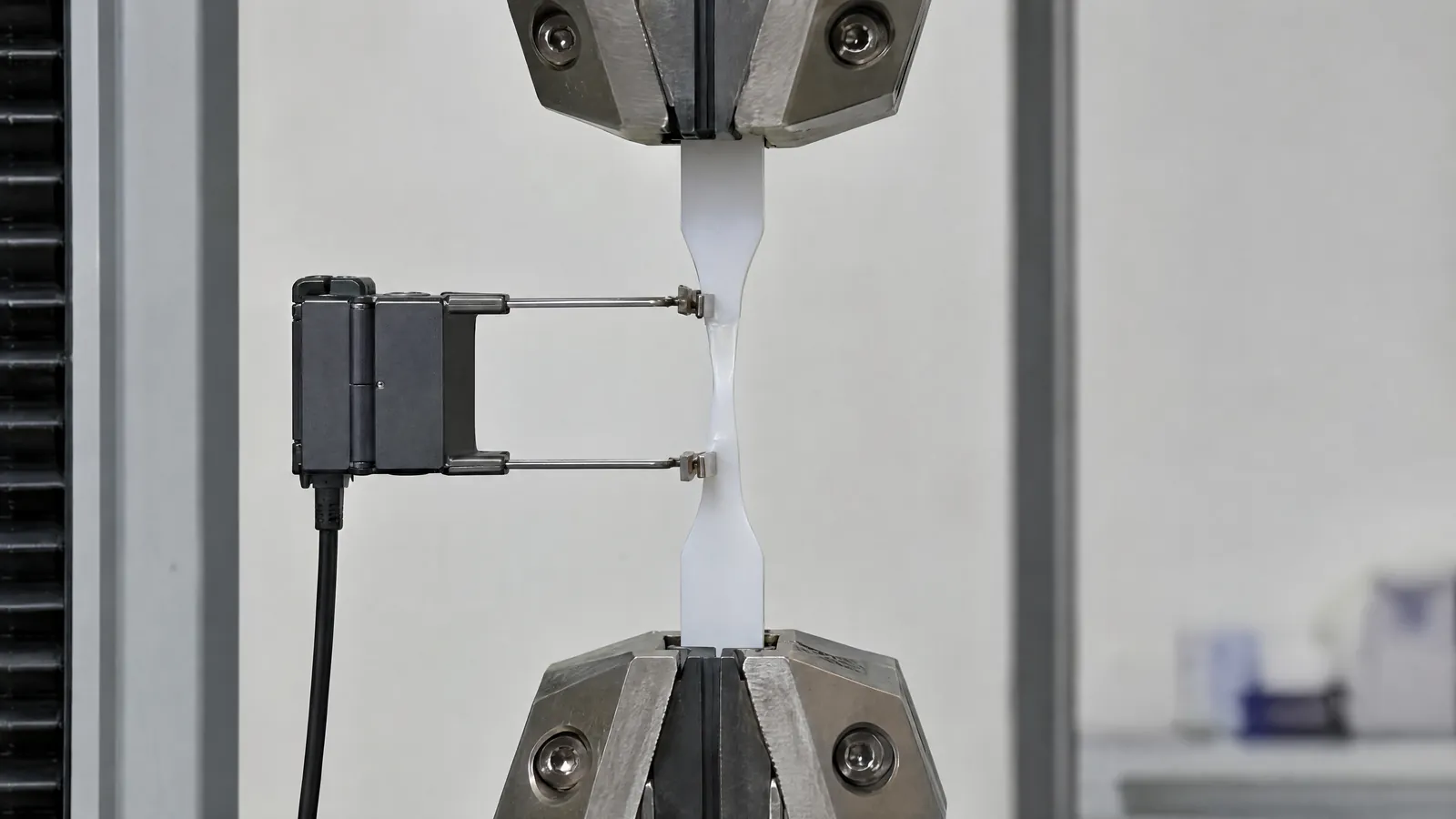
| Tensile strength and elongation at break | ISO 527 | Resistance under axial tensile force, yield point and how far (as a percentage) it elongates before breaking | Balance of flexibility and strength in structural parts and in optimizing filler masterbatch ratios |
| Flexural strength and modulus | ISO 178 | Resistance to bending forces and stiffness | Home appliance housings and automotive panels; the effect of mineral additives such as talc on stiffness is monitored with this test |
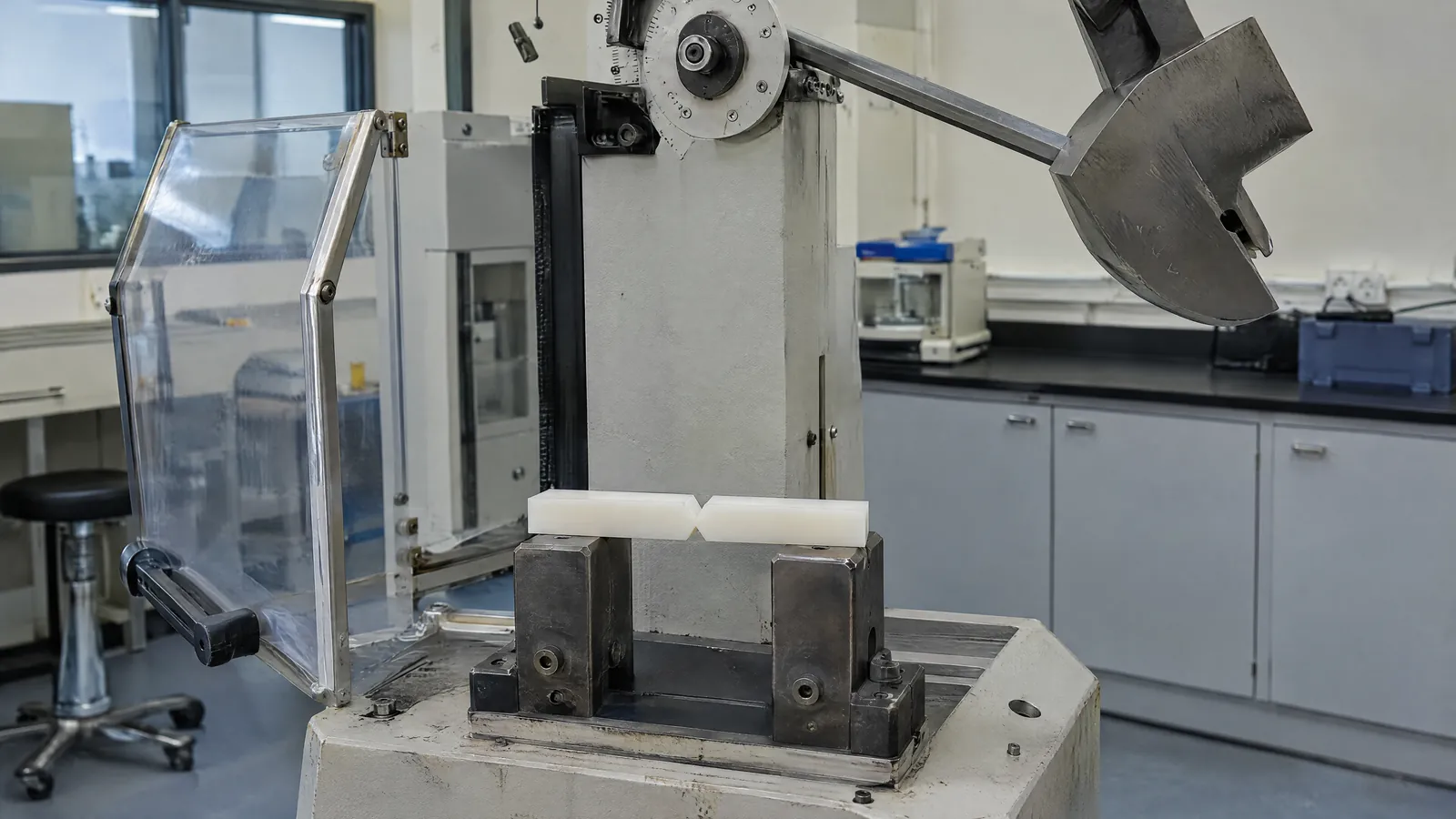
| Impact strength (Charpy / Izod) | ISO 179 / ISO 180 | Ability to absorb energy under sudden impact and shock loads (brittleness or toughness) | Early detection of the risk of brittleness in outdoor plastics used in cold climates |
Critical physical and thermal test methods
Besides mechanical tests, the basic methods that analyze the physical identity and thermal limits of a material are:
| Test | Standard | Purpose |
|---|---|---|
| Melt flow index (MFI / MFR) | ISO 1133 | Processability, flowability and molecular weight stability at a given temperature and weight; flow compatibility between carrier polymer and injection resin |
| Density and specific gravity | ISO 1183 | Weight per unit volume; verification of filler ratios (together with ash content) and consistency of the cost calculation |
| Heat deflection temperature (HDT) | ISO 75 | Resistance to heat under load; part temperature limits |
| Vicat softening point | ISO 306 | Determining the thermal deformation threshold |
Common mistakes in laboratory processes
| Mistake | Consequence |
|---|---|
| Skipping the conditioning period | Testing engineering plastics that absorb moisture in particular without letting them rest in the test environment leads to misleadingly high elongation or low strength results. |
| Choosing the wrong test speed | Not observing the speed limits specified in ISO standards in tensile or flexural tests causes material strength values to be reported incorrectly. |
| Using uncalibrated equipment | Working with equipment whose precision load cells and extensometers have not been calibrated undermines the reliability of quality control. |
Strategic importance in quality control and R&D processes
A reliable test infrastructure and laboratory discipline give companies the following strategic advantages:
- Incoming quality controlVerifying in the laboratory that every incoming raw material lot complies with the standards.
- Formulation optimizationOptimizing the use of cost-reducing fillers or additives in R&D work without compromising mechanical resistance.
- Customer confidence and certificationPhysical and mechanical test results reported to international standards (ISO, ASTM) provide flawless credibility with global buyers.
Conclusion and engineering recommendation
Determining the physical and mechanical properties of plastics with the right methods in a laboratory is the most fundamental engineering discipline that eliminates production losses, prevents unexpected stoppages on injection molding lines and safeguards final product quality. No formulation that is not backed by scientific data should be taken into series production.
Let's find the right solution for your production together
See your requirement in figures with our calculator or request a sample from our laboratory.