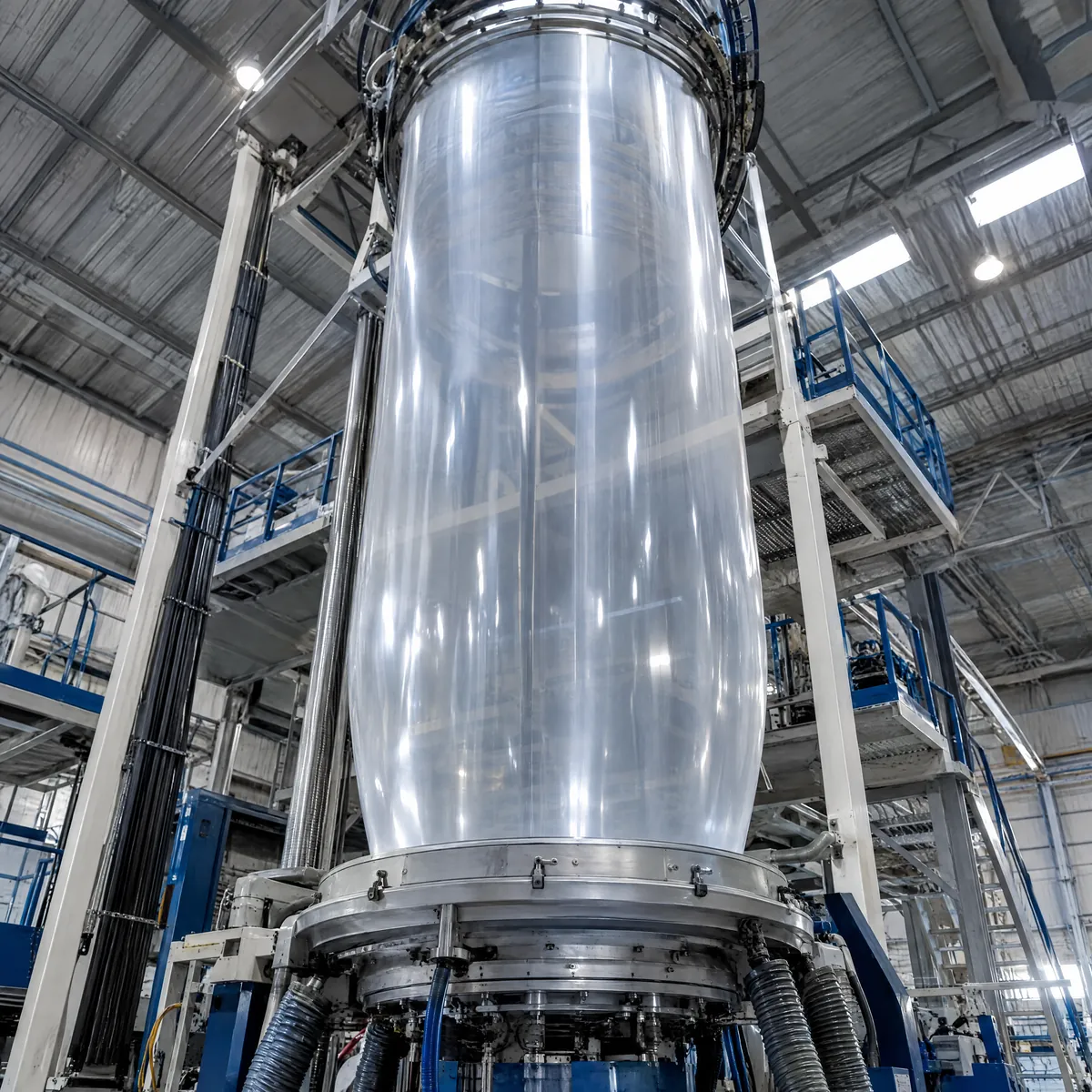
Zero Melt Fracture, Lower Extruder Pressure and Maximum Line Efficiency
Colorex Processing Aid (PPA - Polymer Processing Aid) Masterbatch is an advanced-technology engineering additive designed to eliminate flow defects encountered in the extrusion of high-viscosity polyolefins (LLDPE, mLLDPE, HDPE, HMW-HDPE, PP) and highly filled compounds in particular, to reduce energy consumption and to increase production capacity.
Polymers with a high molecular weight or a narrow molecular weight distribution come into excessive friction with the metal surface as they exit the extruder die lip at high speed. This high shear stress causes dullness and roughness on the film and pipe surface known as "melt fracture" (sharkskin), and the accumulation of "die build-up" (die drool) at the die lip. Colorex PPA Masterbatch adheres to the metal surfaces inside the extruder and to the die channels, forming an ultra-slippery dynamic coating layer at the microscopic level. By allowing the polymer melt to slide along the metal surface without friction, it eliminates all surface defects within seconds.
Key Advantages and Technical Features
Completely Eliminates Melt Fracture (Sharkskin) and DullnessProvides a smooth, glossy, glass-clear film/pipe surface even with hard-to-process raw materials such as LLDPE and mLLDPE.
Stops Die Build-Up and Gel FormationPrevents burnt material from accumulating at the die exit and these particles from breaking off and spoiling the product; reduces downtime and cleaning time.
Lowers Head Pressure and Motor Torque (Amperage)By reducing friction inside the extruder by 15–25%, it makes it possible to run at lower temperatures and provides direct electrical energy savings.
Fast Color and Raw Material ChangeoverBecause it prevents material from adhering in dead spots inside the barrel and head, it cuts the changeover time from dark to light colors and the amount of rejects by up to 50%.
New-Generation PFAS-Free (Fluoropolymer-Free) OptionsIn addition to standard fluoropolymer-based PPAs, we offer PFAS-free (siloxane/modified polymer based) PPA Masterbatch solutions fully compliant with new European Union and US regulations.
Recommended Dosage
Continuous (routine) production: 0.5% - 1.5%
Conditioning a line using PPA for the first time (first 20–30 minutes): 2.0% - 3.0%
Applications and Effects on the Final Product
Applications / Application Areas
LLDPE, mLLDPE and HMW-HDPE packaging, stretch and greenhouse films
PE and PP drinking water, natural gas and drip irrigation pipes
Cable insulation and outer sheath extrusion lines
Film/raffia lines with high calcite filler content or recycled raw material
Blow molding, monofilament and sheet production
Affected Properties / Effects on the Final Product
Elimination of melt fracture (sharkskin): Completely eliminates the surface roughness and irregularity that occur at high speeds.
Surface gloss and transparency: Gives film and pipe surfaces a mirror gloss and high optical clarity.
Gel and black speck control: Prevents material from burning in dead spots inside the barrel, stopping gel defects in the film.
Dimensional and wall thickness stability: Because it balances the flow from the die lip, it provides uniform wall thickness and strength at every point of the product.
Print and seal compatibility: Because it does not affect surface tension, it preserves the quality of printing, lamination and sealing.
Effect on the Process and Production Line
Eliminates downtime by stopping die build-up (die drool) at the die lip.
Lowers extruder head pressure and motor amperage load by 15–25%; increases hourly production capacity (kg/h) and cuts color changeover time by 50%.
Frequently Asked Questions
The most frequently asked questions about processing aid (PPA) masterbatch and their answers. If you cannot find what you are looking for, please contact our team.
How does Processing Aid (PPA) Masterbatch work inside the extruder?
The PPA additive does not dissolve in the base polymer; as it travels along the extruder screw and die channels, it migrates to the metal walls under high pressure and coats the metal surface with a sub-micron layer. As a result, instead of rubbing against the metal, the molten plastic flows quickly over this slippery PPA layer.
What is "Melt Fracture" (Sharkskin) and how does PPA solve it?
When the extruder speed is increased or the LLDPE/mLLDPE ratio is raised, friction at the die lip creates a rough, irregular and dull appearance on the plastic surface resembling fish scales or sharkskin. Because PPA reduces the shear stress at the die lip to zero, it ensures that the surface comes out mirror-smooth even at high speeds.
Does using PPA increase hourly production capacity (kg/h)?
Yes. When PPA is used, head pressure and motor torque (amperage load) drop, so the same machine can be run at higher screw speeds without strain. This results in a net production increase of 10–25% in line capacity.
What advantage does it provide in color changeovers?
The biggest problem in color changeovers is that the previous color sticks to the metal surfaces inside the screw and head. Because PPA coats the metal surface, it prevents the old colorant from adhering to the metal; it cuts the changeover time and the purging material used by half.
What is the recommended let-down ratio (dosage)?
In continuous (routine) production, it is used at 0.5–1.5% to prevent melt fracture and die build-up. On a line where PPA will be used for the first time, it is recommended to feed it at 2.0–3.0% for the first 20–30 minutes so that the metal surface is coated quickly (conditioning), and then to drop to the normal dosage (0.5–1.0%).
What is PFAS-Free (fluorine-free) PPA Masterbatch?
Conventional PPAs contain fluoropolymers (fluoroelastomers). However, PFAS (per- and polyfluoroalkyl substances) restrictions have come onto the agenda in global environmental and food packaging regulations. Colorex offers its customers a PFAS-Free PPA Masterbatch series that is 100% compliant with these new regulations, contains no fluorine and delivers the same high performance.
Are Slip Masterbatch and PPA Masterbatch the same thing?
No, they are completely different. Slip Masterbatch migrates to the product surface after the film has been produced and cooled, allowing the bag to slide on the packaging machine. PPA Masterbatch works only inside the extruder (as the hot melt exits the metal die); it does not change the surface slip of the finished product.
Does it work with highly calcite-filled or recycled raw materials?
It offers very great benefits. Calcite-filled and recycled raw materials build up die drool very quickly at the die lip and raise filter pressure. PPA stops this build-up and extends uninterrupted running time.
Does it affect printing, lamination or sealing?
No. Because PPA works by adhering to the die metal and does not form a free oily layer on the finished film surface, it definitely does not adversely affect the corona level, printing ink adhesion, lamination or heat seal strength.
Does it interact with antiblock or pigments?
Since very highly abrasive coarse fillers can scrape off the thin PPA layer on the die wall, it is recommended to keep the PPA dosage in the 1.0–1.5% range in such formulations. It is fully compatible with all color and additive masterbatches.