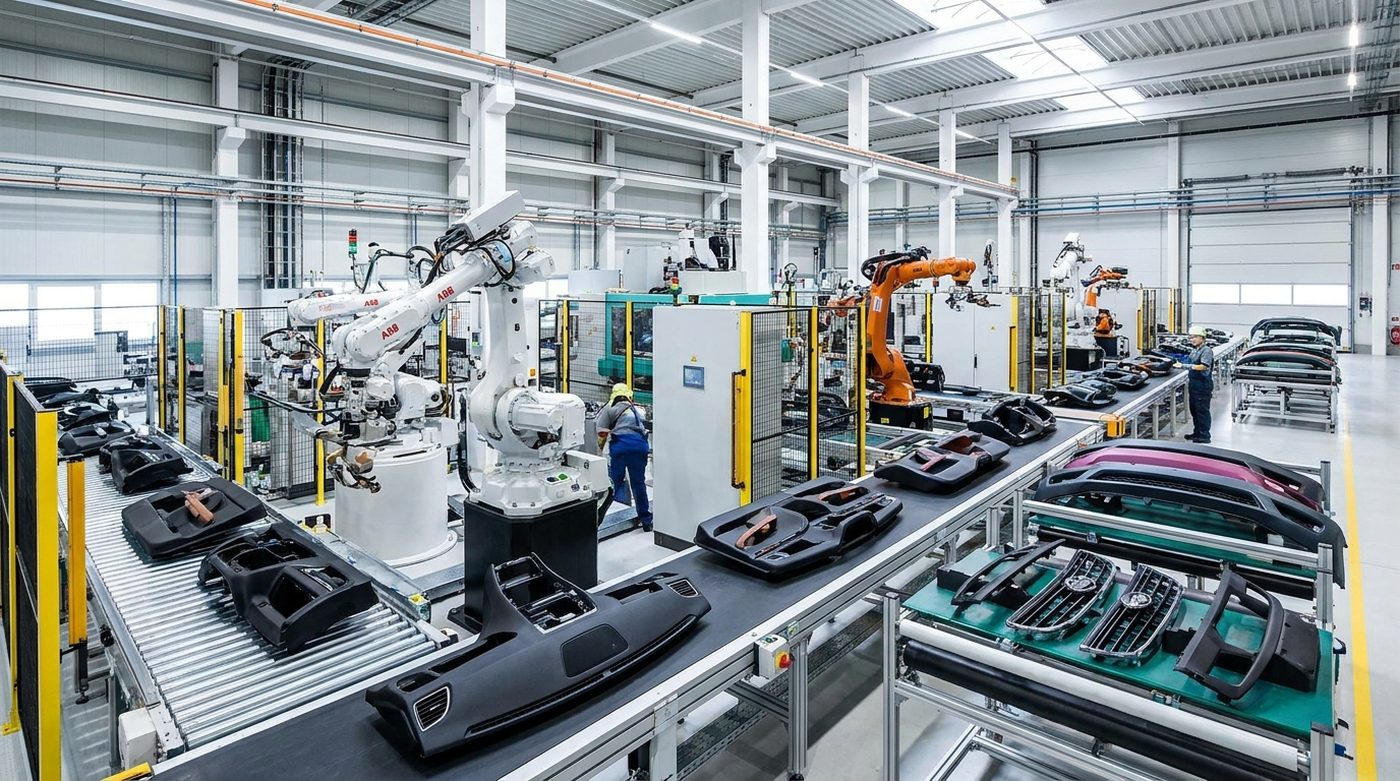
As Colorex, operating in Bursa, the heart of the Turkish automotive industry, we fully meet the industry's most demanding quality and durability standards. Focusing on reducing vehicle weight and emissions, we enhance the mechanical strength and thermal stability of plastic parts to levels competitive with metal.
Our Specific Application Areas
Interior Trim: Solutions focused on low odour (VOC) and high scratch resistance for dashboard panels and door handles.
Exterior Trim: High UV resistance and impact resistance for bumper brackets and mirror housings.
Under-hood: High thermal stability and chemical resistance for radiator tanks and engine covers.
Why Colorex?
Color Precision: Flawless visual harmony with Delta E < 1.0 and inter-batch consistency.
Technical Standards: IATF 16949:2016 quality management, full REACH and RoHS compliance.
Laboratory Verification: Digital reporting with ISO 4892 (UV), ISO 1133 (MFI), and ISO 179 (Impact) tests.
Field Support: We stand by all our engineers and production masters on the line 24/7, just a phone call away.
MAIN PROBLEMS AND SOLUTIONS IN THE AUTOMOTIVE SECTOR
Common Problems and Solutions
A technical guide of 300 questions compiled from the field experience of the Colorex engineering team.
Automotive Interior Trim — Increased volatile organic compound emission and heavy odor formation with temperature in polypropylene-based panels.
Molecular retention must be provided with a zeolite-based odor-eliminating Colorex additive Masterbatch that traps free monomers in the polymer matrix, and pure Colorex Masterbatch should be used for coloring.
Electric Vehicles — Spread of flame and structural collapse at the moment of thermal runaway in battery enclosures.
Polyphenylene sulfide polymer should be selected, and a phosphorus-based halogen-free flame retardant Colorex additive Masterbatch that absorbs heat with an endothermic reaction, along with an insulating black Colorex Masterbatch, should be used.
Automotive Exterior Trim — Photo-oxidative degradation and surface chalking in bumpers due to ultraviolet rays.
Protection should be provided with an ultraviolet absorbing Colorex additive Masterbatch containing hindered amine light stabilizers, and a high light fastness Colorex Masterbatch should be preferred.
Automotive Interior Trim — Microscopic splits and permanent scratches on dashboard surfaces caused by friction.
An anti-scratch Colorex additive Masterbatch containing siloxane polymer that lowers surface energy, and a specially formulated Colorex Masterbatch that provides a matte finish should be used.
Electric Vehicles — Electrical arc formation and dielectric breakdown in high voltage connectors.
An insulating Colorex additive Masterbatch that increases comparative tracking index and an insulating orange Colorex Masterbatch containing no ionic impurities must be included in the process.
Automotive Under the Hood — Hydrolytic degradation of polyamide in radiator tanks due to a hot glycol and water mixture.
A carbodiimide-based hydrolysis stabilizer Colorex additive Masterbatch that protects amide bonds against acidic water attack and a heat-resistant Colorex Masterbatch should be used.
Electric Vehicles — Electromagnetic interference causing system errors in electronic control units.
A carbon nanotube-based electromagnetic shielding Colorex additive Masterbatch and a black Colorex Masterbatch that supports conductivity should be used.
Automotive Interior Trim — Contacting plastic parts emitting squeak noises by rubbing under vibration.
A sound damping Colorex additive Masterbatch containing ultra-high molecular weight silicone that resets surface friction, and a compatible Colorex Masterbatch should be used.
Automotive Lighting — Yellowing of polycarbonate in headlight lenses due to temperature and sun effects.
A benzotriazole-based ultraviolet absorbing Colorex additive Masterbatch and a transparent formulated Colorex Masterbatch that enhances light transmittance should be used.
Automotive Under the Hood — Diffusion of fuel molecules out of the polymer matrix in fuel tank plastics.
A nucleating Colorex additive Masterbatch that tightens the matrix by increasing the degree of crystallization, and a chemical corrosion-resistant Colorex Masterbatch should be used.
Automotive Lightweighting — The necessity of reducing weight in large body parts without a loss of strength.
A foaming Colorex additive Masterbatch that creates a closed-cell microcellular structure with controlled gas release, and a high-density Colorex Masterbatch should be used.
Electric Vehicles — Overheating of cells as a result of insufficient thermal conductivity in battery cooling plates.
A thermally conductive Colorex additive Masterbatch with ceramic fillers that conducts heat without disrupting electrical insulation, and an inorganic Colorex Masterbatch should be used.
Automotive Exterior Trim — Peeling of paint from the polymer surface and weak adhesion in painted bumpers.
A polar-modified Colorex additive Masterbatch that establishes bonds with paint chemicals by increasing surface polarity, and a Colorex Masterbatch with an appropriate carrier should be used.
Automotive Under the Hood — Fatigue cracks in engine covers caused by high-frequency vibration.
An elastomeric impact resistance enhancing Colorex additive Masterbatch that damps crack propagation, and a chemical-resistant Colorex Masterbatch should be used.
Automotive Interior Trim — Mechanical failure caused by wear in seat belt mechanisms.
An anti-wear Colorex additive Masterbatch providing polytetrafluoroethylene-based dry lubrication, and a Colorex Masterbatch that supports surface homogeneity should be used.
Electric Vehicles — Melting of the polymer due to overheating of fast charging sockets under high current.
A high-temperature stabilizer Colorex additive Masterbatch that delays thermal oxidation breakages, and a Colorex Masterbatch that reduces heat absorption should be used.
Automotive Recycling — Phase separation caused by the mixing of different polymers in recovered plastics.
A compatibilizer Colorex additive Masterbatch that establishes a molecular bridge between two different polymer phases, and a Colorex Masterbatch with high opacity should be used.
Automotive Interior Trim — Glare and loss of visual comfort caused by sun reflection on dashboards.
A matting Colorex additive Masterbatch that refracts light by creating microscopic roughness on the surface, and a low-reflection black Colorex Masterbatch should be used.
Automotive Under the Hood — Swelling of cable protective plastics as a result of contact with engine oils.
A crystal regulator Colorex additive Masterbatch that prevents oil penetration by reducing the free volume of the polymer, and an oil-resistant Colorex Masterbatch should be used.
Automotive Exterior Trim — Corrosion formation on chrome-look parts due to salts poured in winter.
An acid scavenger Colorex additive Masterbatch that neutralizes chloride ion attacks, and a special Colorex Masterbatch supporting the metallic appearance should be used.
Electric Vehicles — Shrinkage of battery cell separator plastics under heating, leading to short circuits.
A ceramic-supported dimensional stabilizer Colorex additive Masterbatch that mechanically prevents dimensional shrinkage, and an inactive Colorex Masterbatch should be used.
Automotive Production — Warpage caused by large parts shrinking at different rates during cooling in injection molding.
A nucleating Colorex additive Masterbatch that homogeneously distributes internal stresses by accelerating crystallization, and a dimensionally stable Colorex Masterbatch should be used.
Automotive Interior Trim — Separation of fabric from the plastic panel in roof linings due to moisture and heat.
A reactive Colorex additive Masterbatch that strengthens the adhesive bond by creating chemically active ends on the polymer surface, and a compatible Colorex Masterbatch should be used.
Electric Vehicles — Brittle fracture of charging socket covers when subjected to impact in freezing cold weather.
An elastomeric impact modifier Colorex additive Masterbatch that keeps the polymer ductile by lowering the glass transition temperature, and a cold-resistant Colorex Masterbatch should be used.
Automotive Under the Hood — Static electrical discharges in air filter boxes due to high airflow.
An ionic antistatic Colorex additive Masterbatch that prevents charge accumulation and spreads it over the entire surface, and a black Colorex Masterbatch that hides carbon buildup should be used.
Automotive Lighting — Water stains formed as a result of moisture condensation on the inner surface of headlight housings.
A hydrophobic surface modifier Colorex additive Masterbatch that prevents water molecules from clinging to the surface, and a Colorex Masterbatch that does not outgas should be used.
Automotive Exterior Trim — Permanent creep deformation formed over time under aerodynamic load in spoiler plastics.
A high aspect ratio mineral-reinforced stiffness enhancing Colorex additive Masterbatch that restricts chain mobility, and a high fastness Colorex Masterbatch should be used.
Electric Vehicles — Thermal fatigue cracks caused by high-frequency switching in inverter housings.
An inorganic filler-based stabilizer Colorex additive Masterbatch that brings the thermal expansion coefficient closer to metal, and a thermally stable Colorex Masterbatch should be used.
Automotive Interior Trim — Permanent soiling of light gray interior plastic components by air pollution.
A fluoropolymer-based stain resistance enhancing Colorex additive Masterbatch that creates a dirt-repellent barrier on the surface, and a yellowing-resistant light-toned Colorex Masterbatch should be used.
Automotive Under the Hood — Explosion risk as a result of static electricity accumulation in fuel tank plastics.
A carbon nanotube-based conductive Colorex additive Masterbatch that transmits electrical charge to the ground, and a black Colorex Masterbatch supporting conductivity should be used.
Automotive Chassis — Degradation of brake fluid as a result of moisture absorption through the polymer in the brake fluid reservoir.
A barrier-enhancing Colorex additive Masterbatch that reduces water vapor permeability by tightening the crystal structure, and an oil-resistant Colorex Masterbatch should be used.
Electric Vehicles — Cracking of high-voltage busbar insulations during thermal cycles.
An elastomeric modification Colorex additive Masterbatch that damps the thermal stress at the polymer-metal interface, and an orange warning Colorex Masterbatch should be used.
Automotive Interior Trim — Shrinkage of leather-look coverings on the dashboard due to sunlight.
A molecular cross-linking Colorex additive Masterbatch that minimizes thermal shrinkage, and an automotive-grade Colorex Masterbatch fully resistant to ultraviolet rays should be used.
Automotive Powertrain — Wear and gear stripping occurring under torque in plastic gear wheels.
A nano-ceramic filler-based hardening Colorex additive Masterbatch that reduces surface friction without turning into heat, and a high-purity Colorex Masterbatch should be used.
Automotive Lighting — Burning of the chip as a result of the plastic's inability to dissipate heat in LED coolers.
A graphite-based thermally conductive Colorex additive Masterbatch that conducts heat while maintaining electrical insulation, and a black formulated Colorex Masterbatch should be used.
Automotive Exterior Trim — Cracking of the polymer due to the expansion of freezing water in door handle mechanisms.
A silicone-based water repellent Colorex additive Masterbatch that makes it difficult for water to form ice crystals, and an exterior-compatible Colorex Masterbatch should be used.
Electric Vehicles — Short-circuiting of plastic parts in electric motor winding heads due to crumbling under vibration.
A nano-fiber reinforced strength enhancing Colorex additive Masterbatch that increases molecular bond energy, and a high voltage-resistant Colorex Masterbatch should be used.
Automotive Under the Hood — Air leakage resulting from swelling under high pressure in turbo air pipes.
A branching agent Colorex additive Masterbatch that preserves the form under pressure by increasing melt strength, and an engine-compatible Colorex Masterbatch should be used.
Automotive Interior Trim — Surface stickiness caused by the effect of hand sweat on steering wheel plastics.
An acid scavenger stabilizer Colorex additive Masterbatch that neutralizes the acids in sweat, and a highly fast Colorex Masterbatch that does not chemically react should be used.
Automotive Exterior Trim — Friction noise and skipping of wiper plastics on the glass surface.
A graphite-based surface modifier Colorex additive Masterbatch that permanently lowers the friction coefficient, and a weather-resistant Colorex Masterbatch should be used.
Electric Vehicles — Short-circuiting of battery management boards due to moisture and corrosion.
An anti-corrosion Colorex additive Masterbatch that provides a moisture barrier and protects metallic components, and a pure Colorex Masterbatch that does not create leakage current should be used.
Automotive Chassis — Loss of elasticity in suspension mounts under continuous load.
An elastomeric Colorex additive Masterbatch that increases the recovery elasticity of the polymer and delays fatigue, and a Colorex Masterbatch resistant to dynamic stress should be used.
Automotive Interior Trim — Hidden strength loss caused by ultraviolet light in baby seat connection plastics.
A high-concentration light stabilizer Colorex additive Masterbatch that stops the photo-oxidative cleavage of chains, and an automotive-approved Colorex Masterbatch should be used.
Automotive Under the Hood — Breaking of dipstick plastics by reacting with the acids in engine oil.
An amine-based stabilizer Colorex additive Masterbatch that protects polymer bonds in an acidic environment, and a special Colorex Masterbatch that does not dissolve in hot oil should be used.
Automotive Lighting — Fading of signal lamp plastics from orange to yellow with sunlight.
An inorganic ultraviolet blocking Colorex additive Masterbatch that preserves the chemical structure of the pigment, and a signal orange Colorex Masterbatch with optical transmittance should be used.
Electric Vehicles — Piercing of the fast charging cable sheath due to abrasion from dragging on asphalt.
A ceramic-based anti-wear Colorex additive Masterbatch that increases surface hardness and friction resistance, and a Colorex Masterbatch that does not transfer its color should be used.
Automotive Interior Trim — Whitening and cracking marks formed by stepping on the seat rail plastic covers.
An elastomeric phase modification Colorex additive Masterbatch that distributes stress concentration, and a scratch-resistant Colorex Masterbatch should be used.
Automotive Exterior Trim — Weak reception resulting from the absorption of radio waves in antenna housings.
An ultra-pure stabilizer Colorex additive Masterbatch that minimizes dielectric loss, and a carbon-free Colorex Masterbatch that does not block electromagnetic signals should be used.
Automotive Under the Hood — Wear of the engine water pump impeller due to cavitation effects.
A nano-composite Colorex additive Masterbatch that limits bubble formation and increases impact resistance, and a hot water-resistant inorganic Colorex Masterbatch should be used.
Automotive Production — Growth of microscopic stress cracks (crazing) that form in parts after injection but are invisible to the eye.
A stress-relieving Colorex additive Masterbatch that reduces internal stress between polymer chains, and a Colorex Masterbatch with a special carrier that will not disrupt the polymer's structure should be used.
Automotive Interior Trim — Blowing of bad air caused by mold and fungus in ventilation channels.
A silver-ion antimicrobial Colorex additive Masterbatch that stops reproduction by rupturing cell membranes, and a homogeneously structured Colorex Masterbatch should be used.
Electric Vehicles — Dissolution of the polymer in battery cell frames due to electrolyte leakage.
A polymer stabilizer Colorex additive Masterbatch that creates a barrier against electrolyte chemicals, and a non-reactive inorganic Colorex Masterbatch should be used.
Automotive Exterior Trim — Surface fragmentation of under-door protective moldings by stones splashing from the road.
A rubber-based toughness enhancing Colorex additive Masterbatch that disperses impact energy, and an outdoor weather-resistant black Colorex Masterbatch should be used.
Automotive Under the Hood — Softening of brake fluid reservoirs due to brake fluid seeping into the plastic.
A crystallization regulator Colorex additive Masterbatch that narrows the free volume of the polymer, and a hydraulic fluid-resistant Colorex Masterbatch should be used.
Automotive Interior Trim — Micro scratches caused by cleaning cloths on instrument panel lenses.
An anti-scratch Colorex additive Masterbatch that increases surface hardness at the molecular level, and a transparent Colorex Masterbatch that does not reduce optical transmittance should be used.
Electric Vehicles — Inductive heating in plastic enclosures during high-frequency current switching.
A nano-filled thermally conductive Colorex additive Masterbatch that optimizes heat dissipation, and a pure Colorex Masterbatch that supports electrical insulation should be used.
Automotive Exterior Trim — Loosening and falling of wheel hub plastics due to heat radiating from brake pads.
A mineral-reinforced Colorex additive Masterbatch that limits thermal expansion and preserves dimensional form, and a heat-resistant silver effect Colorex Masterbatch should be used.
Automotive Under the Hood — Weld separation caused by vibration and temperature in intake manifold plastics.
A reactive surface modifier Colorex additive Masterbatch that increases laser and vibration welding performance, and a black Colorex Masterbatch that strengthens the joint should be used.
Automotive Interior Trim — Jamming and difficult opening of the center console sliding cover mechanism over time.
A silicone-based slip Colorex additive Masterbatch that reduces friction with a dry lubrication effect, and a Colorex Masterbatch providing surface smoothness should be used.
Electric Vehicles — High risk of mechanical impact and puncture in battery under-protection plates.
A long-chain branching Colorex additive Masterbatch that increases shear and puncture resistance, and a black Colorex Masterbatch that does not reduce mechanical performance should be used.
Automotive Exterior Trim — Permanent stretching deformation in roof rail plastics under continuous wind load.
A glass fiber compatibilizer Colorex additive Masterbatch that increases rigidity and flexural modulus, and a highly fade-resistant Colorex Masterbatch should be used.
Automotive Under the Hood — Plastic wear in oil pump housings with impurities in hot engine oil.
A ceramic-filled anti-wear Colorex additive Masterbatch that increases surface hardness, and a chemical oxidation-resistant Colorex Masterbatch should be used.
Automotive Interior Trim — Embrittlement of the polymer in roof lighting panels due to the heat of the light source.
A thermal antioxidant Colorex additive Masterbatch that raises the continuous service temperature value, and a light-diffusing Colorex Masterbatch that prevents lamp yellowing should be used.
Electric Vehicles — Signal absorption and reading errors in autonomous driving lidar sensor covers.
A specially formulated stabilizer Colorex additive Masterbatch that transmits infrared and radar signals, and a carbon-free black Colorex Masterbatch that does not absorb signals should be used.
Automotive Exterior Trim — Whitening of exterior door moldings caused by caustic-based car wash shampoos.
An acid-base scavenger Colorex additive Masterbatch that stops chemical attacks on the surface, and an inorganic Colorex Masterbatch fully resistant to cleaning chemicals should be used.
Automotive Under the Hood — Leakage resulting from gasoline vapor diffusion in fuel vapor recovery valves.
A hydrocarbon barrier-enhancing Colorex additive Masterbatch that reduces the free volume of the polymer, and a pressure-resistant black Colorex Masterbatch should be used.
Automotive Interior Trim — Fatigue breakage of the indicator stalk behind the steering wheel after millions of uses.
A nucleating Colorex additive Masterbatch that increases dynamic fatigue resistance and regulates crystal structure, and a colorfast Colorex Masterbatch should be used.
Electric Vehicles — Cavitation and corrosion interaction in battery cooling pump plastics.
A nano-composite Colorex additive Masterbatch combining anti-corrosion and impact-absorbing properties, and a chemical degradation-resistant Colorex Masterbatch should be used.
Automotive Exterior Trim — Circular micro-scratches created by automatic washing brushes on side mirror housings.
An erucamide-based anti-scratch Colorex additive Masterbatch that creates a slippery protective film on the surface, and a Colorex Masterbatch that maintains gloss should be used.
Automotive Under the Hood — Breaking of bonds and loss of damping in engine mount plastics due to engine vibration.
An elastomeric modification Colorex additive Masterbatch that converts vibration energy into heat and damps it, and a heat buildup-resistant black Colorex Masterbatch should be used.
Automotive Interior Trim — Coins rattling and abrading the surface in door storage pockets.
An elastomeric surface modifying Colorex additive Masterbatch that softens the surface and provides sound insulation, and a Colorex Masterbatch that does not disrupt the texture feel should be used.
Electric Vehicles — Plastic supports used in inverter circuits emitting dense toxic smoke in the event of a flame.
A halogen-free flame retardant Colorex additive Masterbatch that suppresses smoke formation, and an insulating Colorex Masterbatch with high thermal shock resistance should be used.
Automotive Exterior Trim — Matting of rear license plate lighting lenses resulting from contact with exhaust gas acids.
A chemical resistance-enhancing stabilizer Colorex additive Masterbatch that stops acidic attacks, and a transparent Colorex Masterbatch that preserves optical clarity should be used.
Automotive Under the Hood — Formation of micro-cracks in crankshaft sensor housings due to engine vibration.
A stress-relieving Colorex additive Masterbatch that regulates molecular mobility and reduces internal stress, and a black Colorex Masterbatch resistant to engine conditions should be used.
Automotive Interior Trim — Leather coverings on the dashboard shrinking in cold winters and expanding and peeling in summer.
A dimensional stabilizer Colorex additive Masterbatch that minimizes the thermal expansion coefficient, and a Colorex Masterbatch capable of withstanding high-temperature cycles should be used.
Electric Vehicles — Loosening resulting from the creep of plastic in battery enclosure mounting bolts over time.
A creep resistance enhancing Colorex additive Masterbatch that prevents the sliding of polymer chains under load, and a Colorex Masterbatch that preserves mechanical performance should be used.
Automotive Exterior Trim — Additives bleeding to the surface over time in window molding plastics, causing white stains.
An anti-migration stabilizer Colorex additive Masterbatch that prevents uncontrolled migration of additives to the surface, and a black Colorex Masterbatch with high pigment stability should be used.
Automotive Under the Hood — Inward collapse and deformation under vacuum in intake manifold plastics.
A mineral-reinforced stiffness enhancing Colorex additive Masterbatch that increases flexural modulus, and a black Colorex Masterbatch supporting the dimensional form should be used.
Automotive Interior Trim — Accidentally dropped embers leaving burn marks on ashtray and lighter plastics.
An endothermic cooling Colorex additive Masterbatch providing resistance against localized high temperatures, and a high flame resistance Colorex Masterbatch should be used.
Electric Vehicles — Electrical interference and capacitive charging in DC and AC current converter plastics.
An insulation-enhancing Colorex additive Masterbatch that has a low dielectric constant and prevents charge accumulation, and a carbon-free pure Colorex Masterbatch should be used.
Automotive Exterior Trim — Regional color fading due to the acidic effect of bird droppings on vehicle antenna housings.
A barrier-featured chemical resistance enhancing Colorex additive Masterbatch that blocks acid reactions on the surface, and an inorganic black Colorex Masterbatch should be used.
Automotive Under the Hood — Loss of flexibility and breaking in brake vacuum hose holders at low temperatures.
An elastomeric impact modifier Colorex additive Masterbatch that keeps the polymer ductile by lowering the glass transition temperature, and a cold-resistant Colorex Masterbatch should be used.
Automotive Interior Trim — The surface rapidly fading and matting with finger touches on roof lighting buttons.
A nano-particle anti-scratch Colorex additive Masterbatch that increases surface hardness, and a Colorex Masterbatch that increases laser marking contrast should be used.
Electric Vehicles — Structural shattering of charging station connector bodies the moment they drop to the ground.
A high toughness-enhancing Colorex additive Masterbatch that damps impact energy at the molecular level, and a Colorex Masterbatch suitable for outdoor use should be used.
Automotive Exterior Trim — Formation of star cracks due to the impact of small stones bouncing off the highway on front grille plastics.
A rubber-phase impact modification Colorex additive Masterbatch that absorbs the impact and stops crack propagation, and a glossy formulated black Colorex Masterbatch should be used.
Automotive Under the Hood — Micro leaks formed by extreme temperature fluctuations in thermostat housing plastics.
A nucleating Colorex additive Masterbatch that preserves dimensional stability against thermal shocks, and a Colorex Masterbatch resistant to high continuous use temperatures should be used.
Automotive Interior Trim — Regional expansion of the polymer due to hot coffee spills on cup holder plastics.
A mineral-reinforced dimensional stabilizer Colorex additive Masterbatch that limits the thermal expansion coefficient, and a heat-resistant stain-repellent Colorex Masterbatch should be used.
Electric Vehicles — Melting of battery cable protection sheaths by rubbing against other parts in the engine compartment.
A ceramic-filled anti-friction Colorex additive Masterbatch that increases wear resistance and thermal durability, and an orange warning color Colorex Masterbatch should be used.
Automotive Exterior Trim — Destruction of inner fender moldings by salty snow and ice splashing from the wheel in winter.
A special stabilizer Colorex additive Masterbatch that increases chemical salt resistance and cold toughness, and an impact-resistant black Colorex Masterbatch should be used.
Automotive Under the Hood — Leaking from the gasket surface due to temperature differences at oil cooler plastic inlets.
A special mineral-reinforced Colorex additive Masterbatch that brings thermal expansion closer to metal and provides conformity, and a dimensionally stable black Colorex Masterbatch should be used.
Automotive Interior Trim — Tearing of gear bellows over time with continuous folding and bending movements.
An elastomeric flexibility-providing Colorex additive Masterbatch that extends dynamic fatigue life and preserves flexibility, and a bending-resistant Colorex Masterbatch should be used.
Electric Vehicles — Hydrolysis with anti-corrosion fluids at battery cooling radiator plastic inlets.
A hydrolysis stabilizer Colorex additive Masterbatch that stops glycol and chemical attacks, and a protective black Colorex Masterbatch compatible with the polymer matrix should be used.
Automotive Exterior Trim — License plate holders hitting the trunk lid, causing vibration noise and scratching the paint.
A softening elastomer modification Colorex additive Masterbatch that cuts vibration and acts as a buffer, and a black Colorex Masterbatch suitable for outdoor weather conditions should be used.
Automotive Under the Hood — Permanent shape distortion forming over time under extreme load and temperature in engine mount connections.
A structural stabilizer Colorex additive Masterbatch that increases creep resistance and maintains rigidity at high temperatures, and a mechanically strengthening black Colorex Masterbatch should be used.
Automotive Interior Trim — Looseness and squeaking formed after thousands of cycles in sun visor mirror hinges.
A crystal structure regulating Colorex additive Masterbatch that increases fatigue resistance and stops wear, and a Colorex Masterbatch optimizing the friction coefficient should be used.
Electric Vehicles — Risk of puncture from road impacts in battery boxes placed under the vehicle chassis.
A ballistic-grade toughness-maximizing impact modification Colorex additive Masterbatch with high impact absorption properties, and a protective Colorex Masterbatch should be used.
Automotive Exterior Trim — Puncture of caravan and SUV roof plastics by hail impact during stormy weather.
A low-temperature impact modifier Colorex additive Masterbatch that provides toughness even below room temperature, and a weather-resistant Colorex Masterbatch should be used.
Automotive Under the Hood — Melting of plastics around the exhaust gas recirculation valve at heats exceeding two hundred degrees.
An ultra-thermal stabilizer Colorex additive Masterbatch that raises continuous heat resistance and stops oxidation, and a black Colorex Masterbatch that does not heat shrink should be used.
Automotive Interior Trim — Colors bleeding and transferring to gloves due to acid and sweat on steering wheel buttons.
A binder Colorex additive Masterbatch that increases chemical resistance and prevents pigment migration, and a high-fastness automotive-grade Colorex Masterbatch should be used.
Electric Vehicles — Burning of circuits because heat dissipation cannot be achieved in electronic module plastics.
A thermally conductive Colorex additive Masterbatch that is electrically insulating but conducts heat linearly, and an inorganic black Colorex Masterbatch suitable for electronic parts should be used.
Automotive Production — Breaking and degradation of the molten polymer during fast production in the injection machine.
A polymer process aid Colorex additive Masterbatch that lowers internal friction and regulates fluidity, and a Colorex Masterbatch that prevents thermal degradation should be used.
Automotive Interior Trim — The "new car" smell reaching an overwhelming level with sunlight on dashboard top covers.
An adsorbent odor-trapping Colorex additive Masterbatch that molecularly binds the chemical volatiles causing the odor, and a high-purity Colorex Masterbatch should be used.
Automotive Exterior Trim — Hubcaps losing their shape and popping out of place due to sudden high heat coming from the brakes.
A thermal stabilizer reinforcing Colorex additive Masterbatch that limits thermal expansion and preserves bolt holding power, and a heat-resistant silver metallic Colorex Masterbatch should be used.
Automotive Under the Hood — Micro-cracks formed by engine vibration in crank sensor housings turning into breakages.
A nucleating Colorex additive Masterbatch that damps vibration energy and protects structural integrity, and a black Colorex Masterbatch resistant to mechanical vibrations should be used.
Electric Vehicles — Accumulation of static electricity during charging in plastics used for battery cell insulation.
A carbon nanotube antistatic Colorex additive Masterbatch that creates a conductive network structure at an ESD-safe level, and a high voltage-resistant black Colorex Masterbatch should be used.
Automotive Interior Trim — Fabric on door panels separating from the plastic surface by "ballooning" and sagging.
An adhesion-enhancing Colorex additive Masterbatch that holds the adhesive at the molecular level by increasing polar ends on the surface, and a Colorex Masterbatch in colors matching the fabric should be used.
Automotive Exterior Trim — Side mirrors fatiguing and loosening from their mounting bases due to wind and vibration.
A crystal-structured Colorex additive Masterbatch that increases dynamic fatigue resistance and prevents crack initiation, and a black Colorex Masterbatch providing high toughness should be used.
Automotive Under the Hood — Embrittlement of the polymer resulting from gasoline vapor diffusion in fuel vapor hose holders.
A barrier-enhancing Colorex additive Masterbatch that stops fuel leakage by closing the free volume of the polymer, and a chemical-resistant black Colorex Masterbatch should be used.
Electric Vehicles — Risk of short circuit in the vehicle resulting from glycol leakage at the cooling radiator plastic inlets.
A hydrolysis stabilizer Colorex additive Masterbatch that stops glycol attack and provides sealing, and a black Colorex Masterbatch compatible with the polymer matrix should be used.
Automotive Interior Trim — Rubber bases in cup holders melting in hot weather and taking on a sticky state.
An ultraviolet light protecting Colorex additive Masterbatch that stops sunlight-induced degradation and preserves molecular integrity, and a heat-resistant black Colorex Masterbatch should be used.
Automotive Exterior Trim — Blackening and matting of rear license plate lighting lenses resulting from contact with hot exhaust gas acids.
A chemical resistance-enhancing Colorex additive Masterbatch that stops acidic attack and preserves optical clarity, and a light-transmitting transparent Colorex Masterbatch should be used.
Automotive Under the Hood — Wear created by metal shavings inside the oil in oil pump gears.
A ceramic-filled anti-wear Colorex additive Masterbatch that increases surface hardness and prevents abrasion, and a black Colorex Masterbatch that preserves mechanical integrity should be used.
Electric Vehicles — Wear caused by friction as a result of continuous plugging and unplugging in charging station connectors.
A silicone-based slip Colorex additive Masterbatch that minimizes the surface friction coefficient, and a black Colorex Masterbatch formulated against wear should be used.
Automotive Interior Trim — Hidden strength loss in seat rail plastic covers due to sunlight and ultraviolet effects.
A high-concentration light stabilizer Colorex additive Masterbatch that stops photo-oxidative breakages, and an automotive-grade Colorex Masterbatch that preserves mechanical performance should be used.
Automotive Exterior Trim — Roof rail plastic mounting bases leaking water in pressurized washes.
An ozone-resistant Colorex additive Masterbatch that preserves its flexibility in all weather conditions and provides sealing, and a black Colorex Masterbatch fully compatible with the outdoor environment should be used.
Automotive Under the Hood — Brake vacuum hose holders losing flexibility and breaking at low temperatures in winter months.
An elastomeric impact modifier Colorex additive Masterbatch that keeps the polymer ductile by lowering the glass transition temperature, and a black Colorex Masterbatch resistant to cold impacts should be used.
Electric Vehicles — Melting of battery management unit plastics due to overheating and electronic failure.
A thermally conductive Colorex additive Masterbatch that rapidly dissipates heat and preserves electrical insulation, and an inorganic black Colorex Masterbatch suitable for electronic use should be used.
Automotive Interior Trim — Coins thrown on center console plastics scratching the surface and creating a bad appearance.
An elastomeric surface modification Colorex additive Masterbatch that increases surface hardness and absorbs impact, and a matte-textured Colorex Masterbatch that hides scratches should be used.
Automotive Exterior Trim — Front grille plastics forming star cracks due to the impact of small stones bouncing off the highway.
A rubber-phase impact modification Colorex additive Masterbatch that absorbs the impact and stops crack propagation, and a black Colorex Masterbatch that preserves a glossy appearance should be used.
Automotive Under the Hood — Permanent shape distortion forming over time under extreme heat and load in engine mount connections.
A structural stabilizer Colorex additive Masterbatch that increases creep resistance and maintains rigidity at high temperatures, and a strength-enhancing black Colorex Masterbatch should be used.
Electric Vehicles — High-voltage orange warning covers changing color and yellowing due to engine heat.
A thermal stabilizer Colorex additive Masterbatch that preserves color tone at high temperatures, and an inorganic complex warning orange Colorex Masterbatch resistant to heat should be used.
Automotive Interior Trim — Paint peeling off on handbrake button plastics with hand sweat and finger friction.
A binder Colorex additive Masterbatch that colors from within the body and increases surface adhesion, and a high-fastness chrome-look Colorex Masterbatch tested against wear should be used.
Automotive Exterior Trim — Regional staining and matting due to the acidic effect of bird droppings on vehicle antenna housings.
A barrier-featured chemical resistance enhancing Colorex additive Masterbatch that blocks acidic reactions on the surface, and an inorganic black Colorex Masterbatch resistant to acid attacks should be used.
Automotive Under the Hood — Micro leaks resulting from expansion caused by extreme temperature fluctuations in thermostat housing plastics.
A nucleating Colorex additive Masterbatch that preserves dimensional stability against thermal shocks, and a black Colorex Masterbatch resistant to continuous use temperatures should be used.
Electric Vehicles — Loosening of bolts as a result of the plastic creeping over time in battery enclosure bolts.
A stabilizer Colorex additive Masterbatch that prevents molecular sliding under load and increases creep resistance, and a black Colorex Masterbatch that does not deform under load should be used.
Automotive Interior Trim — Weak contrast and unreadability after laser marking is applied on roof lighting buttons.
A laser marking-compatible Colorex additive Masterbatch that increases laser light sensitivity, and a specially formulated Colorex Masterbatch that strengthens the marking effect should be used.
Automotive Exterior Trim — Puncture and shattering of inner fender moldings by salty snow and ice splashing from the wheel in winter.
A special stabilizer Colorex additive Masterbatch that increases chemical salt resistance and cold toughness, and a black Colorex Masterbatch that does not become brittle at low temperatures should be used.
Automotive Under the Hood — Exhaust gas recirculation valve plastics losing their form and melting in high heat.
An ultra-thermal stabilizer Colorex additive Masterbatch that raises continuous heat resistance and stops oxidation, and a high-temperature resistant black Colorex Masterbatch should be used.
Electric Vehicles — Puncture and fire risk with stones or bump impacts coming from the road in under-vehicle battery boxes.
A ballistic-grade toughness-enhancing impact modification Colorex additive Masterbatch with high impact absorption, and a protective high-strength black Colorex Masterbatch should be used.
Automotive Interior Trim — Gear bellows fatiguing and tearing over time due to continuous folding and bending movements.
An elastomeric flexibility-providing Colorex additive Masterbatch that extends dynamic fatigue life and preserves flexibility, and a black Colorex Masterbatch resistant to bending stress should be used.
Automotive Exterior Trim — Breaking and snapping off of headlight housing mounting brackets with engine vibration and road shaking.
An elastomeric reinforcement Colorex additive Masterbatch that increases the dynamic strength of the polymer and damps vibration, and a black Colorex Masterbatch that supports vibration absorption should be used.
Automotive Under the Hood — Embrittlement and cracking in engine oil level sensor plastics with acids in the oil.
An amine-based stabilizer Colorex additive Masterbatch that protects polymer bonds in acidic environments, and a special sensor-compatible Colorex Masterbatch insoluble in oil should be used.
Electric Vehicles — Charging gun cable sheath wearing out due to asphalt friction, exposing conductive wires.
A ceramic-based anti-wear Colorex additive Masterbatch that increases surface hardness and friction resistance, and a black Colorex Masterbatch resistant to outdoor friction should be used.
Automotive Interior Trim — Surface matting and a sticky feel caused by hand sweat and acid on door opening handles.
An acid scavenger stabilizer Colorex additive Masterbatch that neutralizes the acids in sweat, and a stain-repellent special Colorex Masterbatch that does not react chemically should be used.
Automotive Exterior Trim — Resonance and humming noise created by high-speed wind on rear spoiler plastics.
A polymer process aid Colorex additive Masterbatch that reduces surface turbulence and provides smoothness, and a slippery glossy Colorex Masterbatch that reduces wind friction should be used.
Automotive Under the Hood — Oil leakage from the metal gasket surface with a temperature difference at oil cooler plastic inlets.
A special mineral-reinforced Colorex additive Masterbatch that matches thermal expansion to metal and provides conformity, and a black Colorex Masterbatch with a formula that does not change dimensions should be used.
Electric Vehicles — Oxidation of battery management boards with moisture and corrosion leaks under the chassis.
An anti-corrosion Colorex additive Masterbatch that provides a moisture barrier and protects metallic components, and an inactive black Colorex Masterbatch that preserves electrical insulation should be used.
Automotive Interior Trim — White marks formed as a result of children sitting in the back kicking the plastics behind the seats.
An elastomeric phase regulator Colorex additive Masterbatch that hides whitening by deflecting light and absorbs energy, and a compatible black Colorex Masterbatch that camouflages scratches should be used.
Automotive Exterior Trim — Water entering the trunk as a result of sealing loss in trunk release button plastics.
An ozone-resistant Colorex additive Masterbatch that preserves flexibility in all weather conditions and provides sealing, and a flexible formulated black Colorex Masterbatch that does not dry out under the sun should be used.
Automotive Under the Hood — Freezing and breaking of brake vacuum hose holders with engine vibration in winter conditions.
A low-temperature impact modifier Colorex additive Masterbatch that keeps the polymer ductile by lowering the glass transition temperature, and a black Colorex Masterbatch resistant to cold impacts should be used.
Electric Vehicles — High-voltage arc and jumping occurring in the plastic separators between battery modules.
An insulation-enhancing Colorex additive Masterbatch that increases tracking resistance and prevents electrical jumping, and a special pure-formulated black Colorex Masterbatch with dielectric properties should be used.
Automotive Interior Trim — Expansion with temperature in sun visor mirror plastic housings and constant trembling of the mirror.
A mineral reinforcement Colorex additive Masterbatch that increases thermal resistance and provides dimensional stability, and a black Colorex Masterbatch that prevents expansion in hot environments should be used.
Automotive Exterior Trim — Side mirror covers becoming matte and filled with micro-scratches in brush car wash machines.
A silicone-based anti-scratch Colorex additive Masterbatch that blocks ultraviolet light and polishes the surface, and a piano black Colorex Masterbatch that does not lose its gloss should be used.
Automotive Under the Hood — Polymer embrittlement resulting from gasoline vapor diffusion in fuel vapor recovery system pipes.
A barrier-enhancing Colorex additive Masterbatch that stops fuel leakage by closing the free volume of the polymer, and a hydrocarbon-resistant black Colorex Masterbatch should be used.
Electric Vehicles — Battery cooling fan blades changing shape over time and disrupting motor balance.
A crystallization regulator Colorex additive Masterbatch that preserves the dimensional form of the polymer at all temperatures, and a rigid formulated black Colorex Masterbatch that withstands centrifugal forces should be used.
Automotive Interior Trim — Permanent stains left by hot coffee leaking from coasters on center console plastics.
A hydrophobic Colorex additive Masterbatch that prevents water from clinging to the surface and allows it to flow without staining, and a dark-colored Colorex Masterbatch that hides liquid stains should be used.
Automotive Exterior Trim — Roof rail plastic mounting clips flexing and rattling with high-speed wind.
A stiffness-enhancing Colorex additive Masterbatch that increases the strength at connection points and stops flexing, and a black Colorex Masterbatch suited for bending resistance should be used.
Automotive Under the Hood — Engine crankcase ventilation hose holders becoming brittle and breaking off due to oil vapor effects.
An oil-resistant stabilizer Colorex additive Masterbatch that stops oil vapor attacks and preserves flexibility, and a black Colorex Masterbatch withstanding high oil temperatures should be used.
Electric Vehicles — Plastic support parts used in inverter circuits emitting dense toxic smoke in the event of a flame.
A halogen-free smoke suppressant Colorex additive Masterbatch that suppresses smoke formation and prevents toxic gas release, and a black Colorex Masterbatch with flame retardant properties should be used.
Automotive Production — Burnt polymer residues on the screw from previous part production creating black spots on the new product in the injection machine.
Periodic machine purging should be done with a high-performance purging Colorex additive Masterbatch that mechanically and chemically scrapes all burnt deposits off the screw and speeds up color transition.
Automotive Interior Trim — Metal objects placed in door storage pockets creating annoying rattling noises with vehicle movement.
An elastomeric surface modifying Colorex additive Masterbatch that softens the surface and provides sound insulation, and a special surface-effect Colorex Masterbatch that enhances the texture feel should be used.
Automotive Under the Hood — Micro-cracks formed by engine block vibration in crank sensor housings growing over time.
A nucleating Colorex additive Masterbatch that damps vibration energy and protects molecular integrity, and a black Colorex Masterbatch resistant to vibration fatigue should be used.
Automotive Exterior Trim — Polymer additives bleeding to the surface in window molding plastics, leaving white chalky stains.
An anti-migration stabilizer Colorex additive Masterbatch that prevents additives from migrating to the surface, and a high-quality black Colorex Masterbatch that does not cause pigment migration should be used.
Electric Vehicles — Battery cell separator plates flexing and warping with temperature changes during charge-discharge cycles.
A dimensional stabilizer Colorex additive Masterbatch that minimizes the thermal expansion coefficient, and an inorganic Colorex Masterbatch that provides structural integrity against temperature expansions should be used.
Automotive Interior Trim — Local burn marks forming from falling hot ash on plastics close to the ashtray or heat sources.
An endothermic cooling Colorex additive Masterbatch providing resistance against local high temperatures, and a flame-retardant black Colorex Masterbatch resistant to sudden heat shocks should be used.
Automotive Under the Hood — Inward collapse and deformation with suction pressure under vacuum in intake manifold plastics.
A mineral-reinforced stiffness-enhancing Colorex additive Masterbatch that increases the flexural modulus, and a black Colorex Masterbatch that does not deform under vacuum pressure should be used.
Automotive Exterior Trim — Front under-bumper air deflector plastics getting shredded by rubbing on slopes and speed bumps.
A rubber-phase impact modification Colorex additive Masterbatch that absorbs the impact and stops crack propagation, and a black Colorex Masterbatch resistant to friction should be used.
Electric Vehicles — Wearing of plastic clip threads as a result of continuous plugging and unplugging in charging unit connectors.
A silicone-based slip Colorex additive Masterbatch that minimizes the surface friction coefficient, and a specially formulated black Colorex Masterbatch that does not create dust during wear should be used.
Automotive Interior Trim — Polymer chains slowly embrittling with the heat of the lamp in roof lighting panel plastics.
A thermal antioxidant Colorex additive Masterbatch that raises the continuous service temperature value, and a light-diffusing Colorex Masterbatch that prevents lamp yellowing should be used.
Automotive Under the Hood — Oil vapor leaking and causing loosening in seals in brake fluid reservoir caps.
A crystallization regulator Colorex additive Masterbatch that narrows the free volume of the polymer, and a black Colorex Masterbatch providing sealing fully resistant to hydraulic oil corrosion should be used.
Automotive Exterior Trim — Permanent creep formation under aerodynamic load at highway speeds in roof spoiler plastics.
A high aspect ratio mineral-reinforced stiffness-enhancing Colorex additive Masterbatch that restricts chain mobility, and a black Colorex Masterbatch preventing structural form loss should be used.
Electric Vehicles — Electrical interference and capacitive charge accumulation on DC current converter plastic covers.
An insulation-enhancing Colorex additive Masterbatch that has a low dielectric constant and prevents charge accumulation, and an electrically insulating pure black Colorex Masterbatch that does not leak carbon should be used.
Automotive Interior Trim — Fatigue and breakage in glove box lock mechanisms after thousands of opening and closing operations.
An anti-fatigue nucleating Colorex additive Masterbatch that increases the cyclic load resistance of the polymer, and a high-strength black Colorex Masterbatch that does not weaken mechanical performance should be used.
Automotive Under the Hood — Cracking with acid components in the oil in engine oil level sensor plastic housings.
An amine-based stabilizer Colorex additive Masterbatch that protects polymer bonds in an acidic environment, and an engine block-compatible black Colorex Masterbatch resistant to chemical degradation should be used.
Automotive Exterior Trim — Wheel hub logos and labels losing their adhesiveness and falling off due to wash water and external factors.
A polar-modified Colorex additive Masterbatch that establishes bonds with adhesive chemicals by increasing surface polarity, and an outdoor-resistant silver metallic Colorex Masterbatch should be used.
Electric Vehicles — Hydrolysis-induced leakage with the effect of glycol and antifreeze at battery cooling system pipe joints.
A hydrolysis stabilizer Colorex additive Masterbatch that stops glycol attacks, and a chemical-resistant black Colorex Masterbatch that protects the molecular chains of the polymer matrix should be used.
Automotive Interior Trim — Matted, stained appearances caused by fingernail scratches and ring rubbing on inner door opening handles.
An anti-scratch Colorex additive Masterbatch that increases surface hardness at the molecular level, and a specially formulated black Colorex Masterbatch that preserves the matte texture against hand contact should be used.
Automotive Under the Hood — Gasoline vapor swelling the polymer over time and disrupting the seal in fuel tank return valves.
A barrier-enhancing Colorex additive Masterbatch that stops fuel leakage by closing the free volume of the polymer, and a sealing-featured black Colorex Masterbatch resistant to hydrocarbons should be used.
Automotive Exterior Trim — Hazing by reacting with exhaust gas acids on rear license plate lighting housing lenses.
A chemical resistance-enhancing stabilizer Colorex additive Masterbatch that stops acidic attacks, and a transparent light-transmitting Colorex Masterbatch that protects optical clarity without yellowing should be used.
Electric Vehicles — Risk of mechanical puncture by sharp stones bouncing off the road on battery underbody protection shields.
A long-chain branching Colorex additive Masterbatch that increases cutting and puncturing resistance, and a strength-enhancing filled black Colorex Masterbatch against ballistic effects should be used.
Automotive Interior Trim — Stress whitening and permanent form distortion formed by accidentally stepping on seat rail plastic covers.
An elastomeric phase modification Colorex additive Masterbatch that distributes stress concentration, and a matte-textured black Colorex Masterbatch that hides light reflection upon impact should be used.
Automotive Under the Hood — Invisible metal burrs in the oil sanding the plastic surface on oil pump gears.
A ceramic-filled anti-wear Colorex additive Masterbatch that increases surface hardness, and a permanent lubrication-effect black Colorex Masterbatch resistant to metal friction should be used.
Automotive Exterior Trim — Side mirror arms fatiguing and loosening from their mounting bases due to the effect of wind and highway vibration.
A crystal-structured Colorex additive Masterbatch that increases dynamic fatigue resistance, and a black Colorex Masterbatch providing high toughness resistant to vibration stresses should be used.
Electric Vehicles — Electromagnetic waves causing interference with processors in inverter and power distribution unit plastics.
A carbon nanotube-based electromagnetic shielding Colorex additive Masterbatch, and a black Colorex Masterbatch supporting conductivity that isolates electronic parts should be used.
Automotive Interior Trim — Air vent fins loosening and failing to hold their position with hot air coming from the air conditioner.
A dimensional stabilizer Colorex additive Masterbatch that provides form stability at high temperatures, and an automotive-grade black Colorex Masterbatch that leaves no odor with hot air blowing should be used.
Automotive Under the Hood — Engine crankcase ventilation hose holders getting scorched and breaking off with hot oil vapor and engine heat.
An oil-resistant stabilizer Colorex additive Masterbatch that stops oil vapor attacks, and a thermally resistant black Colorex Masterbatch that prevents high-temperature oxidation should be used.
Automotive Exterior Trim — Windshield washer fluid nozzles clogging and bursting with the effect of calcified water and freezing in winter conditions.
A water-repellent Colorex additive Masterbatch that makes limescale adhesion difficult by increasing surface smoothness, and a black Colorex Masterbatch that prevents embrittlement at freezing temperatures should be used.
Electric Vehicles — High voltage-triggered micro arcs creating pathways in the plastic on battery cell module separators.
An insulation-enhancing Colorex additive Masterbatch that increases tracking resistance, and a special formulated black Colorex Masterbatch with dielectric purity that prevents electrical jumping should be used.
Automotive Interior Trim — Dashboard leather covers shrinking in the summer heat, opening from the seams, and sagging.
A molecular cross-linking Colorex additive Masterbatch that minimizes thermal shrinkage, and a highly fast automotive-series Colorex Masterbatch fully resistant to sunlight should be used.
Automotive Under the Hood — Brake vacuum hose plastic fittings freezing and breaking like porcelain with engine vibration in winter conditions.
An impact modifier Colorex additive Masterbatch that keeps the polymer ductile by lowering the glass transition temperature, and a black Colorex Masterbatch that maintains its strength at sub-zero temperatures should be used.
Automotive Exterior Trim — Regional color bleeding and flaking with the effect of bird droppings and acid rain on vehicle antenna housings.
A chemical resistance-enhancing Colorex additive Masterbatch that blocks acidic reactions on the surface, and a black Colorex Masterbatch providing color fastness resistant to acid attacks should be used.
Electric Vehicles — Insulation loss and melting resulting from the continuous rubbing of the charging gun cable sheath on the ground asphalt.
A ceramic-based anti-wear Colorex additive Masterbatch that increases surface friction resistance, and a non-wearing black Colorex Masterbatch resistant to outdoor friction should be used.
Automotive Interior Trim — Phones and similar items placed on the center console surface sliding and flying around with vehicle movement.
An elastomeric anti-slip Colorex additive Masterbatch that creates a silicone-like soft and grippy texture on the surface, and a matte Colorex Masterbatch matching the surface effect should be used.
Automotive Under the Hood — Micro expansion and water leaks formed by extreme temperature fluctuations in thermostat housing plastics.
A nucleating Colorex additive Masterbatch that preserves dimensional stability against thermal shocks, and a leak-proof formulated black Colorex Masterbatch that does not expand should be used.
Automotive Exterior Trim — Inner fender moldings getting impacted and shattered by salty ice blocks splashing from the wheel in winter.
A special stabilizer Colorex additive Masterbatch that increases chemical salt resistance and cold toughness, and a rubber-supported black Colorex Masterbatch that does not become brittle at low temperatures should be used.
Electric Vehicles — Plastic insulation foams between battery modules deflating with pressure over time and creating vibration gaps.
A permanent set regulating Colorex additive Masterbatch that protects the cellular memory of the polymer and increases damping, and a black Colorex Masterbatch whose flexibility does not diminish over time should be used.
Automotive Interior Trim — Very low light transmission contrast remaining after laser marking is applied on roof lighting buttons.
A laser marking-compatible Colorex additive Masterbatch that increases laser light sensitivity, and a black Colorex Masterbatch optimizing the marking contrast suitable for night visibility should be used.
Automotive Under the Hood — Exhaust gas recirculation valve plastics losing their form and melting to cause blockages in high heat.
An ultra-thermal stabilizer Colorex additive Masterbatch that pushes continuous heat resistance higher, and a high-performance black Colorex Masterbatch resistant to direct contact with hot exhaust gases should be used.
Automotive Exterior Trim — Roof rail mounting gaskets leaking water in pressurized washing machines and hot-cold changes.
An ozone-resistant Colorex additive Masterbatch that preserves its flexibility in all weather conditions, and a black Colorex Masterbatch that does not lose its elastic form against outdoor pressures should be used.
Electric Vehicles — Sharp stones coming from the road creating a risk of piercing with a ballistic effect on under-vehicle battery protection boxes.
A ballistic-grade toughness-enhancing Colorex additive Masterbatch with high impact absorption, and a strength-enhancing black Colorex Masterbatch that maximizes puncture and tear resistance should be used.
Automotive Interior Trim — Leather and plastic fatigue tears formed by the constant folding and bending of the gear bellows during gear shifts.
An elastomeric flexibility-providing Colorex additive Masterbatch that extends dynamic fatigue life, and a black Colorex Masterbatch with an elastic structure resistant to repetitive bending stress should be used.
Automotive Under the Hood — Permanent shape distortion forming over time under extreme heat and engine load at engine mount connection points.
A structural stabilizer Colorex additive Masterbatch that increases creep resistance, and a black Colorex Masterbatch that maintains rigidity by supporting strength at high temperatures should be used.
Automotive Exterior Trim — Star-shaped cracking of front grille plastics by gravel flying from the vehicle ahead during highway driving.
A rubber-phase impact modification Colorex additive Masterbatch that stops crack propagation, and a surface-resistant black Colorex Masterbatch that hides the glossy appearance against microscopic damages should be used.
Electric Vehicles — Charging connector bodies losing liquid sealing resistance while being dragged in the rain or on wet floors.
A hydrophobic surface modifier Colorex additive Masterbatch that stops liquid passage on the surface, and a specially formulated insulating black Colorex Masterbatch that prevents moisture from reaching electrical components should be used.
Automotive Interior Trim — Fatigue gap and annoying squeaking formed after thousands of openings and closings in sun visor hinge plastics.
A crystal structure-regulating Colorex additive Masterbatch that stops wear, and a dry lubrication-added black Colorex Masterbatch that gives a lubricating feel by optimizing the friction coefficient should be used.
Automotive Under the Hood — Leakage malfunctions caused by differential expansion with the hot engine block in oil cooler plastic housings.
A mineral-reinforced Colorex additive Masterbatch that equalizes thermal expansion to metal, and a high-tech black Colorex Masterbatch whose dimensions do not deform under pressure should be used.
Automotive Exterior Trim — Door protection moldings expanding in hot summer months, shifting out of place, and sagging by releasing their tapes.
A dimensional stabilizer Colorex additive Masterbatch that minimizes the thermal expansion coefficient, and a specially formulated sun-resistant black Colorex Masterbatch that does not shrink should be used.
Electric Vehicles — High voltage orange warning shields blackening and burning over time with aggressive heat fluctuations inside the engine.
A thermal stabilizer Colorex additive Masterbatch that prevents oxidation at high temperatures, and an inorganic complex warning orange Colorex Masterbatch that does not distort the color tone should be used.
Automotive Interior Trim — The formation of dangerous light reflections and glares on the vehicle screen frames that blind the driver.
A matting Colorex additive Masterbatch that eliminates reflection by refracting light, and an anti-glare special black Colorex Masterbatch that completely traps light by providing a deep matte appearance should be used.
Automotive Production — Remaining burnt polymers on the screw from the previous part production in the injection machine creating black burrs in the new product.
Periodic machine scraping should be performed with a high-performance purging Colorex additive Masterbatch that mechanically and chemically scrapes all burnt deposits on the screw.
Automotive Interior Trim — Sagging observed due to weak adhesion between the plastic carcass and covering fabric on vehicle roof linings.
A reactive Colorex additive Masterbatch that establishes strong cross-links with adhesive chemicals by increasing surface polarity, and a beige or gray-toned Colorex Masterbatch compatible with the interior trim fabric should be used.
Automotive Under the Hood — Engine cover fixing clips embrittling and breaking off over time due to engine vibration and heat, rendering them non-functional.
A long-term thermal stabilizer Colorex additive Masterbatch conferring resistance to cyclic heat shocks, and a special elastomer-supported black Colorex Masterbatch preserving elasticity by increasing elongation at break should be used.
Automotive Exterior Trim — Separation of the outer transparent protective layer from the plastic on wheel hub emblems as a result of pressurized wash water and brush impacts.
A polymeric primer-featured Colorex additive Masterbatch optimizing interfacial tension and facilitating adhesion, and an outdoor weather-resistant high-gloss silver metallic Colorex Masterbatch should be used.
Electric Vehicles — Water droplets condensing on cooling lines under the battery module creating a risk of dripping onto electrical connections.
An antifog-featured Colorex additive Masterbatch preventing water vapor from forming droplets on the surface and making it spread as a thin film, and a black Colorex Masterbatch supporting insulation performance should be used.
Automotive Interior Trim — Acidic beverage or hot tea spills placed in cup holders staining the plastic surface and swelling the polymer.
An oleophobic and hydrophobic surface-modifying Colorex additive Masterbatch preventing liquid molecules from diffusing into the polymer, and a matte-textured dark Colorex Masterbatch stopping temperature-related deformation should be used.
Automotive Under the Hood — Blackening and cracking on clips at exhaust gas recirculation (EGR) hose connections with continuous contact with heat and sulfur gas.
A Colorex additive Masterbatch containing a sulfur deactivator neutralizing sulfur-based acidic attacks, and an inorganic-reinforced black Colorex Masterbatch maintaining its form by withstanding extreme temperatures should be used.
Automotive Exterior Trim — Turn signal lenses under the side rearview mirrors losing light transmittance by being continuously exposed to sun, snow, and wind.
A spectral stabilizer Colorex additive Masterbatch fixing the optical refractive index of the polymer, and a transparent high-purity Colorex Masterbatch filtering ultraviolet light without disrupting lighting efficiency should be used.
Electric Vehicles — Composite mounts connecting inverter circuit boards to the chassis causing electromagnetic leaks under vibration.
A carbon nanotube-based shielding Colorex additive Masterbatch creating a Faraday cage effect while damping structural vibration, and a conductive black Colorex Masterbatch maximizing EMI insulation should be used.
Automotive Interior Trim — Plastic parts contacting rubber seals inside the door yellowing and getting dirty due to sulfurous rubber bleeding.
A chemical barrier-featured Colorex additive Masterbatch blocking the penetration of additives from elastomers into the polymer, and a dark-colored automotive-grade Colorex Masterbatch preventing the dirty appearance should be used.
Automotive Under the Hood — Methanol-based wiper fluids thinning the plastic and causing environmental stress cracking (ESCR) in windshield washer fluid reservoirs.
An ESCR-improving Colorex additive Masterbatch regulating the glass transition point and distributing stress under chemical attack, and a semi-transparent durable Colorex Masterbatch allowing the liquid level to be seen should be used.
Automotive Exterior Trim — Excessive heat accumulation formed in summer months on panoramic glass roof molding plastics reflecting as temperature into the car.
A thermal-reflective Colorex additive Masterbatch lowering the surface temperature by reflecting the sun's infrared waves, and an infrared-transparent black Colorex Masterbatch breaking the heat-absorbing disadvantage of the color black should be used.
Electric Vehicles — Cables plugged into the charging station losing their flexibility in snow and frost events, breaking the wire insulation upon bending.
A cold impact modifier Colorex additive Masterbatch preserving its elastomeric property even at very low temperatures (-40°C), and an outdoor black Colorex Masterbatch whose structure does not degrade at low heat should be used.
Automotive Interior Trim — Turbulence caused by airflow in dashboard cooling pipes causing an annoying whistling sound.
A flow-regulating Colorex additive Masterbatch resetting air friction by providing surface smoothness at the melt stage, and a micronized formulated black Colorex Masterbatch preserving surface smoothness should be used.
Automotive Under the Hood — Impurities in the gasoline sticking to the plastic surface and forming deposits in fuel pressure regulator housings.
A special slip-featured Colorex additive Masterbatch preventing deposit adhesion by minimizing surface energy, and an inert black Colorex Masterbatch not reacting with fuel additives should be used.
Automotive Exterior Trim — Creep-induced swelling and loss of function occurring under load on tailgate shock absorber covers.
A molecular-binding creep-preventing Colorex additive Masterbatch stopping permanent deformation under the influence of time and temperature, and a durable black Colorex Masterbatch maintaining its rigidity for many years should be used.
Electric Vehicles — The battery enclosure underbase losing its sealing insulation through electrolytic corrosion while passing through saltwater puddles.
An anti-corrosion Colorex additive Masterbatch chemically neutralizing the attack of salt ions on polymeric bonds, and a dielectric pure black Colorex Masterbatch not lowering the insulation level should be used.
Automotive Interior Trim — Adhesive vapors of leather coverings applied on gear knobs and steering wheel trims softening the polymer over time.
A chemical resistance modifier Colorex additive Masterbatch blocking the plasticizing effect of adhesive solvents, and a coating-compatible chrome or black Colorex Masterbatch not releasing its color against solvents should be used.
Automotive Under the Hood — The plastic swelling like a balloon and causing power loss when 2.5 bar pressure is reached in turbo intercooler air intake pipes.
A long-chain branching Colorex additive Masterbatch preserving melt strength and hardness at high temperatures, and a rigid black Colorex Masterbatch with dimensional stability against high pressure should be used.
Automotive Exterior Trim — Load protection plastics used in pick-up truck beds drying out with UV under the sun and scratching the load on them.
A hindered amine light stabilizer Colorex additive Masterbatch preventing ultraviolet destruction, and a teflon (PTFE)-supported slip surface-effect black Colorex Masterbatch allowing the load to slide easily should be used.
Electric Vehicles — Arc-induced heating during current increases regionally charring the polymer in the power distribution unit fuse box.
An intumescent flame retardant Colorex additive Masterbatch forming a carbonized layer before catching fire and trapping the heat, and an insulating red/black Colorex Masterbatch meeting tracking resistance standards should be used.
Automotive Interior Trim — Under-seat rear heater air outlet channels wearing out and tearing rapidly by rubbing against passengers' shoes.
A silicone-based anti-wear Colorex additive Masterbatch reducing the friction effect of shoe rubber by sliding on the surface, and a dark anthracite Colorex Masterbatch not leaving color upon friction should be used.
Automotive Under the Hood — The differential oil cap hardening during sudden temperature drops and causing a crack sealing problem due to vibration.
A hybrid thermal stabilizer Colorex additive Masterbatch offering durability at high temperatures and preventing embrittlement at low temperatures, and a reactive black Colorex Masterbatch not damaging the sealing gasket should be used.
Automotive Exterior Trim — The roof antenna "shark fin" cover leaving acidic marks when cleaned after highway fly and insect strikes.
An intense surface tension-increasing Colorex additive Masterbatch stopping the penetration of biological acids into the plastic, and a deep-gloss black Colorex Masterbatch resistant to chemical staining should be used.
Electric Vehicles — Glycol temperature swelling the plastic and causing the clamp to pop off at the battery cooling circulation hose fittings.
A hydrophobic barrier-enhancing Colorex additive Masterbatch preventing water from entering polymer cells and increasing free volume, and an engineering-grade black Colorex Masterbatch maintaining dimensional tolerance should be used.
Automotive Interior Trim — The red color of the emergency button fading to pink over time with the sun in vehicle seat belt buckle housings.
A high-performance ultraviolet light protecting Colorex additive Masterbatch stopping the oxidative fading of the pigment, and a high-fastness signal red Colorex Masterbatch tested to automotive interior hardware standards should be used.
Automotive Under the Hood — The molecular chains of oil pump sensor cable clips slowly dissolving while remaining in hot oil.
A crystallinity-regulating Colorex additive Masterbatch preventing oil molecules from getting between the polymer chains, and a special yellow/black Colorex Masterbatch resistant to full immersion tests should be used.
Automotive Exterior Trim — Permanent sticking of the tar and gravel mixture splashing from the tires on inner fender insulation plastics.
A low-surface energy fluoropolymer-based Colorex additive Masterbatch rendering the adhesion of sticky substances impossible, and an impact-resistant black Colorex Masterbatch not whitening upon stone impacts should be used.
Electric Vehicles — Extinguishing plastic dripping and spreading the flame in case of a possible fire in high voltage cable carrier channels under the chassis.
A PTFE-based Colorex additive Masterbatch abruptly raising the viscosity of the polymer at the time of combustion to prevent dripping (anti-dripping), and a flame retardant orange Colorex Masterbatch should be used.
Automotive Interior Trim — Diffuser plastic losing its transparency over time with LED heat and trapping the light in sun visor mirror lighting.
A thermal spectral stabilizer Colorex additive Masterbatch preventing the loss of optical clarity at the nano level as a result of thermal oxidation, and a special diffuser-featured transparent Colorex Masterbatch scattering light without refracting it should be used.
Automotive Under the Hood — Plastic resonator chambers in air intake pipes collapsing inward with turbo suction pressure and making noise.
A long glass fiber compatibilizing Colorex additive Masterbatch seriously increasing the bending and collapsing resistance (modulus) of the polymer, and a rigid black Colorex Masterbatch resistant to in-engine vacuum pressure should be used.
Automotive Exterior Trim — Front bumper ventilation grilles shrinking with heat reflecting from hot asphalt and losing their mold geometry.
A dimensional stabilizer Colorex additive Masterbatch homogeneously distributing post-mold residual stresses and reducing the risk of thermal shrinkage, and a heat-resistant black Colorex Masterbatch preserving shape stability should be used.
Electric Vehicles — Micro dust generated by inverter cooling surface plastics during heat fluctuations polluting the circuits.
A surface-binding Colorex additive Masterbatch preventing dusting by strengthening molecular bond links on the polymer surface, and an antistatic-effect black Colorex Masterbatch not reflecting dust should be used.
Automotive Interior Trim — Plastic bearings used in the wiper stalk mechanism behind the steering wheel microscopically wearing out due to vibration.
A siloxane-based lubricating Colorex additive Masterbatch minimizing the sliding friction coefficient of two plastic parts on each other, and a homogeneous structured black Colorex Masterbatch tolerating wear should be used.
Automotive Under the Hood — Hybrid corrosion effect created by saltwater splashing from the road and exhaust heat on engine oil pan protection covers.
A corrosion barrier-featured Colorex additive Masterbatch consisting of an acid scavenger and thermal stabilizer combination, and a protective black Colorex Masterbatch not whitening in saltwater should be used.
Automotive Exterior Trim — Rear fog lamp reflector housings warping by combining with the brake lamp heat on hot summer days.
A nucleating Colorex additive Masterbatch preserving form by raising the glass transition and heat deflection temperature (HDT), and a thermally durable silver Colorex Masterbatch not suffering optical deformation should be used.
Electric Vehicles — Outdoor rainwater bypassing the seal on the charging unit inlet cover and creating a short-circuit risk on connection pins.
A strong hydrophobic modifying Colorex additive Masterbatch making water bead up and flow off the polymer surface, and an insulator-performance black Colorex Masterbatch with near-zero water absorption should be used.
Automotive Interior Trim — Plastics around the seat heating buttons secretly drying out with continuous low heat coming from the heating pads.
A long-lasting thermal Colorex additive Masterbatch stopping the polymer from drying and embrittling under low-intensity but continuous heat exposure, and a matte Colorex Masterbatch preserving its color against thermal aging should be used.
Automotive Under the Hood — The crankshaft ventilation cover fatiguing and cracking at bolt points during shaky engine operation.
An elastomer-based anti-fatigue (fatigue resistance) Colorex additive Masterbatch stopping micro-crack growth under stress, and a structural black Colorex Masterbatch resistant to bolt torque pressure should be used.
Automotive Exterior Trim — The panoramic roof plastic wind deflector peeling its lacquer coating off with continuous airflow.
An adhesion-enhancing primer Colorex additive Masterbatch strengthening molecular cross-links between the polymer and surface coating chemicals, and a black Colorex Masterbatch with a carrier compatible with exterior paints should be used.
Electric Vehicles — Composite plastic mounts connecting the battery module to the chassis losing their flexibility in chassis torsions.
An elastomeric modifying Colorex additive Masterbatch capable of absorbing high torsional energy while preserving rigidity, and a black Colorex Masterbatch not exhibiting stress whitening under torsional stresses should be used.
Automotive Interior Trim — Trunk loading sill plastics getting rapidly scratched with deep gouges from rubbing metal or hard objects.
An anti-scratch Colorex additive Masterbatch increasing surface hardness with a molecular network structure and allowing hard objects to slide, and an anthracite/black Colorex Masterbatch camouflaging deep scratches should be used.
Automotive Under the Hood — Steering hydraulic fluid reservoir reacting with amine and phosphorus additives in the oil and yellowing the polymer.
A special metal deactivator and stabilizer Colorex additive Masterbatch rendering the attack of oil additives on polymer bonds inactive, along with a transparent Colorex Masterbatch with a liquid level indicator hiding the yellowing should be used.
Automotive Exterior Trim — Formation of capillary surface cracks (crazing) on side window scraper plastic moldings with ozone gas and sun effects.
An antiozonant and ultraviolet blocking Colorex additive Masterbatch neutralizing chain scissions caused by ozone on the surface, and a matte black Colorex Masterbatch not losing its flexibility outdoors should be used.
Electric Vehicles — Weakness occurring at mold parting lines (weld line) due to sudden heat loading on battery socket holders during fast charging.
A flow-regulating Colorex additive Masterbatch ensuring perfect mixing of the weld line in the melt phase and strengthening the joint, and a homogeneous black Colorex Masterbatch not creating connection weakness should be used.
Automotive Interior Trim — Plastic tubes in headrest adjustment mechanisms rubbing inside the metal sleeve and leaving abrasive plastic dust.
A molybdenum disulfide or teflon-based dry lubrication-providing Colorex additive Masterbatch that self-lubricates and absorbs friction heat, and a mechanical black Colorex Masterbatch approved by friction tests should be used.
Automotive Under the Hood — Ethanol melting the plastic in fuel pressure sensor plastics when E10 or E85 (ethanol fuel) are used.
A high-density barrier Colorex additive Masterbatch blocking the entry of aggressive hydrocarbons like ethanol into the polymer matrix, and a black Colorex Masterbatch not chemically reacting with ethanol should be used.
Automotive Exterior Trim — Roof rack mounting feet exhibiting brittle fragility (brittleness) under sudden roof load at minus degrees in winter.
An elastomeric impact modifier Colorex additive Masterbatch keeping the polymer ductile in the cold by pulling the glass transition temperature to minus forty degrees, and a black Colorex Masterbatch retaining strength at freezing temperatures should be used.
Electric Vehicles — High electromagnetic frequency accelerating the chemical aging of the plastic in insulation protection barriers.
A multi-functional stabilizer Colorex additive Masterbatch damping the thermal and ionic stress created by electromagnetic fields, and a shielding black Colorex Masterbatch not losing its dielectric properties over time should be used.
Automotive Interior Trim — Pull-wire guiding plastics in inner door lock mechanisms creeping over time with continuous tension.
A creep resistance enhancing Colorex additive Masterbatch preventing molecules from sliding over each other under long-term static load, and an engineering-grade black Colorex Masterbatch with high dimensional tensile resistance should be used.
Automotive Production (General) — Complex parts sticking tightly to the mold during the ejection phase in the injection machine on the mass production line.
A slip Colorex additive Masterbatch acting as a mold release that creates a microscopic lubrication layer on the mold surface and facilitates part ejection in seconds, eliminating the need for external spray, and a compatible Colorex Masterbatch accelerating production without disrupting surface quality should be used.
Automotive Interior Trim — Damp and cold air coming from the air conditioner accumulating static dust on the polymer in dashboard cooling air channels.
An antistatic Colorex additive Masterbatch permanently stopping dust from sticking to the surface by preventing ionic charging, and a pure black Colorex Masterbatch not emitting odors with air conditioner blowing should be used.
Automotive Under the Hood — Sudden boost pressure fluctuations causing swelling and ballooning in the plastic in turbocharger intercooler pipes.
A branching agent Colorex additive Masterbatch preventing expansion under pressure by raising the melt strength of the polymer, and a black Colorex Masterbatch maintaining its form by withstanding turbo temperatures should be used.
Automotive Exterior Trim — Surface matting and discoloration of hubcaps upon contact with aggressive acidic chemicals in wheel cleaners.
A chemical barrier Colorex additive Masterbatch blocking the attack of strong acids and bases on polymer chains at the surface, and a bright silver or black Colorex Masterbatch fully resistant to cleaning liquids should be used.
Electric Vehicles — Thermal expansion-induced micro leaks in battery cooling system fitting connections threatening vehicle safety.
A thermal expansion regulating Colorex additive Masterbatch allowing the plastic part to flex compatibly with the metal fitting, and a black Colorex Masterbatch with a sealing formula against thermal shocks should be used.
Automotive Interior Trim — Torsional forces coming from the vehicle chassis cracking the connection plastic at the sun visor roof mounting bases.
An impact-damping elastomeric Colorex additive Masterbatch absorbing chassis torsional energy and allowing flexing, and a roof-compatible Colorex Masterbatch not exhibiting stress whitening under load should be used.
Automotive Under the Hood — Sediment and burrs in hot oil wearing out and widening the strainer holes over time in oil pump suction strainers.
A ceramic-based anti-scratch Colorex additive Masterbatch optimizing polymer surface hardness and allowing abrasive substances to slide off, and a special black Colorex Masterbatch chemically resistant to hot engine oil should be used.
Automotive Exterior Trim — The transparent housing of the rear license plate lamp getting filled with capillary scratches from washing brushes and trunk closing vibrations.
A surface-modifying anti-scratch Colorex additive Masterbatch forming an invisible slippery film on the transparent surface, and an optically pure transparent Colorex Masterbatch keeping light transmittance above 90% should be used.
Electric Vehicles — Water splashes from the outside evaporating on the motor surface and applying high heat and moisture stress to the cover on the electric motor cover.
A hydrolysis stabilizer Colorex additive Masterbatch protecting polymer bonds against hydrolysis, which is a combined attack of moisture and heat, and a thermal-resistant black Colorex Masterbatch preserving its form under water vapor should be used.
Automotive Interior Trim — The transparent plastic holding the logo on vehicle door sill illuminations scratching and losing its transparency due to continuous foot rubbing.
A high hardness-enhancing anti-scratch Colorex additive Masterbatch preserving optical clarity against heavy friction, and a bright transparent Colorex Masterbatch allowing the light to reflect the logo without refraction should be used.
Automotive Under the Hood — The differential breather cap expanding and contracting during sudden temperature changes, leaking oil vapor.
A mineral-reinforced dimensional stabilizer Colorex additive Masterbatch limiting dimensional changes in thermal cycles, and an unbending rigid black Colorex Masterbatch possessing oil vapor resistance should be used.
Automotive Exterior Trim — Plastic trims at the base of side window scraper weatherstrips warping in the summer sun, creating a risk of scratching the glass.
A thermal stabilizer Colorex additive Masterbatch damping the heating effect of the sun and stopping permanent warping, and a non-deforming black Colorex Masterbatch with high ultraviolet fastness should be used.
Electric Vehicles — Floor stone ricochets posing a risk of severing the wire with a ballistic effect in under-chassis high-voltage cable protection shields.
A high-toughness impact modifier Colorex additive Masterbatch dissipating puncture and tear energy at the molecular level, and a protective orange or black Colorex Masterbatch with ballistic strength creating an armor effect should be used.
Automotive Interior Trim — Seat belt buckles wearing out the edge plastics while entering and exiting their housings, opening ugly notches.
A dry lubricant-featured PTFE-based Colorex additive Masterbatch minimizing the friction coefficient of the metal buckle on the surface, and a body-colored Colorex Masterbatch matching the interior color at the time of wear should be used.
Automotive Under the Hood — Intake manifold vibration mounts failing to absorb engine shaking and embrittling under high temperature.
A high-temperature elastomeric Colorex additive Masterbatch maintaining its vibration damping property up to 150 degrees, and a flexible black Colorex Masterbatch not cracking as a result of thermal aging should be used.
Automotive Exterior Trim — Roof rail snap-in tabs not flexing in cold weather during assembly and breaking from the root, making assembly impossible.
A flexibility-regulating Colorex additive Masterbatch pulling the elastic modulus of the polymer below room temperature and increasing tab toughness, and a fluid black Colorex Masterbatch not disrupting the tab form should be used.
Electric Vehicles — Plastic studs fixing inverter circuits fatiguing and loosening with heating-cooling cycles, shaking the circuit.
A crystallization stabilizer Colorex additive Masterbatch maximizing fatigue life against thermal cycles, and a black Colorex Masterbatch not losing its bolt-holding power for many years should be used.
Automotive Interior Trim — The rail channels where the mechanism slides on center console sliding covers wearing out over time and jamming the cover.
A silicone-based anti-friction Colorex additive Masterbatch self-lubricating in the rail channels and stopping mechanical wear, and a compatible Colorex Masterbatch supporting the smooth operation of the mechanism should be used.
Automotive Under the Hood — Swelling and sweating leaks occurring in fuel tank filler neck plastics with an increasing ratio of ethanol in gasoline.
A high-density barrier-enhancing Colorex additive Masterbatch preventing aggressive solvents like ethanol from penetrating the polymer barrier, and a fuel-compatible chemical-resistant black Colorex Masterbatch should be used.
Automotive Exterior Trim — Aerodynamic lower crankcase protection plastics sagging (creeping) over time with highway wind and hot asphalt heat.
A creep resistance-enhancing Colorex additive Masterbatch mechanically locking the sliding of polymer chains under long-term load, and a rigid black Colorex Masterbatch not losing its shape should be used.
Electric Vehicles — Friction heat and mechanical fatigue occurring while the charging plug is inserted into the plastic housing of the vehicle charging port.
A wear-resistant Colorex additive Masterbatch allowing the socket to slide easily, thus preventing heating, and a high-performance matte black Colorex Masterbatch whose color does not fade despite continuous friction should be used.
Automotive Interior Trim — Fatigue cracks forming as a result of millions of clicks on paddle shifters behind the steering wheel.
A special nucleating Colorex additive Masterbatch extending the dynamic load-bearing capacity and cyclic fatigue life of the polymer, and an automotive-grade Colorex Masterbatch not disrupting the fine surface feel should be used.
Automotive Under the Hood — The engine oil cap losing its gasket holding property and leaking by continuously contacting the hot engine block.
A mineral-reinforced Colorex additive Masterbatch zeroing thermal expansion at the contact zone and stopping dimensional shrinkage, and a temperature-resistant black Colorex Masterbatch offering high sealing tolerance should be used.
Automotive Exterior Trim — Side mirror signal LED frames being subjected to capillary cracks (crazing) with automatic washing chemicals and pressurized waters.
An ESCR-improving Colorex additive Masterbatch raising surface hardness and distributing chemical stress, and a protective glossy formulated Colorex Masterbatch resistant to washing brushes should be used.
Electric Vehicles — Emergency pressure relief (venting) valve plastics in the battery pack losing their setting to take in external moisture and expel internal gas.
A structural regulating Colorex additive Masterbatch optimizing polymer porosity to provide selective gas permeability, and a pure inactive black Colorex Masterbatch not hindering valve performance should be used.
Automotive Interior Trim — The airbag unit lying under the dashboard top cover tearing irregularly at the moment of explosion as the plastic surface embrittles from overheating in summer.
A thermal stabilizer Colorex additive Masterbatch stopping the embrittlement of the polymer at high heat, and a flexibility-preserving Colorex Masterbatch supporting planned tearing at the explosion lines should be used.
Automotive Under the Hood — The brake fluid level sensor float dissolving over time with acids in the oil, giving a level reading error.
A chemical barrier protective Colorex additive Masterbatch isolating the float polymer from hydraulic acids, and a weight-optimized Colorex Masterbatch not altering its buoyancy density in the oil should be used.
Automotive Exterior Trim — The rear trunk lid spoiler fading from the top surface in sunny regions while accumulating heat from the bottom surface and warping.
An infrared-reflective Colorex additive Masterbatch blocking ultraviolet light and reducing heat build-up simultaneously, and a durable colored Colorex Masterbatch reflecting without its color fading should be used.
Electric Vehicles — Plastics used in motor power inverter mounting bases aging through a combination of electromagnetic fields and heat.
A hybrid stabilizer Colorex additive Masterbatch simultaneously stopping electromagnetic fatigue and thermal oxidation, and an insulation-performance black Colorex Masterbatch not allowing conductivity leakage should be used.
Automotive Interior Trim — Inner door storage pockets attracting all the dust in the air on the production line with the static electricity generated while being ejected from the mold.
A fast-acting antistatic Colorex additive Masterbatch instantly zeroing the static charge upon exiting the mold, and an automotive-standard Colorex Masterbatch guaranteeing a clean appearance on the production line should be used.
Automotive Under the Hood — Quick-connect plastic fittings in the fuel line snapping their tabs when plugged in or unplugged at low temperatures.
A low-temperature impact modifier Colorex additive Masterbatch keeping the polymer ductile and flexible even at sub-zero temperatures, preventing tab breakage, and a special black Colorex Masterbatch that does not become brittle should be used.
Automotive Exterior Trim — Front lower bumper fog lamp bezels graying and forming a "burnt" appearance by contacting road salt and melting snow waters.
An acid scavenger barrier Colorex additive Masterbatch neutralizing chemical salt attacks on the surface, and a protective black Colorex Masterbatch with high blackness intensity not whitening in winter conditions should be used.
Electric Vehicles — Battery cooling hose plastic T-fittings eroding from the inner wall with continuous glycol circulation.
A surface-hardening Colorex additive Masterbatch stopping cavitation and glycol abrasion caused by water pump pressure, and a hydrophobic black Colorex Masterbatch increasing internal flow lubricity should be used.
Automotive Interior Trim — Inner roof grab handle mounting connections creeping over time with passenger weight, stretching the roof lining.
A creep resistance Colorex additive Masterbatch increasing static load bearing capacity and preventing the plastic from sagging, and an aesthetically compatible Colorex Masterbatch supporting strength should be used.
Automotive Under the Hood — Air intake box plastic locking clips wearing out with engine vibration, leaving the air filter cover loose over time.
A dry lubricant (teflon/silicone) featured Colorex additive Masterbatch preventing the wear of clip surfaces under vibration, and a strong black Colorex Masterbatch not losing its gripping toughness should be used.
Automotive Exterior Trim — Decorative plastics at the ends of door outer window weatherstrips cracking due to a combination of sun heat and windshield washer fluids (ESCR).
An environmental stress cracking resistance-enhancing Colorex additive Masterbatch simultaneously damping the thermal stress of the sun and the chemical attack of the washer fluid, and an ultraviolet-resistant black Colorex Masterbatch should be used.
Electric Vehicles — High-voltage busbar cable fixing plastics carrying the flame in case of a fire, igniting adjacent modules.
A PTFE-based Colorex additive Masterbatch abruptly raising the viscosity of the polymer to stop dripping (anti-dripping) upon burning, and a halogen-free flame-retardant orange or black Colorex Masterbatch should be used.
Automotive Interior Trim — Plastic trim pieces covering leather steering wheel seams reacting with cosmetic creams on hands and becoming sticky.
A chemical resistance-enhancing barrier Colorex additive Masterbatch blocking the penetration of solvents and acids in cosmetic products into the polymer, and a high color-fastness matte-textured Colorex Masterbatch should be used.
Automotive Under the Hood — The crankshaft position reader sensor plastic housing slowly approaching a melt consistency by being exposed to extremely hot engine oil.
A high-temperature stabilizer Colorex additive Masterbatch raising the melting and softening temperature of the polymer and locking its structural integrity, and a sensor black Colorex Masterbatch resistant to thermal shocks should be used.
Automotive Exterior Trim — Wheel center logo caps matting due to brake dust and high heat, and getting scorched by washing acids.
A surface energy-lowering Colorex additive Masterbatch making it difficult for brake dust to adhere to the surface, and a glossy lacquer-compatible Colorex Masterbatch perfectly resistant to wheel cleaning acids should be used.
Electric Vehicles — The knocking sound created by objects bouncing off the road onto the under-vehicle protection plastics reflecting into the cabin at high decibels.
A sound-insulating elastomeric Colorex additive Masterbatch damping the acoustic wave formed at the moment of impact among the polymer chains and converting it into heat, and a vibration-absorbing acoustic black Colorex Masterbatch should be used.
Automotive Interior Trim — Vacuum cleaner heads snagging on seat rail covers during cleaning, scratching and crushing the plastic.
An anti-scratch enhancing Colorex additive Masterbatch optimizing the surface friction coefficient and allowing hard objects to slide, and a flexible textured Colorex Masterbatch absorbing mechanical impact should be used.
Automotive Under the Hood — Gearbox ventilation hose plastic valves expanding and clogging with hot transmission oil vapor.
A chemical barrier protective Colorex additive Masterbatch blocking oil vapor attacks on the surface and stopping expansion (swelling), and a valve-compatible black Colorex Masterbatch not reacting with oil should be used.
Automotive Exterior Trim — Rear wiper arm plastic covers getting covered with water spots as a result of chemical foams drying in automatic car washes.
A hydrophobic modifying Colorex additive Masterbatch ensuring water cannot cling to the polymer surface and flows off, and a deep glossy black Colorex Masterbatch minimizing the appearance of stains should be used.
Electric Vehicles — Battery enclosure emergency pressure relief (venting) plastic discs hardening over time and failing to open in case of an explosion.
An anti-aging antioxidant Colorex additive Masterbatch ensuring the polymer remains flexible and functional for many years, and a valve red/black Colorex Masterbatch supporting the mechanical design should be used.
Automotive Interior Trim — Anti-slip plastics at the bottom of cup holders sticking to the bottom of the cup in hot weather and coming out of place.
A surface curing and keeping-dry Colorex additive Masterbatch preventing the elastomeric surface from melting (tackiness) in the heat, and a matte-surfaced black Colorex Masterbatch preserving its anti-slip property should be used.
Automotive Under the Hood — Fatigue cracks forming at the mounting screw holes of the over-engine plastic protection cover due to engine shaking.
A nucleating and impact-absorbing Colorex additive Masterbatch distributing stress concentration at the screw holes and stopping micro-cracks, and a structural black Colorex Masterbatch resistant to bolt torque should be used.
Automotive Exterior Trim — Side mirror signal frames freezing in winter and expanding in summer, causing water leaks into the door panel.
A mineral-based Colorex additive Masterbatch minimizing the dimensional expansion coefficient of the plastic against thermal cycles (thermal shock), and an expansion-compatible flexible black Colorex Masterbatch should be used.
Electric Vehicles — Plastics around the electrical socket embrittling due to intense heat and electromagnetic fields during DC fast charging.
A multi-purpose stabilizer Colorex additive Masterbatch simultaneously stopping electromagnetic fatigue and thermal destruction, and a high-tech black Colorex Masterbatch not losing its insulating performance should be used.
Automotive Interior Trim — Mounting tabs of roof lining lighting frames breaking without flexing on the production line in winter months.
A low-temperature modifier Colorex additive Masterbatch keeping the polymer ductile even below room temperature, imparting flexibility to the mounting tabs, and a compatible Colorex Masterbatch perfectly filling mold details should be used.
Automotive General Production — The use of mold release sprays in multi-cavity automotive molds causing adhesion failures prior to painting.
A mold release (slip) Colorex additive Masterbatch completely ending the use of external sprays, allowing the polymer to release itself within the mold, and a specially formulated Colorex Masterbatch that does not prevent paint adhesion afterwards should be used. The recommendations provided may vary depending on the product brand, as well as the brand and size of the machine.
Let's find the right solution for your project
Contact our team for sample requests, color matching or technical consultancy.