
When sourcing raw materials or masterbatches in the plastic injection molding, extrusion and compounding industries, the Technical Data Sheet (TDS) is one of the most critical technical documents you will encounter. For purchasing specialists, quality control engineers and R&D laboratory managers, the TDS is the most fundamental technical guide showing a material's identity, performance limits and processability parameters.
However, the biggest mistake frequently made in the global plastics market and in local plants is to review TDS documents only by looking at the numerical values on them, ignoring the engineering realities behind the test standards. A misread data sheet can lead to stoppages on production lines, mold filling problems or performance losses in the final product.
In this comprehensive technical review, we look in detail at how a TDS document should be handled in the light of global standards, what the most critical parameters mean in practice, the chronic mistakes made in the field and how proper raw material approval processes should be run.
The basic structure of a TDS and international test standards (ISO / ASTM)
When reviewing a TDS, the first thing to check is which international test standard the stated values were measured to. Two main standards are accepted in the global supply chain:
| Standard family | What is it based on? |
|---|---|
| ISO standards | Generally European and global industrial standards |
| ASTM standards | Mostly American test standards and methods |
Values measured for the same polymer or masterbatch with different test methodologies (for example because of differences in test temperature, load or tensile speed) may look different on paper. When comparing raw materials, quality control departments must always compare data belonging to the same test standard (e.g. ISO 1133 vs. ASTM D1238). Comparing different standards misleads companies and drives them to the wrong raw material choice.
The most critical TDS parameters according to global laboratory data
The critical parameters given the most attention in compounding laboratories and quality control tests worldwide are:
Melt Flow Index (MFI / MFR): Shows the flowability (g/10 min) of the polymer at a given temperature and weight. If the MFI of the carrier polymer does not match the MFI of your main injection resin, dispersion problems, flow marks, strength losses or delamination occur in the part.
Density (g/cm³): The specific gravity of the material. Especially when choosing a filler masterbatch, density directly affects part unit weight and final cost calculations.
Moisture Content and Ash Content: Shows the percentage of mineral filler or the amount of volatile moisture in the masterbatch. The ash content test is the clearest laboratory parameter for checking whether the supplier has stayed true to the formulation. High moisture content, on the other hand, creates "silver streaks" on the injection molded part.
Vicat Softening Temperature and Heat Deflection Temperature (HDT): Determine the material's resistance to heat under mechanical load. Reading this value correctly prevents thermal deformation, especially in automotive and home appliance parts.
| Parameter | What does it show? | What it means for the process |
|---|---|---|
| MFI / MFR (ISO 1133 · ASTM D1238) | Flowability at a given temperature and weight (g/10 min) | If carrier and base resin MFI do not match: dispersion problems, flow marks, delamination |
| Density (g/cm³) | Specific gravity | Part unit weight and final cost calculation |
| Moisture content and ash content | Mineral filler percentage and amount of volatile moisture | Checking fidelity to the formulation; high moisture = silver streaks |
| Vicat and HDT | Resistance to heat under mechanical load | Preventing thermal deformation in automotive and home appliances |

Common TDS reading mistakes in the industry
| Mistake | Why is it risky? |
|---|---|
| Focusing on a single parameter | Approving a raw material by looking only at the price or only at the MFI value. Mechanical strength, elongation at break and UV resistance, however, form a whole. |
| Ignoring test conditions | Treating MFI values measured at different temperatures and weights as the same. |
| Skipping laboratory verification | Releasing the first lot received at the factory into production without carrying out independent tests against the TDS values on paper. |
The strategic importance of reading the TDS in purchasing and quality processes
Major manufacturers on a global scale put the TDS review through a three-stage filter. Golden rules for purchasing:
- Choosing the right source (purchasing assurance)Instead of collecting price-driven quotations alone, purchasing departments filter incoming TDS data through laboratory approval and so avoid the trap of low-priced but off-spec raw materials.
- Process compatibility (production assurance)Whether the temperature windows on injection molding or film lines are within the thermal degradation limits stated in the TDS is analyzed in advance.
- Lot consistency and spectrophotometric controlThe TDS values of the product received from the supplier must match exactly the results of the independent tests carried out at the factory on receipt.
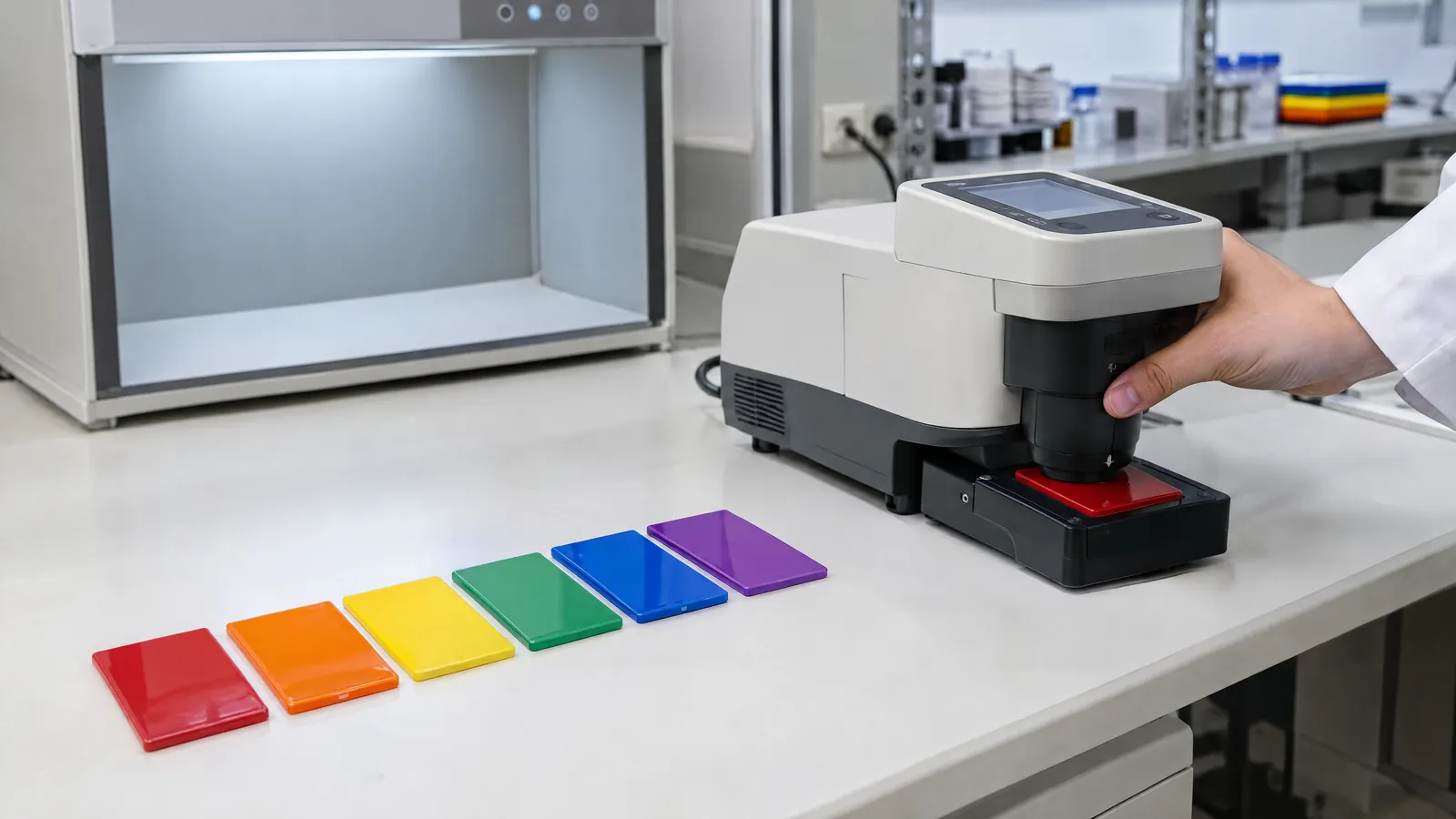
The nanometer-precision spectrophotometric and rheological analyses performed in our laboratories ensure that the TDS data on paper hold true in the field.
Conclusion and engineering recommendation
Technical Data Sheets (TDS) are the first and most binding technical agreements between suppliers and manufacturers. Reading and correctly interpreting these sheets is the most important engineering discipline that eliminates production losses, optimizes raw material costs and safeguards quality standards.
Let's find the right solution for your production together
See your requirement in figures with our calculator or request a sample from our laboratory.