
Rising petrochemical and raw material costs in the plastics industry are forcing companies to achieve sustainable cost optimization without compromising mechanical strength, physical performance or surface quality. One of the most effective industrial ways to optimize polymer budgets is the intelligent integration of the right mineral additives and fillers into the formulation.
However, using fillers is never a matter of simply diluting the resin by adding a low-cost mineral to the polymer. It is a high-level compounding engineering process that requires rigorous management of polymer morphology, rheological behavior, particle dispersion and mechanical test parameters.
In this technical review, we take a detailed look at the economic value of using fillers, the critical mineral types in the industry, particle size optimization, the chronic challenges encountered on production lines and the engineering routes to maximum cost efficiency.
The basic purpose and economic value of fillers in the plastics industry
In commodity and engineering plastics (PP, PE, PS, ABS, PA, etc.), base polymer resins are directly affected by fluctuations on global raw material exchanges. Calcium carbonate (CaCO₃), talc, kaolin and specialty minerals are components that offer a high cost advantage compared with the polymer matrix.
Fillers added in the right ratios, with surface modification and homogeneous dispersion, bring the following added value to production:
- Raw material cost optimizationDirectly lowers the raw material cost per kilogram, delivering significant budget savings in high-tonnage production.
- Dimensional stabilityMinimizes the mold shrinkage of the part, preventing warpage after injection molding and stabilizing dimensional tolerances.
- Thermal conductivity and cycle timeMineral structures such as talc in particular shorten part cooling time, increasing the cycle speed of injection molding machines and raising manufacturing capacity.
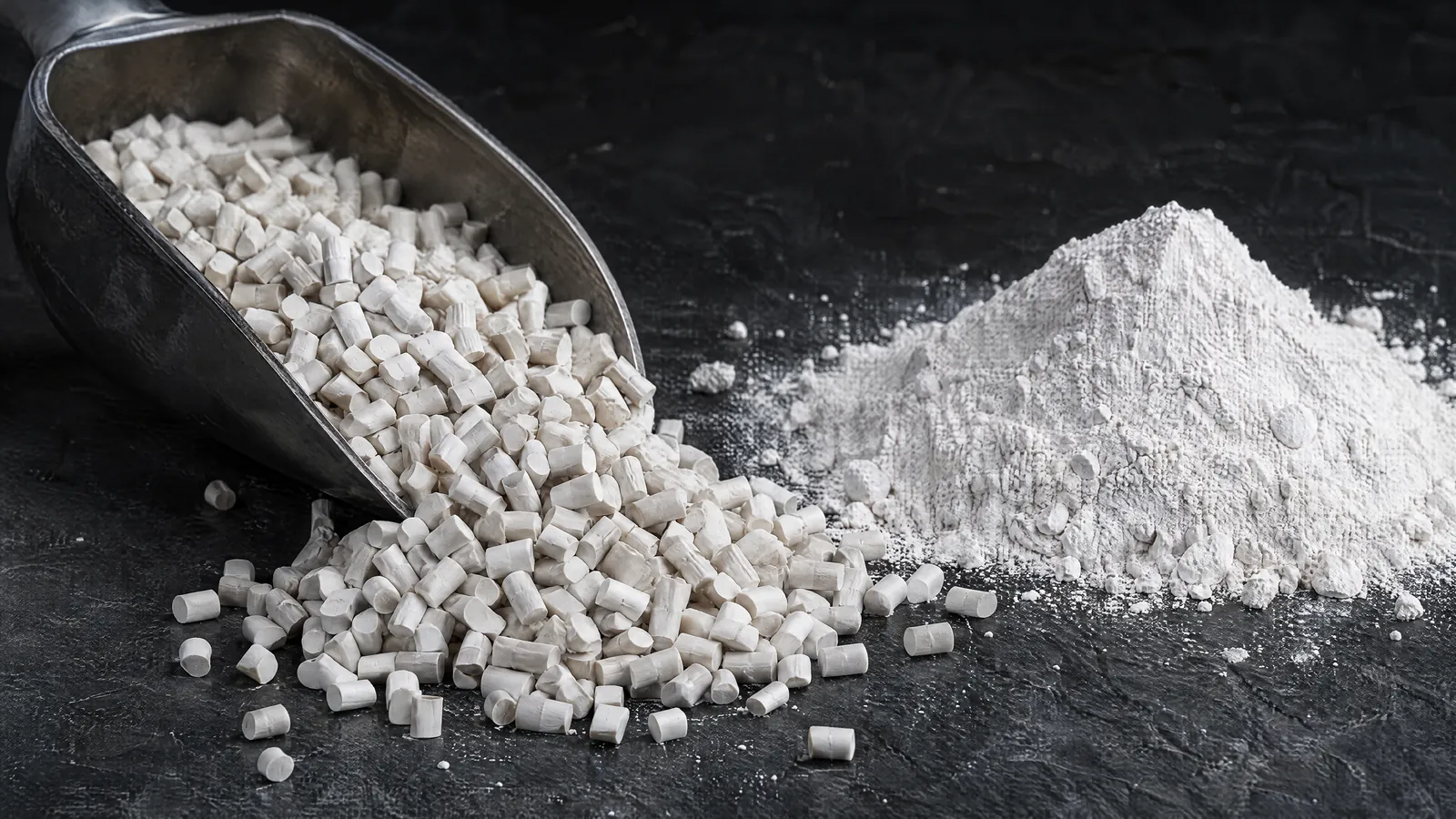
The most widely used filler types in the industry and their engineering properties
Not every mineral filler offers the same compatibility with every polymer matrix. The main fillers, which should be selected according to the end use of the final product (automotive, packaging, home appliances, etc.), are:
Calcium Carbonate (CaCO₃ - Calcite): Widely used in polyethylene (PE) and polypropylene (PP) film, blow molding and injection molding lines. It is the most frequently preferred filler thanks to its high purity, basic nature and economy. With the right particle size distribution, it provides volume gain without reducing mechanical strength.
Talc (Magnesium Silicate): Indispensable especially in home appliance housings, automotive interior and exterior trim parts and PP-based structural engineering components. Thanks to its platy (lamellar) crystal geometry, it significantly increases the flexural modulus (stiffness) and heat deflection temperature (HDT) of the part.
Specialty Mineral Additives and Nano-Fillers: Advanced-technology fillers integrated into the polymer matrix where high barrier properties, flame retardant synergy or flawless surface quality are required.
| Filler | Where is it used? | Key effect |
|---|---|---|
| Calcite (CaCO₃) | PE and PP film, blow molding and injection molding lines | Volume gain without reducing mechanical strength; the most frequently preferred filler |
| Talc (magnesium silicate) | Home appliance housings, automotive trim parts, PP structural components | Increase in flexural modulus (stiffness) and heat deflection temperature (HDT) |
| Specialty mineral and nano-fillers | Applications requiring barrier properties, flame retardant synergy and surface quality | Advanced-technology performance |
The critical importance of particle size and surface modification
The key to success and mechanical resistance in filler masterbatch production is the micronized particle size (d50 and d98 values).
Agglomeration and stress concentrations: Fillers with a particle size that is too large, or whose surfaces are not coated with suitable fatty acids (for example stearic acid), agglomerate in the polymer. This creates microscopic stress concentration points, reducing impact strength and elongation at break.
Surface coating technology: Surface modification is essential for mineral filler particles to form chemical and physical bonds with the polymer chains. A perfectly coated Filler Masterbatch stabilizes the melt flow index (MFI) and prevents excessive wear (abrasion) of the extruder screw and the injection barrel.
Challenges in the use of fillers and practical solutions
Uninformed or excessive use of fillers on production lines brings some chronic problems with it:
| Challenge | What happens? | Solution |
|---|---|---|
| Loss of mechanical strength | Excessive filler loading (for example uncontrolled filler at 40% and above in PP) weakens the tensile strength of the material. | The formulation should be supported with the right elastomer reinforcements or suitable coupling agents (compatibilizers). |
| Surface defects (dullness and flow marks) | Surface irregularities or dullness may appear on injection molded parts. | The MFI of the carrier polymer in the filler masterbatch should be fully matched to the flow rate of the base resin. |
| Equipment wear | Mineral fillers are abrasive by nature. | For long-term line operation, wear-resistant nitrided bimetallic screws and barrels should be preferred. |
Direct feeding or compounding / masterbatch process?
Adding the filler directly to the raw material in powder form is strictly not recommended industrially, because it creates an inhalation hazard for occupational health, causes feeding irregularities and does not disperse homogeneously.
The safest and most efficient method is to use a Filler Masterbatch pre-homogenized on high-torque twin-screw extruders. In this way the mineral filler is fed to the lines perfectly wetted within the polymer carrier, so the line delivers maximum output, flawless dispersion and minimum loss.
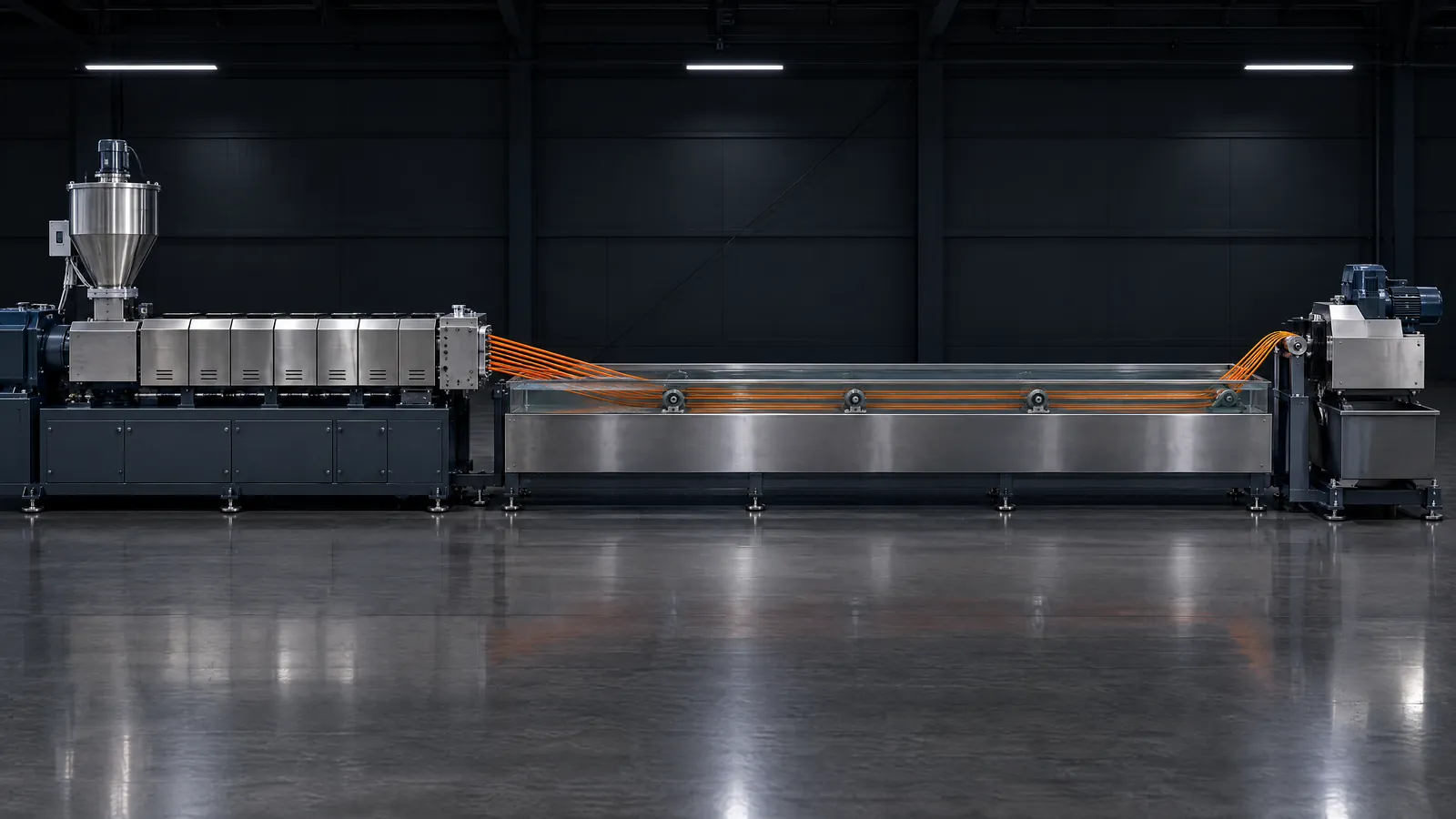
| Method | Result |
|---|---|
| Adding powder filler directly to the raw material | Inhalation hazard, feeding irregularities, non-homogeneous dispersion; not recommended industrially |
| Pre-homogenized filler masterbatch | Wetted filler, flawless dispersion, maximum output, minimum loss |
Conclusion and engineering recommendation
Using fillers to reduce production costs is possible not through random increases in ratio, but through engineering work that combines polymer science, the end use of the part (automotive, packaging, home appliances, etc.) and mechanical test data. The right filler type, the optimum loading ratio and the choice of a high-quality masterbatch give companies an enormous financial advantage without reducing quality and strength.
Let's find the right solution for your production together
See your requirement in figures with our calculator or request a sample from our laboratory.